Laos & Cambodia Discoverer
Overview

In Laos, immerse yourself in a slower, more traditional way of life before continuing into Cambodia, where you'll explore lesser-known temples and confront the country’s haunting past. Along the way, you’ll eat like a local, stay in local homes, and support grassroots community initiatives, a deeply immersive experience designed to help you understand read more these two diverse nations through authentic cultural connections.


Itinerary
Saibadee! Welcome to Laos. Upon arrival, you will be met by your local guide and transferred to your hotel. The UNESCO World Heritage small city of Luang Prabang is a favourite for many travellers. Nestled in the hills of northern Laos between the Mekong and Khan Rivers it is a wonderful place to explore by foot or jump onto a Jumbo (local transport) to experience a local's perspective on the town.
Tonight, you will experience a Laos feast. Served in family style, which means all the dishes will be served up on the table and you can try them all. Enjoy all the local flavours and foods from chunky bamboo soup to sausages and dips accompanied by sticky rice, herbed fished in banana leaf, lemongrass stuffed chicken, pumpkin with kaffir lime and ginger and a selection of sweet Laos confections.
After breakfast, enjoy a short, guided tour of Luang Prabang, exploring the city's oldest temple Wat Sene and the magnificent Wat Xiengthong with its roof sweeping low to the ground, which represents classical Laotian architecture. You will also visit the National Museum (former Royal Palace), which hosts a range of interesting artefacts and the Traditional Arts and Ethnology Centre to learn about Laos' many ethnic minorities.
Then, you will board a cruise upstream on the Mekong River, which provides you with a panoramic view of the tranquil countryside as well as an interesting visit to the mysterious Pak Ou Caves. Two linked caves are crammed with thousands of gold lacquered Buddha statues of various shapes and sizes left by pilgrims. You might want to climb up to the top of Mount Phousi (about a 330-step climb and will take roughly 15-20 minutes) where you can explore the sacred, gilded stupa as well as take in sweeping views of the city and the Mekong River at sunset.
Finish the day by visiting the famous Night Market, where you can find a fascinating selection of handmade textiles made by local and hill tribe people surrounding Luang Prabang.
Optional: For those who are early risers and are keen to experience the mystical aura of Luang Prabang, there is an optional early start giving you the opportunity to participate in the daily morning rituals of saffron-clad monks collecting offerings of Alms, (often in the form of sticky rice), from the faithful residents.
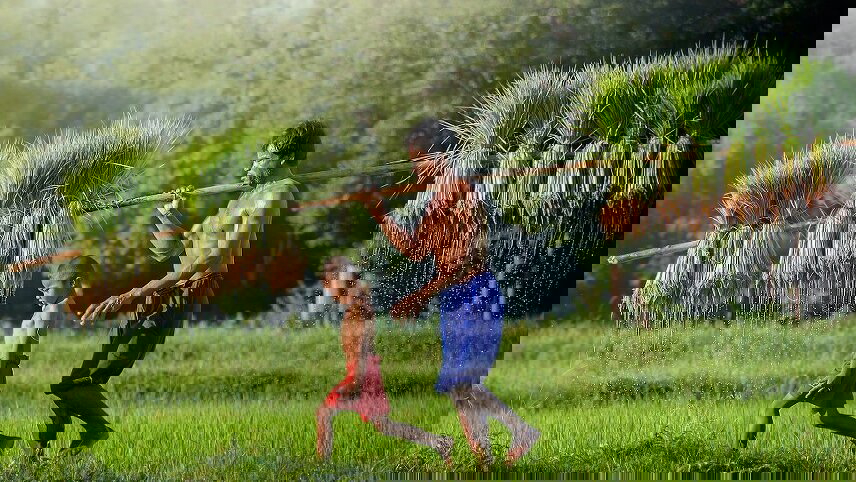
After breakfast, head out to the outskirts of town and spend an enjoyable half day on a community-based rice farm situated in the idyllic countryside, surrounded by mountains and rice paddies. Experience the life of a farmer by trying your hand at various farm activities, providing great photo opportunities.
Alternatively, watch life on the farm unfold from the comfort of a traditional Lao rice house balcony, surrounded by rice terraces and an organic vegetable farm. During the experience, you can learn about bamboo weaving, blacksmith work, and sugar cane processing. Then tour the organic garden and learn how natural herbs are used in traditional medicine. Later, enjoy lunch with Lao dishes at the restaurant overlooking the farm. (Please note this is a join-in tour. Private presentation guide at the farm is subject to availability)
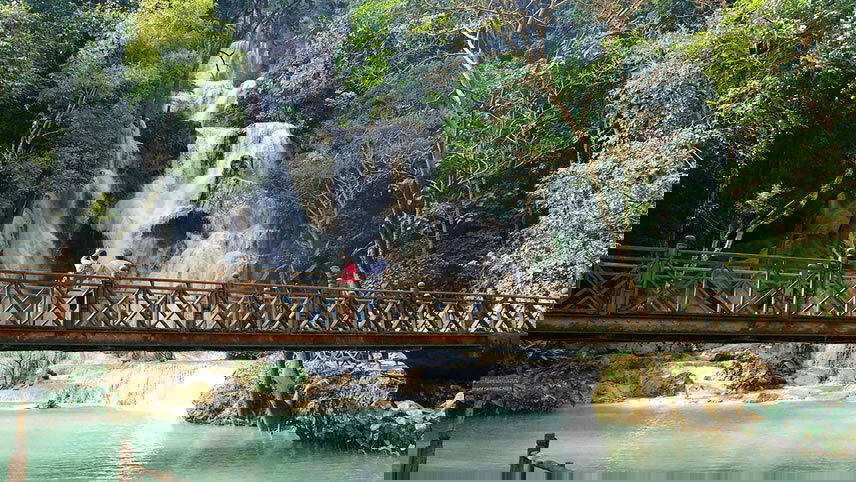
Next, drive to the beautiful Kuang Si Waterfall where you can splash around in the turquoise pools or walk along the forest paths. On the way, you will visit villages of various minorities Laotian (Ban Quay, Ban Ou). There's also an opportunity to visit the bear sanctuary near the waterfall which is run by Free the Bears Fund Inc.
Finish the day with a visit to Ock Pop-Tok. This Laos-based social enterprise works primarily in the fields of textiles, handicrafts, and design. Meaning ‘east meets west', Ock Pop Tok brings the fascinating world of traditional Lao handicrafts alive for visitors. The Living Crafts Centre overlooking the Mekong is the heart of Ock Pop Tok and a fascinating place to visit. Enjoy a drink at Ock Pop Tok Silk Road Café and amazing views over the Mekong.
This morning you will be transferred to the airport for your flight to Pakse, departing at 8:30am (1hr,40min)
On arrival at Pakse, you will be met and transferred to Champasak, the former capital of the Kingdom of Champasak (1713–1946). Champasak is now a small town set on the banks of the Mekong. The highlight of this one-street town is the picturesque pre-Angkorian Wat Phou Temple. Built between the 6th and 13th centuries, the temple is a UNESCO World Heritage Site, inscribed for being an outstanding example of the integration of a symbolic landscape of great spiritual significance to its natural surroundings.
Afterwards, Depart Pakse and drive 35km (22 mi) south through pleasant rural scenery of hills and local villages to Champasak and explore Wat Phou. Notice how the temple is divided into two parts: the lower section consisting of two ruined palace buildings at the edge of a pond and the upper section, which is the temple sanctuary itself. You have the option to climb the old staircase adorned with nagas (mythical snakes) to admire the surrounding scenery. Be sure to wear proper walking attire as the climb up to the main temple can be slippery at times.
This morning, depart Champask and drive to the Bolaven Plateau (approx. 1.5-2 hours). The Bolaven Plateau is known for its cooler temperature being located high above the Mekong Valley. Rivers run off this high plateau in all directions and then plunge out to lush forests in a series of spectacular surging waterfalls. The coffee and tea grown in these areas are said to be some of the best in the world. The hill tribe people are unfailingly friendly, welcoming you with waving hands and smiling faces. These ethnic minorities still retain their age-old cultural traditions and are recognisably distinct from each other by their dress.
Continue your journey through the Paksong and Bolaven Plateau until you reach Tad Fane Waterfall. The scenery around Tad Fane waterfall is spectacular with twin waterfalls plummeting into a deep gorge surrounded by flourishing vegetation. Today you see the cultivation of rich coffee, tea, cardamom, bananas, and other crops that are grown in the area.
This morning, enjoy the cool fresh air of the Bolaven Plateau before continuing your journey to Kingfisher Ecolodge (approx. 1.5 hours), sitting on the boundaries of Xe Pian NPA and the Kiat Ngong village.
This afternoon, depart at approx. 2:30pm for your trek to Phou Asa Mountain (approx. 3-3.5 hours). Featuring stunning views over large areas of southern Laos, intriguing ruins and dense semi-evergreen forests. Walk along forest trails accompanied by a village guide to explore this archaeological site while learning about the forest including its many medicinal plants and non-timber forest products. The guides will also point out signs of wildlife (tracks, scat and habits) and other features of the forest.
Atop the mountain, you will see an ancient stone structure called Vat Phou Asa, which is believed to be a temple. For your hike, bring walking shoes or sandals, long trousers (if available), hat, and sunscreen. The trek involves a moderate hike in forested areas, rocky paths, and gentle slopes. The forest path is also easy to walk, with only a few tree roots to step over.
This morning, depart the lodge early with your guide. Before dawn, at around 0430hrs, an experienced guide from Kingfisher Ecolodge will accompany you for the trek along the edge of the Ramsar-protected Ban Kiet Ngong Wetlands, one of the largest and least altered wetlands in the region. Hike through swamps, lakes and marshes at the foot of Phou Asa, a large rock outcrop renowned for its intriguing ruins and superb views of the dense semi-evergreen forests below.
Once you arrive at your hide, you will have the pleasure of enjoying the bird activity in the day's early light when birds are most active. The Ban Kiet Ngong wetland is one of the most important areas in Indochina for water birds. Here you will find the rare Giant Ibis, the White-winged wood duck, the Sarus Crane, the Lesser Adjutant and the White-shouldered Ibis. With over 320 species of birds present on the wetlands it is certainly one of the best places in Laos to view such a wide variety of wetland-dwelling birds. (Please note the bird-watching experience is a group experience with other guests from Kingfisher Ecolodge).
This afternoon, return to the lodge where the rest of the day is free at your leisure or wander around the nearby village with your guide.
Today you continue your journey by road to Ban Nakasang pier where you will take a local boat to Don Khone and explore the surroundings of the 4000 islands. The Si Phan Don (meaning 4000 Islands) is a riverine archipelago located in the Mekong River, Champasak Province in southern Laos. Si Phan Don is characterised by numerous islands, half of which are submerged when the Mekong River is in flood.
Next up is Ban Khone where you will begin retracing the French colonial–past by bike or tuk-tuk, where some old colonial houses still stand and glimpse the first Lao railway with its own locomotive.
Continue your exploration of the area of the 4000 islands by boat and visit the beautiful Liphi waterfall, also known as the Samphamith, which forms a natural border between Lao and Cambodia. Enjoy the sunset by the immersive Mekong River.
After breakfast, aboard a boat to Ban Nakasung and take a short drive to the Lao – Cambodia border. On the way, visit the breathtaking Khone Phapheng waterfall, Southeast Asia's biggest waterfall, known as the ‘Niagara of the East'.
Next, a short 100m walk takes you across the Lao border into Cambodia (Voeun Kham / Dom Kralor border crossing) where you will meet your Cambodian guide. You will need to carry your own luggage to Cambodian immigration. Visa on arrival is available at the Cambodian border for $30 USD. Immigration officials may request a small processing fee. You will need one passport photo.
Now, you will travel from the border crossing to Stueng Treng province and on to Kratie (approx. 4hrs). Until recently, Kratie was a strategic trading port on the river between Phnom Penh and Stung Treng. Both the French and Khmer Rouge found the town useful and there are several French colonial buildings that remain.
After a chance to buy essentials at the local market, board a local boat from Kratie waterfront to Koh Trong for your stay – approximately 280 families call this 6-kilometre island home. Almost totally removed from time and modernity, Koh Trong is a haven of peace and times gone by. Without roads, cars or modern facilities, the locals live a simple yet full life, within the beauty and serenity of this island. Its long stretching waters, almost peninsula-like, sit between the Mekong and create a truly ethereal feel.
Depending on the season and the river height, you may need to walk up a stretch of beach and then board a Tuk Tuk, the only one of its kind. You will make the exciting journey to Soriyabori Villas Resort, a hotel hidden from view nestled into the countryside. Passing by locals, friendly and waving, you will see everyday life from the local shop in a wooden house, to the small school'town hall and past the many Pomelo trees which this island is famous for.
Later in the afternoon, go cycling or travel by horse and cart around the Island from Rajabouri Villas Hotel and visit the Pagoda and its interesting statues. See real local life and enjoy the dual aspect view of the Mekong. This island is very easy and safe to navigate alone or with your guide. Sample local snacks at leisure, in the little wooden house shops dotted along the paths.
Please Note: There is no air conditioning at the resort – fan only
Awaken early and refreshed for an early breakfast, before you take a cart back to the ferry terminal and catch a local boat across the Mekong to the mainland.
Continue with approx. 40-minute drive and a boat ride to the vast waters where you can find the rare Irrawaddy dolphins of the Mekong play and jump. There are thought to be around 60 dolphins located in this area, and your guide will help to suggest the best spot to witness these elegant mammals. A majestically quiet stretch of water, you may also glimpse rare birds and see the locals casting their fishing nets. You will see locals playing on the football pitch or selling their wares at the strategically placed market. You will be able to make a stop to view the goods and your guide will assist in the negation of any purchases.
After disembarking, you will then journey around the small town of Kratie, a former colonial town with almost a seaside feel, with its long French-style promenade and colonial buildings. You will walk through the local market and small bar/ pub street area having lunch at leisure.
Afterwards , you will be transferred (approximately 3 hours) by private vehicle to your hotel located north of Kompong Cham, a peaceful town that was once an important trading hub. A visit here is now a great opportunity to experience life in small-town Cambodia.
The rest of the day is free at leisure.
This morning, drive to the centre of Kampong Cham where you will visit the twin ‘mountain temple' of Phnom Pros and Phnom Srei.
Afterwards, grab some local bikes (no helmets) to explore the rural island of Koh Paen, which is linked to Kompong Cham by an elaborate bamboo bridge, (it is passable only in the dry season – we take a ferry in the wet). The locals here make their living fishing, growing tobacco and sesame so it is a good place to go for a closer look at some of Cambodia's cottage industries.
Later, drive approximately 3 hours to Phnom Penh capital city via Skuon (a small town famous for its tasty spiders), where it's possible to sample an eight-legged snack. It is recommended that you eat these furry arachnids as you would a crab, by cracking the body open and pulling the legs off one by one – delicious!
For dinner, you will dine at Golden Pumpkin Restaurant, a family-run eatery in Phnom Penh known for its unique incorporation of pumpkin into traditional Khmer cuisine. Committed to fresh, chemical-free ingredients, the restaurant sources produce from local farmers, supporting their livelihoods and creating valuable employment opportunities.
Home to about 1.5 million people, Phnom Penh, has been Cambodia's capital since the French colonisation of the country. Located on the banks of the Tonle Sap and Mekong River, Phnom Penh was once known as the “Pearl of Asia”, one of the loveliest French-built cities in Indochina.
Depart at approx. 8am to spend a full day exploring this charming city which boasts a rich blend of Khmer and colonial architecture. In the morning, explore Wat Phnom and discover the legend of Lady Penh, the founder of the city, the Royal Palace and Silver Pagoda, two of the most striking buildings in the capital and considered some of the finest examples of Khmer architecture. Also visit the National Museum, designed in Khmer style by a French archaeologist and painter in 1917. The museum houses Khmer art and sculptures from different periods of Cambodian history. Enjoy lunch at a local restaurant.
This afternoon, learn more about the turbulent Khmer Rouge years with visits to Tuol Sleng, a high school turned interrogation prison known as S-21 during the Khmer Rouge era and now a genocide museum; and Cheung Ek, a large memorial commemorating the 17,000 victims who died there under the reign of Khmer Rouge leader, Pol Pot, made famous by the movie “The Killing Fields”.
Here you will see a pagoda made up of some 8,000 human skulls marking the site of one of Cambodia's infamous Killing Fields. While sombre reminders of the cruelty of the Khmer Rouge regime, these visits will also provide an appreciation of the struggle that Cambodian people have faced and their tremendous courage to move on and rebuild their nation.
Note that women are required to cover their shoulders, and both men and women should ensure their knees are covered. Visitors are also requested to maintain a respectful and humble demeanor when visiting the Toul Sleng Genocide Museum and Killing Fields.
You may also like to take a stroll along the famous Sisowath Quay and enjoy a coffee or cocktail at one of the many cafes (own expense) while observing the bustling river traffic.
This morning, travel by private vehicle to Siem Reap (approx. 6.5 hrs travel time plus stops). Along the way, you will make several stops to see some of rural Cambodia. Visit the peaceful temple site of Sambor Prei Kuk, built in the 6th and 7th centuries.
You will arrive in Siem Reap in the evening. Siem Reap is only a few kilometres from the largest religious site in the world – Angkor Wat. However, the town itself is well worth exploring. A visit to the old market is a must, even if you're not looking for souvenirs; wandering through the stalls and surrounding shops, the silks, cotton, sarongs, silver and statues is a feast for the eyes and nose! There's also, a long tradition of shadow puppetry in the region, and if you're lucky you might catch a show at one of the local restaurants in the evening, perhaps while you're eating the speciality cuisine of Cambodia – amok, the name given to curry steam-cooked in banana leaves.
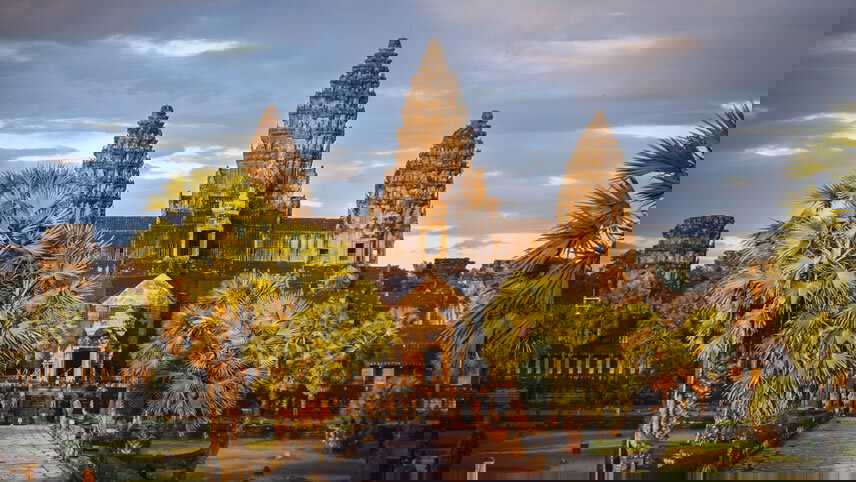
Wake up early and transfer by private vehicle at approx. 4:45am to the West Gate of Angkor Wat from where the sunrise can be best observed. Angkor Wat (early 12th century) is surrounded by 190-metre-wide moat 1.5 kilometres by 1.3 kilometres and is claimed to be the largest religious building in the world. It is certainly one of the wonders of the ancient world.
You will be amazed by the sheer size of the temple, which took 30 years to construct and used the labour of up to 300,000 workers. Angkor Wat was built as the earthly representation of the universe with its central tower symbolising Mt Meru which, Hindus believe, is at the centre of the universe. Afterwards, return to the West Gate where you can enjoy breakfast just outside of the Angkor complex at a local restaurant.
Next, drive to visit Banteay Kdei built between the 12th and 13th centuries. The ruined condition of the temple in no way detracts from the grandeur of this walled temple. Banteay means fortified monastery and refers to the double wall surrounding it.
Then, continue to Ta Prohm. This beautiful temple, built in 1186 as a Buddhist temple dedicated to the mother of Jayavarman VII, is one of Angkor's jewels and is overgrown with fig trees, giving a haunting yet exotic atmosphere. The magnificent roots of the trees have merged over the centuries with the temple's huge stone blocks, creating a ‘forgotten city' feeling. Pause at Ta Keo, which would have been the finest temple in Angkor had it been completed. A short distance further, are the twin temples of Chau Say Tevoda and Thommanon. Return to town for a rest and relaxation at your hotel mid-afternoon.
Later, drive to Angkor Thom, not a temple, but an entire walled city of 9 sq km which served as the ancient royal Capital of the Khmer Empire from approx. 1181. With a probable population of 1 million, it was far bigger and grander than any city in Europe at the time. Your guide will take you to the Terrace of the Elephants and the Terrace of the Leper King. The centrepiece of Jayavarman VII's capital is the Bayon temple and, as you approach, you will notice the 216 giants, enigmatic, smiling faces looking in every direction.
This evening, return to the South gate where you will board a small, private boat out to Prasat Chrung Temple to watch the amazing sunset.
After breakfast, you will transfer to the outskirts of town to visit one of the more remote jungle temples – Beng Mealea. Feel like an explorer when you discover the overgrown temple. Undiscovered for centuries, Beng Mealea has recently been made accessible and remains largely unrestored. It is one of the very few temples that adventurers can climb through.
Afterwards, travel back to see some other early examples of Cambodia's historic temples – the Roluos Group. Roluos is the site of an ancient centre of Khmer civilisation known as Hariharalaya. It was the first town built by the Angkorian kings in the 8th and 9th centuries and consists of three main temples: Bakong, Lolei and Preah Ko. The surrounding countryside with its rice paddy fields and sugar palm trees is very typically Cambodian.
From there, continue to the shores of the Tonle Sap Lake, where you will have the opportunity to learn about life on the lake. The Tonlé Sap is Southeast Asia's largest freshwater lake with its size varying greatly depending on the season. Board a local boat and visit Kompong Pluk, a village where you will see houses on stilts that are submerged when Tonlé Sap Lake extends. On the way, you will pass floating houses and impressive flooded forests.
Please note that due to low water levels during the dry season, the boat trip is only possible from approximately June to March. In the dry season it may be possible to arrange an overland visit to Kompong Pluk to walk among the stilted houses.
Tonight, at your final dinner, you will be experiencing Khmer cuisine from award-winning Master Chef Luu Meng at his restaurant Malis. The restaurant was born out of the desire to restore Cambodian cuisine to its former glory and put the country back on the culinary map after the terrible Khmer Rouge regime and civil war. Renowned for its fresh seasonal produce, delicate flavours and generous hospitality Luu Meng and his team are reviving long-forgotten countryside dishes.
This morning, travel to Banteay Srei via backroads and villages. On the way, you will have the possibility to stop at local communities. Seize the opportunity to taste palm juice and palm sugar, which are popular local produce (seasonal).
Upon arrival at the ‘gem' of the Angkor area, the pretty temple of Banteay Srei. The small and charming ‘Citadel of the Women' remains one of the best-preserved temples in Cambodia. It displays some of the finest examples of classical Khmer art and is noted for its truly remarkable fine bas-reliefs. Banteay Srei is unique in that it is constructed of pink sandstone, which is seen nowhere else in Angkor.
This afternoon transfer to the airport for your onward flight (flight not included).
Trip Inclusions
- Participate in the morning alms with monks
- Get hands-on at a local rice farm
- Spend time with the hill tribe minority groups
- Explore the island of Koh Trong by bike
- Dine at a local restaurant run by former street youths
- Visit Cambodia's famous Angkor temples
- Cruise through the water villages on Tonle Sap
- Return airport transfers
- 15 nights of accommodation
- 15 Breakfasts, 3 Lunches, 4 Dinners
- Domestic flight from Luang Prabang to Pakse
- Bicycle rental for cycling days
- Private air-conditioned vehicle
- English-speaking tour leader
- Bottled drinking water for sightseeing
- All entrance fees as per the itinerary
- International & domestic air tickets not mentioned above
- Meals and beverages not mentioned above
- Early check-in and late check-out charges from the hotel
- Visas
- Personal travel insurance
- Expenditure of a personal nature such as drinks, souvenirs, laundry, tipping etc
- Early check-in/Late check-out
- Accommodation, itinerary and inclusions subject to change.
- Disruptions to itinerary may occur.
Dates & Pricing
Your Global Journeys Travel Advisor will check the availability of your departure date when you Enquire. Additional savings may apply. T&C’s apply.
Tour & cruises prices are per person. Prices shown have savings applied, are subject to availability and may be withdrawn at any time without notice. Pricing and trip details are correct at this point in time, however are subject to confirmation at the time of booking and are subject to change by Crooked Compass. For cruise itineraries, cabin images are sourced from the cruise-line and should be treated as indicative only. Cabin inclusions, upholsteries and room layout may differ to the image(s) shown depending on the ship selected and your sailing dates.