Treasures of Bangladesh

Overview

In Sreemangal, wander rolling tea read more gardens and sample the region’s famous seven-layer tea. Visit Monipuri, Garo and Khasia villages to learn about tribal traditions and livelihoods, then continue to Sonargaon, the former capital of Bengal, where ancient merchant streets and folk art museums showcase the region’s layered past. In Barisal, drift through one of the world’s last floating vegetable markets and witness riverside pottery-making that has remained unchanged for centuries.
Finally, board a private vessel and explore the Sundarbans, the world’s largest tidal mangrove forest and home to the elusive Bengal tiger. Walk jungle trails, climb watchtowers for sweeping views, and glimpse wildlife from silent country boats before stepping ashore at UNESCO-listed Bagerhat, with its Sixty Dome Mosque and terracotta temples. This is travel that is raw, eye-opening and deeply human, a journey into a land of warmth, contrast and living heritage.


Itinerary
Welcome to Bangladesh. Defined by rivers, history and resilience, this journey introduces you to a country few travellers truly know. From Dhaka's chaotic streets to quiet forest villages, prepare for a raw and revealing experience. Arrive in Dhaka, the Bangladeshi capital, where you'll be met and transferred to your hotel. The rest of the day is free to relax.
Optional visits (subject to arrival time) include the National Museum (closed Thursdays and Friday mornings), with its collection of sculptures, paintings and ancient artefacts, or the Liberation War Museum (closed Sundays), documenting the 1971 war of independence. Time permitting, view the striking National Parliament Complex from outside. Designed by Louis I. Kahn and completed in 1982, it remains one of South Asia's most significant modernist structures.
Dhaka is a city of contrasts – chaotic yet compelling. Ornate mosques and crumbling colonial facades line streets buzzing with rickshaws, while conch shell artisans and food vendors fill the alleys of Old Dhaka with sound and scent.
Depart Dhaka this morning for the full-day drive to Chattogram, stopping enroute to explore the archaeological zone of Mainamati in Cumilla. Visit Salban Vihara, one of the most significant Buddhist monastic sites in Bangladesh. Dating from the 8th to 12th centuries, this site, along with Rupban Mura and Itakhola Mura, was part of a cultural and spiritual hub under the Chandra and Deva dynasties. The surrounding archaeological museum holds an impressive collection of terracotta plaques, votive stupas, and bronze and black stone sculptures.
Continue to the Jagannath Temple, also known as Sateroratna Mandir (Seventeen Jewel Temple), built in the early 18th century by the Tripura King Ratna Manikya II. Although its iconic towers have been damaged, the Bengal-style terracotta façade remains an outstanding example of regional temple architecture.
Time permitting, stop at local workshops near Kumira where recycled ship-breaking steel is repurposed into everyday tools and crafts.
Please Note: visits to the shipbreaking yards themselves are not permitted.
Begin the day with a visit to the 17th-century Andarkilla Shahi Jame Masjid. Built in 1667 under Mughal command by Umed Khan, son of Nawab Shaista Khan, this hilltop mosque marked the Mughal victory over Arakanese and Portuguese forces. It later served as a British munitions store before being returned to religious use in 1855 through local petition.
Continue to the Chattogram War Cemetery, established by the British Army to honour Commonwealth soldiers who died on the Indo-Burma front during WWII. Now containing 731 graves, including those of Australian, British, Canadian, African, Indian and New Zealand soldiers, the cemetery is maintained by the Commonwealth Graves Commission. In the afternoon, drive along the coast to Cox's Bazar.
Enjoy a relaxed morning at leisure, with time to explore the longest natural beach in the world or simply unwind. In the afternoon, drive south to Himchori National Park. Established in 1980, the park is known for its scenic waterfall, forested hills and birdlife. Over 280 bird species have been recorded here, along with diverse flora including native trees, grasses, and shrubs.
Stop for lunch at a local Bengali restaurant before continuing to Inani Beach, where coral and rock formations stretch along the shoreline. During the monsoon season, the green hue of the living coral is particularly striking. Stay to watch the sunset over the Bay of Bengal.
This morning, cross the bay by speedboat to visit Maheshkhali Island. Forested hills and pockets of mangrove line the shores of this quiet island. Explore the hilltop Adinath Temple and the nearby Rakhain village, home to a vibrant Buddhist temple and community.
Return to Cox's Bazar and transfer to the airport for your domestic flight to Dhaka. On arrival, transfer to your hotel for the night.
Today's exploration focuses on Old Dhaka – a district rich in Mughal heritage, religious landmarks and vibrant street life. Begin with a walking tour through Shankhari Bazaar, one of Dhaka's oldest neighbourhoods. This narrow, bustling lane is home to the Shankhari community, artisans known for crafting conch shell bangles traditionally worn by Hindu married women. Colonial-era buildings line the street, and the air is filled with the aromas of Old Dhaka's famed street food.
Continue to Northbrook Hall, also known as Lalkuthi (Red House), an 1879 riverside structure built in honour of Lord Northbrook, then Viceroy of India. Once a telegram office and later a women's college, it now belongs to the Dhaka Municipality.
Visit the busy Sadarghat riverfront, where ferries and wooden boats ply the Buriganga River – once a vital transport hub, now quieter since the opening of the Padma Bridge. Key historical landmarks include Ahsan Manzil, the former palace of the Nawab of Dhaka; the Armenian Church, built in 1781 and a reminder of the city's once-flourishing Armenian merchant community; Star Mosque, with its ornate decoration; the incomplete Mughal-era Lalbagh Fort; Curzon Hall, part of Dhaka University and named after British Viceroy Lord Curzon; and Dhakeswari Temple, the national Hindu temple of Bangladesh, believed by some to have given the city its name.
In the evening, there is the option to browse Aarong, a well-known outlet for local handicrafts.
Depart Dhaka this morning and travel northeast towards Sreemangal, stopping en route in Rupshi village to witness the intricate craft of Jamdani weaving. This centuries-old textile tradition, once linked to the legendary muslin trade, is known for its delicate motifs woven by hand without any mechanical aids or drawn patterns. Each design exists only in the weaver's memory, with the process requiring intense skill and concentration.
Continue along the Asian Highway through fertile cropland, roadside markets and forested villages inhabited by both indigenous communities and local farmers. The changing landscape offers a glimpse into the rural rhythms of Bangladeshi life.
Later in the afternoon, visit the Monipuri village market. Here, tribal women showcase colourful handmade textiles and crafts. End the day with a visit to a local tea stall to sample Sreemangal's famous seven-layer tea and engage in casual conversation with locals.
After breakfast, set out to explore Lawachara National Park, one of Bangladesh's richest rainforest ecosystems. This protected forest is home to rare species including the Hoolock gibbon, capped langurs, slow lorises, and several types of macaques. The forest also hosts more than 280 species of birds and a stunning variety of butterflies, some with wingspans reaching up to 20 centimetres. A forest trail leads to a nearby Khasia village, where you can observe traditional lifestyles and cultivation practices in a remote community setting.
In the afternoon, visit a Garo tribal village to learn about the community's ancestral customs, or head to a pottery village where artisans continue to handcraft clay pots using age-old techniques. You may even have the chance to try shaping one yourself.
Time permitting, stop at Madhabpur Lake. Surrounded by forested hills and blanketed with lilies, this tranquil reservoir offers a peaceful setting to watch the sun set before returning to town.
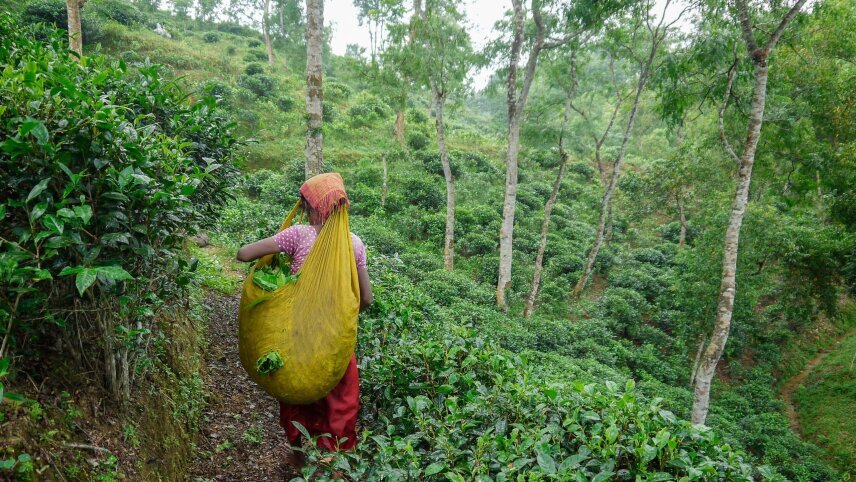
Begin the day with a peaceful walk through Sreemangal's tea estates. Watch local women plucking leaves in the early light and take time to speak with them about their work. You're welcome to try your hand at tea picking – a simple but rewarding experience.
Later, depart for Sonargaon, the former capital of Bengal during the Turkish Sultanate period. Dating back to the late 13th century, Sonargaon served as an important administrative, commercial and maritime centre and was a seat of power for rulers including Sultan Fakhruddin Mubarak Shah and Isa Khan. Historic travellers such as Ibn Battuta and Niccolò de' Conti described it as a thriving centre of trade and commerce.
Visit the Folk-Art Museum, founded in 1975 by celebrated Bangladeshi artist Joynul Abedin. The museum showcases Bengal's rural crafts and traditions and includes the historic Boro Sardar Bari, offering an insight into the region's cultural and artistic heritage.
Continue to Panam Nagar, a once-thriving merchant settlement now known as the Dead City. More than 50 historic buildings line its atmospheric main street, reflecting the fading legacy of Bengal's wealthy merchant communities. Despite the effects of time and decay, Panam Nagar remains one of Bangladesh's most significant historic sites and was included on the World Monuments Watch in 2006.
In the evening, continue to Dhaka for your overnight stay.
fter breakfast, leave the bustle of Dhaka behind and travel south to Barisal, a riverine city often referred to as the Venice of Bengal for its intricate network of waterways.
Before reaching your hotel, visit Lakutia Palace, a 17th-century estate built by Rup Chandra Roy in Lakhutia village, just outside Barisal. Set across an expansive estate, the complex includes the remains of the main palace along with several temples and other historic structures. Though time has taken its toll on the once-grand residence, its weathered architecture offers a fascinating glimpse into the region's zamindar heritage, while ongoing preservation efforts seek to protect the site for the future.
Continue to Barisal and settle into your hotel for the evening.
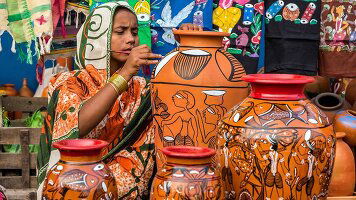
Set off early this morning with a packed breakfast to explore Barisal's famed floating vegetable market, one of the last remaining of its kind in the world. From a traditional wooden boat, glide through narrow canals as locals trade fresh produce directly from their vessels. Visit a riverside village where you can observe the complete cycle of traditional pottery-making – from raw clay collection to shaping, firing, and loading for distribution.
Continue overland to Mongla and board your privately chartered forest vessel to begin your journey into the Sundarbans. Designed for remote exploration, the boat features simple but comfortable cabins with shared facilities, an open-air viewing deck, and onboard dining. This mobile base will take you deep into one of the world's most biodiverse mangrove forests.
The Sundarbans is the largest tidal mangrove forest on Earth and a UNESCO World Heritage Site. Shared between Bangladesh and India, it forms part of the Ganges Delta and is shaped by the meeting of fresh and salt water. The unique ecosystem supports over 300 species of birds, fish, reptiles and mammals, including spotted deer, monkeys and the elusive Royal Bengal Tiger. Marine life includes Ganges and Irrawaddy dolphins as well as finless porpoises.
In the evening, visit a remote village on the forest's edge to meet locals and learn about their lives amid this fragile, powerful landscape.
Wake to the calls of forest birds and the rhythmic sounds of the delta. Begin the day by exploring the narrow canals of the Sundarbans by small country boat. These silent journeys are ideal for birdwatching and offer a closer view of the mangrove ecosystem. Step ashore for a short forest walk near the Andarmanik area to observe wildlife along the jungle trails.
After lunch on board, sail south to Kotka, one of the most wildlife-rich regions of the forest. From here, you can climb a watchtower for panoramic views or join a guided hike through mangrove forest and open grassland. The walk leads to a remote beach where tiger tracks are sometimes seen in the sand, offering a rare insight into this elusive predator's habitat. In the evening, enjoy a traditional BBQ dinner on deck under the stars.
This morning, sail toward Kachikhali Island, also known as Tiger Point – a remote forest zone known for its high concentration of wildlife. Upon arrival, set off on a forest hike beneath the mangrove canopy, emerging into open grasslands where herds of spotted deer and wild boar graze. Keep an eye out – this is one of the best areas for spotting the elusive Royal Bengal Tiger.
In the afternoon, visit Dimer Char and the forest stations at Harbaria or Karaljal. These sites offer additional opportunities to observe wildlife and understand the complexity of the mangrove ecosystem.
Cruise peacefully through the Sundarbans' creeks and channels as you make your way back toward Mongla. Arrive in the late evening and remain on board for your final night in the forest.
After breakfast on board, disembark and travel to Bagerhat, a historic city at the meeting point of the Ganges and Brahmaputra rivers. Founded in the 15th century by Turkish general Ulug Khan Jahan, Bagerhat is famed for its dense collection of brick-built mosques and monuments, earning it the title of “Mosque City.”
Visit Kodla Math, an unusual terracotta Hindu temple located in the village of Ayudha. Unlike most temples in the subcontinent, its design is vertical and pyramid-like, following the Shikhara architectural style. The intricate façade decoration makes it a standout example of regional temple artistry.
Continue to the UNESCO World Heritage-listed Sixty Dome Mosque, the largest historic mosque in Bangladesh and an iconic symbol of medieval Islamic architecture in Bengal. Nearby, visit the shrine of Saint Khan Jahan Ali, where local legend and religious devotion meet – crocodiles in the adjacent pond are said to be sacred. In the afternoon, drive back to Dhaka.
After breakfast, transfer to Dhaka International Airport for your onward flight.
Trip Inclusions
- Explore the rolling tea plantations of Sreemangal and taste its famous seven-layer tea
- Visit Khasia, Monipuri, and Garo villages to engage with tribal communities and their traditions
- Discover Dhaka's bustling bazaars, colonial architecture, and Mughal landmarks
- Sail to Maheshkhali Island to visit the Adinath Temple and meet the Rakhain Buddhist community
- Experience Barisal's floating vegetable market and riverside pottery-making villages
- Cruise deep into the Sundarbans mangroves in search of the Bengal tiger and other rare wildlife
- Return airport transfers
- 14 nights' accommodation at specified hotels with breakfast daily
- 3 nights, 4 days Sundarbans expedition by privately chartered forest vessel
- Forest entry fees and armed forest guard service during the Sundarbans trip
- Reserved boat trip for Maheshkhali Island
- Reserved boat trip for Barisal floating market and canal village visits
- 3 lunches and 3 dinners
- Sightseeing and monument entrance fees as per the itinerary
- All overland transfers and tours by private air-conditioned vehicle
- Local transport experiences including walking tours and village visits
- English-speaking guide service throughout
- Local guide services where required
- Bottled water daily
- Domestic flight from Cox's Bazar to Dhaka (economy class, 20kg luggage allowance)
- All applicable tolls, parking fees, and government taxes
- International and domestic air tickets not mentioned above
- Meals and beverages not mentioned above
- Early check-in and late check-out charges from the hotel
- Visas
- Personal travel insurance
- Expenditure of a personal nature such as drinks, souvenirs, laundry, tipping etc
- Early check-in/late check-out
- Accommodation, itinerary and inclusions subject to change.
- Disruptions to itinerary may occur.
Dates & Pricing
Your Global Journeys Travel Advisor will check the availability of your departure date when you Enquire. Additional savings may apply. T&C’s apply.
Tour & cruises prices are per person. Prices shown have savings applied, are subject to availability and may be withdrawn at any time without notice. Pricing and trip details are correct at this point in time, however are subject to confirmation at the time of booking and are subject to change by Crooked Compass. For cruise itineraries, cabin images are sourced from the cruise-line and should be treated as indicative only. Cabin inclusions, upholsteries and room layout may differ to the image(s) shown depending on the ship selected and your sailing dates.
Similar Tours

16 Days Luang Prabang Siem Reap
Operated By: Crooked Compass
15 Days Tashkent Dushanbe
Operated By: Crooked Compass