Heart of Taiwan
Overview

Explore Hakka heritage in Beipu, then journey through the forested highlands of Alishan and cycle along the shores read more of Sun Moon Lake. Uncover the colonial past of Lukang and Tainan, visit sacred temples, and wander the lively streets of Anping. In Kaohsiung, admire Buddhist monuments and lakeside pagodas before venturing into the remote Rukai village of Wutai. This journey offers a deeply authentic view of Taiwan’s cultural and natural diversity.


Itinerary
Welcome to Taiwan! On arrival in Taipei, meet your English-speaking local guide and transfer into the city. After a brief stop to drop off your luggage, begin exploring Taiwan's dynamic capital.
Your first visit is to the National Palace Museum, home to one of the world's most significant collections of Chinese imperial artefacts. Originally part of Beijing's Forbidden City collection, these works were moved to Taiwan during the Chinese Civil War. The museum showcases over 700,000 pieces of Chinese art spanning over 8,000 years, including jade carvings, calligraphy, bronzes and imperial treasures previously reserved for emperors.
As evening falls, immerse yourself in the sensory overload of Raohe Street Night Market. Known for its local atmosphere and culinary variety, this is one of Taipei's oldest night markets. Sample signature Taiwanese street foods such as black pepper beef pies (shen bing), braised pork rice (lu rou fan), and crispy deep-fried dumplings. Expect a lively crowd, neon lights, and the sounds and smells of traditional food stalls lining the bustling street. Return to your hotel and check in from 3.00pm. The rest of the evening is at leisure to relax or continue exploring at your own pace.
After breakfast, depart Taipei for a full day exploring Taiwan's northern coast. Begin in the hillside town of Jiufen, once a thriving gold mining centre during the Japanese occupation. The name Jiufen, meaning “nine portions”, recalls a time when nine families lived here and shared supplies brought in from the outside.
Today, Jiufen's narrow streets are lined with Japanese-era buildings, traditional teahouses, and small artisan shops. The town's lantern-lit alleys inspired scenes from Hayao Miyazaki's Spirited Away. Try a local specialty, taro balls in sweet red bean soup, and enjoy views across the mountains and ocean from a teahouse terrace.
Continue to the Gold Museum in nearby Jinguashi, where Taiwan's gold rush story is preserved. Gold was first discovered here in the 1890s during railway construction. The museum offers a look into the region's mining heritage and the experience of workers during the boom years.
Make brief stops at two striking remnants of the mining era. The Golden Waterfall appears to flow with metallic hues due to natural mineral deposits, while the remains of the 13 Levels copper refinery loom over the coast, an industrial ruin reclaimed by nature. Travel on to Shifen, a former coal transport hub known for its railway that runs directly through the village. Here, release a traditional sky lantern painted with your personal wishes. These paper lanterns rise on the warm air from a flame beneath, carrying messages into the sky.
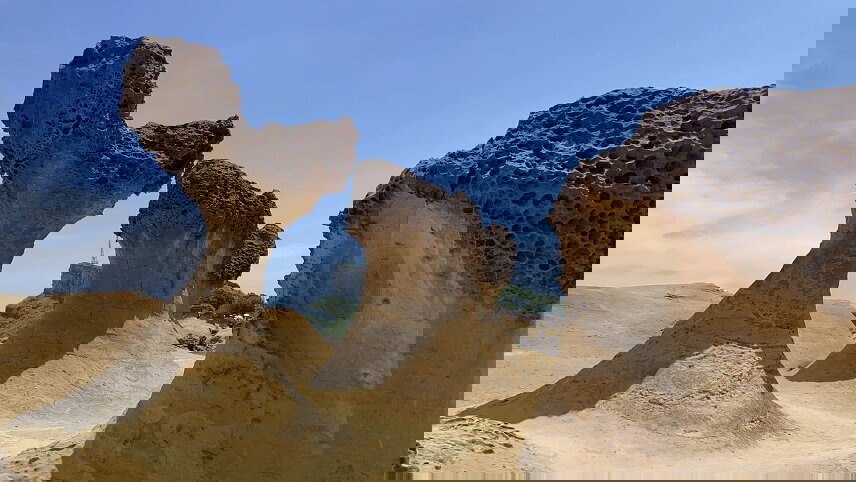
In the afternoon, visit Yehliu Geopark, a headland shaped by thousands of years of wind and wave erosion. The result is a landscape of remarkable rock formations, including the well-known Queen's Head and other sculptural shapes formed by natural forces. Return to Taipei in the late afternoon. The evening is at leisure.
After breakfast, travel from Taipei to Yilan via the Snow Mountain Tunnel. This engineering feat took 15 years to complete and ranks among the longest road tunnels in the world. It links Taipei's Pinglin District with the eastern county of Yilan, cutting through the rugged Snow Mountain range. Yilan is known for its pristine natural environment and fresh mountain water, making it a key agricultural region.
Begin your day with a visit to Wufengqi Waterfall, a scenic area surrounded by forested hills. The short walk to the falls offers peaceful views and passes a nearby church built in a traditional Chinese architectural style.
Continue to the National Center for Traditional Arts, a cultural hub dedicated to preserving Taiwan's folk traditions. Stroll through recreated streets lined with artisan workshops and heritage buildings. The centre showcases traditional music, crafts, toys and performance arts, with scheduled parades held twice daily.
Visit Kavalan Whisky Distillery, one of Taiwan's most celebrated producers. Learn about the distillation process and how local climate conditions influence the flavour of this internationally awarded whisky. The visit concludes with a guided tasting. Return to Taipei in the afternoon. The evening is at leisure.
Depart Taipei after breakfast and travel south to Beipu in Hsinchu County, a region shaped by Hakka migrants from Fujian and Guangdong. The township preserves a blend of traditional Hakka and Minnan architecture, with historic shopfronts, ancestral halls and temples reflecting the layered past of its settlers.
Wander the narrow alleys of Beipu's old street, where encounters with long-time residents reveal stories of migration, community and resilience. Join a hands-on experience preparing traditional Hakka Lei Cha, a ground tea made from roasted sesame, peanuts, grains and green tea. Once ground to a powder, hot water is added to create a hearty, savoury drink that has been part of Hakka life for generations.
Enjoy lunch at a local restaurant before continuing to Taichung, the largest city in central Taiwan. The drive takes approximately 90 minutes. On arrival, visit the Wufeng Lin Family Mansion, one of Taiwan's most prominent examples of traditional residential architecture. Spanning multiple buildings and courtyards, the estate belonged to the influential Lin family and reflects the social structure, craftsmanship and material culture of Qing dynasty Taiwan. Intricate woodwork and decorative elements speak to both status and artistry, offering insight into Taiwan's elite heritage.
Later, explore Fengjia Night Market, the second largest in Taiwan. Known for its variety of street food, fashion and electronics, this bustling night market is a hub of local life. Sample savoury snacks, browse independent boutiques, or simply soak in the vibrant atmosphere. Check in to your hotel, conveniently located within walking distance of the market. The evening is free to relax or continue exploring at your own pace.
After breakfast, travel south to Sun Moon Lake, a scenic drive of approximately 90 minutes. Situated at an elevation of 760 metres, this is Taiwan's largest freshwater lake. Its name refers to the shape of its two halves, with one resembling the sun and the other the moon. Surrounded by forested mountains, the lake is both a natural landmark and a site of deep cultural significance. It has long been home to the Thao Indigenous people and was later popularised as a honeymoon destination.
Begin your day at a local tea plantation to learn about Taiwanese tea and the techniques behind its production. Discover how elevation, soil and climate influence flavour, and explore the role of tea in Chinese traditions and everyday life.
Visit Wenwu Temple, the most prominent temple complex in the region. Located on a hillside with expansive views of the lake, the temple is dedicated to the God of Literature, the God of War and Confucius. Its architectural features reflect both Taoist and Confucian influences, with colourful carvings, ceremonial halls and detailed inscriptions.
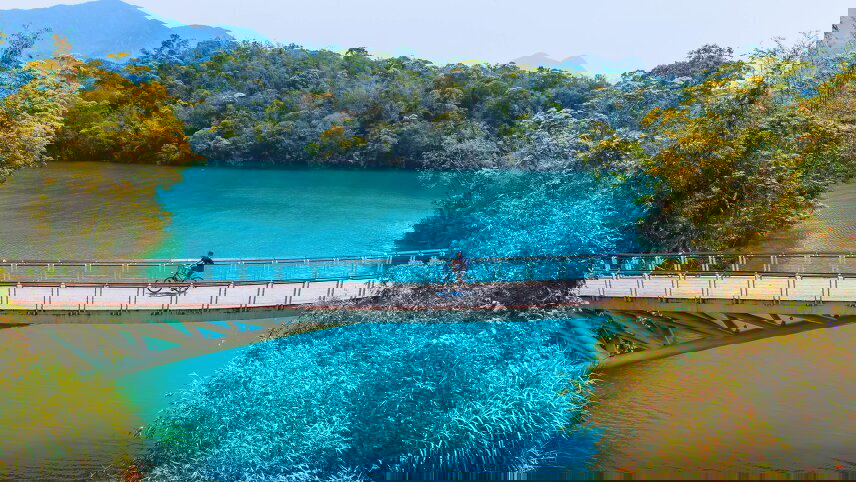
In the afternoon, cycle along the lake's western edge, following a route recognised as one of the world's most scenic. Stop at Longfeng Temple, a place where couples come to receive blessings for love and relationships. Continue on to the Xiangshan Visitor Centre, a striking lakeside structure designed by Japanese architect Dan Morihiko.
On your return, follow the same path back, passing Shuishe Pier and Wenwu Temple once more with panoramic lake views along the way. If preferred, the cycling can be replaced with a shared boat ride across the lake. Check in to your hotel overlooking Sun Moon Lake. The evening is at leisure.
After breakfast, depart Sun Moon Lake and travel to Alishan, one of Taiwan's most celebrated highland regions. Known for its mist-covered peaks, dense bamboo groves, towering red cypress and cedar trees, tea plantations and Indigenous Tsou communities, Alishan offers a striking contrast to the lowlands.
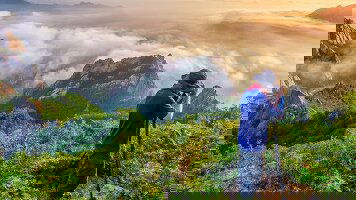
En route, stop at the Cloud Falls Valley Café. From here, take in views across the valley where, on clear days, the sea of clouds drifts between the ridgelines. You may also enjoy a coffee at your own expense while soaking in the highland atmosphere.
Upon arrival, visit the Alishan Forest Recreation Area. Originally developed during the Japanese colonial period for logging, the area is now preserved for recreation and conservation. Board the historic forest train, a narrow-gauge railway originally built to transport timber, and travel through the cool, pine-scented forest.
Spend the afternoon hiking one of Alishan's six marked trails. The recommended Shueishan Giant Tree Trail is ideal for first-time visitors. The route leads through ancient forest past the Sister Ponds and Shouzhen Temple, culminating at the Xianglin Giant Tree. Believed to be over 2,000 years old, this towering tree is often referred to as the second sacred tree of Alishan. The original sacred tree, which stood for over 3,000 years, was lost to natural decay but remains an important symbol of the region's natural heritage.
Enjoy lunch at a local restaurant before continuing deeper into the mountains for a glimpse of Jade Mountain. At 3,952 metres, it is the highest peak in Taiwan and a revered natural icon. Check in to your boutique accommodation surrounded by the mountain wilderness. The evening is at leisure.
After breakfast, check out and depart Alishan. Travel west to Lukang, a journey of approximately 1.5 to 2 hours. Once Taiwan's second-largest port, Lukang thrived as a trade centre during the Qing dynasty. Junks from mainland China arrived here to exchange goods such as cloth and crockery for rice and sugar, leaving behind a legacy of wealth and culture.
Explore the heritage-rich streets of Lukang by tricycle. The town is known for its well-preserved old residences, intricate temples and traditional architecture. Visit Lungshan Temple, a masterpiece of southern Chinese temple design, and Matsu Temple, dedicated to the sea goddess worshipped by fishermen and traders.
Continue south to Tainan, the oldest city in Taiwan and its former capital. Begin in the Anping District, where Dutch colonial forces established Fort Zeelandia between 1624 and 1634. The fortress once formed the stronghold of the Dutch East India Company and played a pivotal role in the island's early colonial history. Stroll along Anping Old Street, a narrow lane filled with traditional food stalls, antique shops and craft stores. The area also holds several hidden temples, tucked between historic merchant houses and residences.
In the afternoon, take a shared boat ride through the mangroves. Observe wild birdlife, visit oyster farms and learn about traditional fishing methods that have sustained local communities for generations. Check in to your hotel in central Tainan. The rest of the evening is at leisure.
Start your day with breakfast then check out and depart Tainan. Begin the day with a visit to Ten Drum Cultural Village, a former sugar refinery transformed into a lively arts complex. Here, experience an energetic drumming performance by professional percussionists and take part in a hands-on session to try your own rhythm on traditional Taiwanese drums. The park blends industrial heritage with creative arts, making it a unique cultural stop.
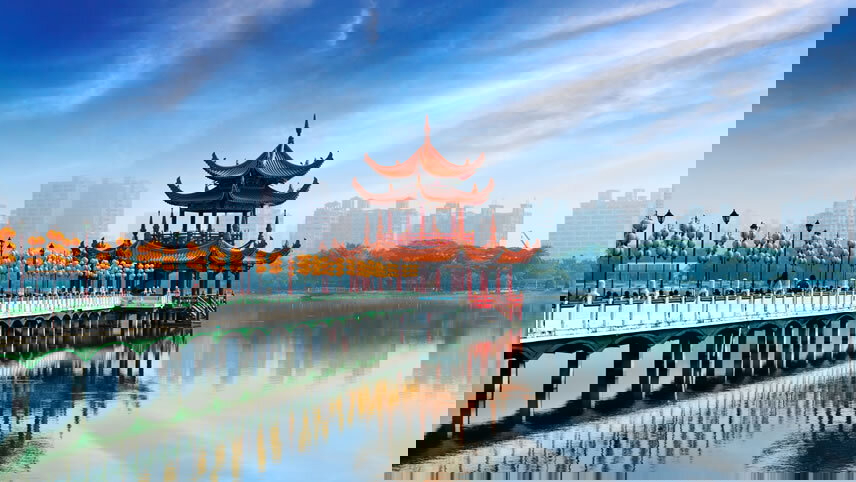
Continue south to Kaohsiung, the largest city in southern Taiwan and an important port with a vibrant urban character. On arrival, explore Lotus Lake, a man-made body of water surrounded by temples and pagodas. Visit the Dragon and Tiger Pagodas, a pair of colourful towers guarded by enormous animal figures. Enter through the dragon's mouth and exit via the tiger to symbolically ward off bad luck. Nearby, the Spring and Autumn Pavilions rise above the water on intricately carved platforms, dedicated to the martial deity Guan Gong.
Later, visit the Fo Guang Shan Buddha Museum, also known as the Buddhist Memorial Hall. Founded by Master Hsing Yun, this spiritual and cultural complex is one of the most important Buddhist centres in Taiwan. Participate in a guided Heart Sutra calligraphy session, then take time to view the 108-metre seated Buddha statue and surrounding pagodas, set within landscaped gardens and courtyards. Check in to your hotel in central Kaohsiung. The rest of the day is at leisure.
After breakfast, check out of your hotel and depart Kaohsiung for the remote mountain village of Wutai. Located at an average altitude of 1,000 metres, Wutai is home to the Rukai people, one of Taiwan's Indigenous communities. Often referred to as the “Home of the Clouds,” the village is known for its dramatic setting, cultural richness and distinctive architecture.
Visit the Wutai Presbyterian Church, a unique structure blending traditional Rukai stone-slab construction with Western ecclesiastical design. Built using local materials and Indigenous craftsmanship, the church is a symbol of the cultural fusion between Christianity and Rukai heritage.
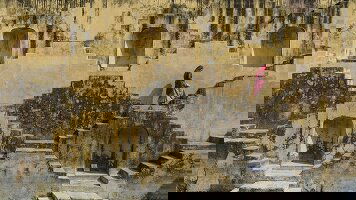
Continue your exploration along Stone Plate Alley, also known as Art Alley. The stone-paved path is lined with houses that double as works of art, decorated with intricate carvings, bone and fang ornaments, and vibrant stone paintings. These expressions of local identity and myth offer a rare insight into the Rukai worldview and lifestyle. A visit here reveals not only the aesthetics of Rukai architecture but also the deep connection between the community and the land.
Enjoy lunch at a local restaurant showcasing Indigenous flavours before returning to Kaohsiung. From Kaohsiung, board the high-speed train to Taipei in economy class. On arrival, transfer to your hotel and check in. The evening is free to relax or explore the city at your own pace.
After breakfast, check out of your hotel and spend the morning visiting a selection of Taipei's cultural landmarks before your transfer to the airport. Begin at Dihua Street in the Dadaocheng district, one of the city's oldest neighbourhoods. Known for its preserved architecture, traditional medicine shops and dry goods stores, this historic area offers a glimpse into daily life during the late Qing dynasty and Japanese colonial period. The nearby traditional market continues to serve locals, offering produce, herbs and handmade goods in an atmosphere that balances nostalgia with urban renewal.
Continue to Chiang Kai-shek Memorial Hall, a prominent monument dedicated to Taiwan's former president. Observe the ceremonial changing of the guard, performed with precision and formality beneath the towering white structure crowned with a blue-tiled octagonal roof. Visit the modern icon of Taipei, the Taipei 101 Tower. Once the world's tallest building, its design blends contemporary engineering with traditional symbolism. Stop for a photo outside the tower. Admission to the observatory deck is not included due to variable weather conditions.
Before leaving the city, make a final stop at Bao'an Temple, a Taoist temple known for its elaborate wood carvings, decorative ceilings and quiet courtyards. It remains an active place of worship and a national historic site.
Enjoy lunch at a renowned dumpling house, either Din Tai Fung or Hangzhou Xiaolongbao House, depending on availability. Both are celebrated for their precision-crafted xiaolongbao and refined takes on traditional Taiwanese cuisine. Transfer to the airport for your onward flight. Farewell Taiwan.
Trip Inclusions
- Eat your way through Taiwan's night markets
- Step back in time exploring Taiwan's ancient villages
- Sip on award winning Taiwanese whiskey
- Explore the stunning 'rice barn' of Taiwan
- Participate in a traditional tea making ceremony
- Wander through one of Taiwan's family mansions
- Meander through alpine forests
- Discover Sun Moon Lake by bike or on foot
- Return airport transfers with English Speaking Guide
- English speaking tour guide and driver's services as described in the itinerary (including all parking & toll fees)
- Private transportation
- 9 night's accommodation including meals as shown
- Entrance fees and tickets as per the itinerary
- One way bullet train from Kaohsiung to Taipei (economy class) and the additional transfer from Taipei Station to the hotel in Taipei (including the guide's bullet train ticket)
- Bottled water per day
- International flights
- Visas
- Travel and medical insurance
- All services, meals other than those indicated above
- Personal porters
- Any changes to the proposed and confirmed program.
- All items of a personal nature e.g. drinks, laundry, telephone calls, tips etc
- Early check in/Late check-out
- Accommodation, itinerary and inclusions subject to change.
- Disruptions to itinerary may occur.
Dates & Pricing
Your Global Journeys Travel Advisor will check the availability of your departure date when you Enquire. Additional savings may apply. T&C’s apply.
Tour & cruises prices are per person. Prices shown have savings applied, are subject to availability and may be withdrawn at any time without notice. Pricing and trip details are correct at this point in time, however are subject to confirmation at the time of booking and are subject to change by Crooked Compass. For cruise itineraries, cabin images are sourced from the cruise-line and should be treated as indicative only. Cabin inclusions, upholsteries and room layout may differ to the image(s) shown depending on the ship selected and your sailing dates.