Jordan & Saudi Arabia Encompassed
Overview

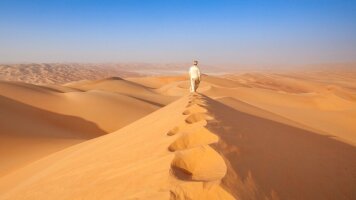
Few regions can boast such a rich combination of heritage, culture and natural beauty. Embrace a sense of openness, vastness and quiet that invites you to wander in this living museum of Arabia. From mazes of dramatic rock formations to rolling, sand-swept dunes to a valley cloaked in palm and citrus groves to millennia-old clues in basalt lava flows, journey through this timeless desert and embrace the warm culture.


Itinerary
Welcome to Jordan! On arrival in Amman, you will be met and transferred to the lowest point on earth, the Dead Sea. Check into your hotel, the rest of the day is at leisure.
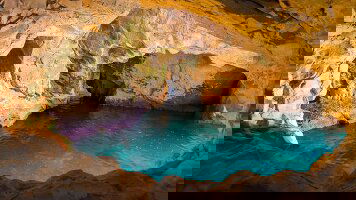
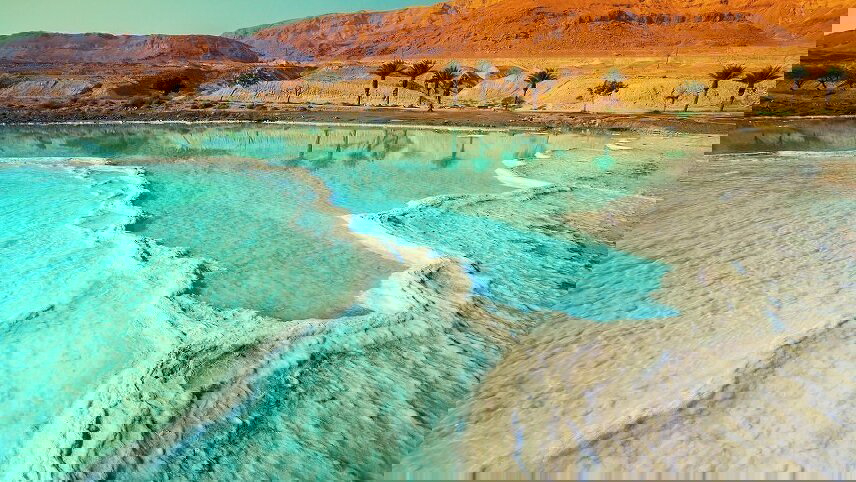
Float on the salty waters of the Dead Sea and cover your body with the dark mud from the shores. Since the days of Herod the Great, people have flocked in search of its curative secrets. The area is characterised by high annual temperatures, low humidity and high atmospheric pressure. The air is extremely oxygen-rich. With the highest content of minerals and salts in the world, the Dead Sea water possesses anti-inflammatory properties, and the dark mud found on its shores has been used for over 2,000 years for therapeutic purposes.
Follow a scenic route towards Petra and make your first stop at the impressive Mt Nebo. Overlooking the Jordan Valley and parts of the Holy Land, Mt Nebo is traditionally believed to be the place where Moses viewed the Promised Land before his death and is also thought to be his burial site.
Next, travel to the town of Madaba. Here, you can admire the famous 6th-century mosaic map of Jerusalem and the Holy Land at St. George's Church. The Archaeological Park also features other notable mosaics worth exploring. Journey along the renowned ancient caravan route known as the King's Way.
Stop for a brief photo opportunity in Wadi Al Mujib, a vast valley with stunning geological formations that mirror the Arnon River of the Hebrew Bible, before continuing to the historical site of the Crusader castle, Kerak. Explore its underground passageways, take in the panoramic views, and imagine the historic sieges by the forces of Salah ad-Din.
Get to know your local guide and set off from Dana Village, as you explore the second largest nature reserve in Jordan. Pass by terraced gardens, walk along dramatic mountains and sweeping valleys with changing colours and spectacular views of Wadi Dana. Your guide will share with you about life in the village, the reserve and its fauna and flora.
Once returning to the village, it is time to head to Little Petra (60km, 1.5hrs), which most likely served as a caravan stopping point en route for Petra. Enter the small site through a narrow gorge, known as Siq Al Barid, to see temples, tombs and water channels carved in the sandstone. One of the caves shows the remains of a Nabatean fresco painting.
This is where many religious activities were held, including the Feast of Drink when the king of the Nabataeans hosted celebrations and provided drinks for his guests. There is also a cave with the remains of a fresco painted by the Nabataeans that represented grape vines, which shows that this was the area for wine production. In the Siq Al Barid, the Nabataean irrigation system, which distributed water through long channels, provides evidence of the greatness of this system with reservoirs carved into the rock and dams. Continue to your hotel in Petra for the evening.
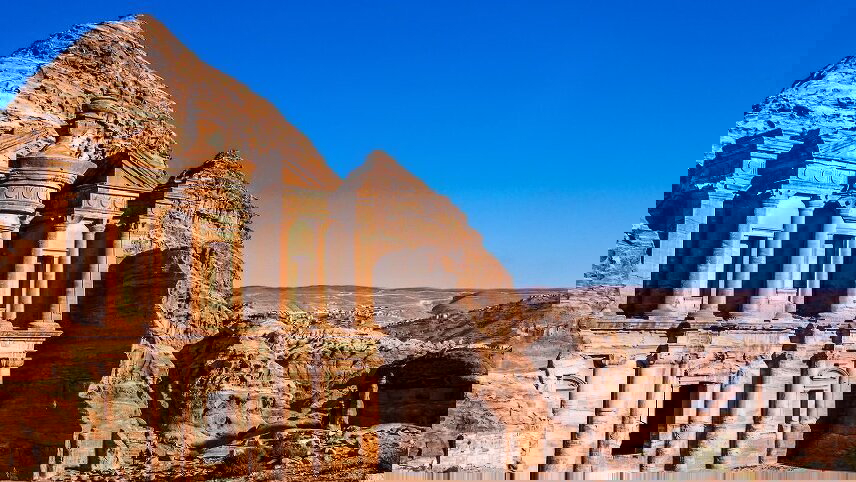
Today is all about exploring Petra on foot! Start your adventure from Little Petra, a former caravan stop featuring smaller sandstone façades. From here, pass the Neolithic village of Beidah and walk across open farmland, gradually ascending into a mountainous area. The path will lead you to the awe-inspiring Monastery El Deir, a 45-metre-high structure carved into the sandstone rock. Take in the magnificent views over the Wadi Araba as you explore this impressive monument and its surroundings.
To complete the hike, descend the 800 stairs to the lower parts of Petra, following the main trail to the main gate. The hike is a moderate grading and typically takes around 4 hours to reach the Monastery. Be aware that there is one exposed section that may pose a challenge for those with a fear of heights.
Set off with your local guide and hike/scramble the Al Madras path to the Treasury Viewpoint (1.2km, 45min hiking). Stand in awe, as you soak in the view below and imagine what it must have been like traversing the desert in the Crusader times. Back on the main trail, pass the narrow canyon, the so-called Siq, with its colourful sandstone. At the end, you will be rewarded with a view of the most beautiful monument, the Treasury.
Continue via the Street of Facades to the Royal Tombs and Pharaoh's Castle. You will have free time to explore Petra on your own this afternoon. For those still feeling active, why not climb the stairs to the High Place of Sacrifice?
Start your day with an early morning drive of two hours to the Al Mudawara Border, where you will cross into Saudi Arabia. Following the border crossing, continue your journey with a four-hour drive to the stunning Wadi Al Dissah.
Upon reaching the valley, enjoy a delicious traditional lunch prepared by our team. After lunch, embark on foot on an exploration of Wadi Al Dissah. This impressive 15 km long canyon runs through the Jebel Qaraqir, a sandstone massif with breathtaking rock formations. The cliffs at the eastern entrance rise over 100 metres, while the tallest cliffs at the western entrance soar up to 500 metres. Admire the dramatic scenery from the massive rocky peaks standing on both sides of the canyon. Take a walking tour inside the valley, where you will encounter water streams and lush vegetation, including palm trees and bushes.
After you explore Wadi Al Dissah, drive to Tabuk (214km,2.5hrs). Upon arrival, check into your hotel and have dinner.
Embark on a scenic 3-hour (310km) drive towards AlUla, where you will delve into the historical treasures between Jabal Ikma and Dedan. Begin your journey in the ancient oasis city of Dedan, formerly known as Lihyan, which served as the capital of two significant Arabian kingdoms in the 1st millennium BCE. The city's strategic location near trade routes led to the discovery of extensive remains of large, fortified cities. Notably, the Lion Tombs, carved into the cliff of Jabal Dedan, are a must-see marvel.
Continue to Jabal Ikmah, renowned for its open library of inscriptions in Aramaic, Dadanitic, and Nabataean. Set amidst a stunning desert landscape, this site provides a fascinating glimpse into the region's rich historical and cultural heritage.
A brief drive will take you to a local palm farm in AlUla. Here, your host will offer insights into the farm's history and its daily operations. Enjoy a tasting session of the local sweet dates and fresh fruit grown on the plantation.
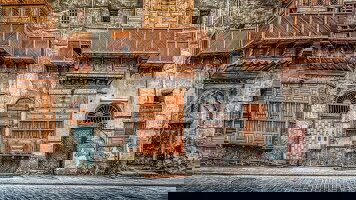
Conclude your tour in the heritage village of Al-Ula, also known as Ad Deerah or Old Town. This traditional Arabian mud-brick village was inhabited for centuries, with origins dating back eight centuries. Positioned on higher ground to avoid seasonal floods, Al-Ula Old Town is a poignant reminder of the past, with recent inhabitation enhancing its significance. Dominated by Musa bin Nusayr Castle, a 10th-century citadel, it offers commanding views of the area.
For the early risers, start your day with an exhilarating hot air balloon ride (not included) over the expansive desert. Alternatively, opt for a 30-minute helicopter flight that offers a bird's-eye view of AlUla's seven most famous landmarks. Your aerial journey will take you over Jabal AlFil, Maraya, Jabal Ikmah, Dadan, and AlUla Old Town, providing a unique perspective of these iconic heritage sites.
If you prefer a more relaxed start, head to Hegra, Saudi Arabia's premier historical site and the country's first UNESCO World Heritage Site. This was the second-largest city of the Nabataean kingdom, with Petra being the capital. Explore 110 tombs adorned with inscriptions, learn about the ancient Nabataean civilisation, and visit Jabal Ithlib, home to a Triclinium (Diwan) used for councils and rituals. Discover the remnants of Roman influence, including defensive walls, gates, and towers.
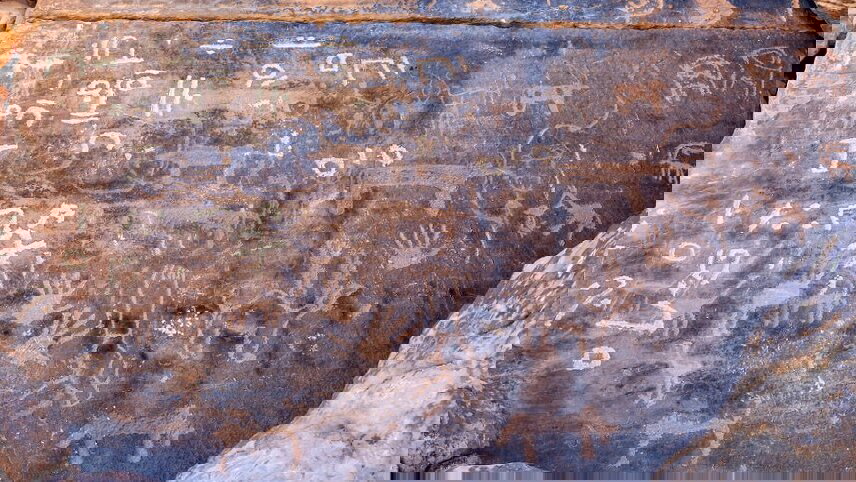
In the afternoon, embark on the Adventure Trail, an 8 km hike through a historical treasure trove. The trail features clusters of pictographs dating back two thousand years, revealing the stories of the region's ancient inhabitants. This hike, taking 3-4 hours (8km) depending on your fitness level, showcases AlUla's rich heritage and stunning natural beauty. Traverse through varied terrains, from volcanic rocks to soft sand, and witness water and air erosion effects that shaped the canyon.
The flat trail, with a gradual elevation drop of 95 meters, is shaded by the canyon's long walls, making it ideal for exploration during hot summer days. Be prepared for knee-deep water ponds in winter months, adding an adventurous element to your hike.
Say goodbye to beautiful Saudi, as you transfer to AlUla Airport for your departure.
Trip Inclusions
- Float in the Dead Sea
- Explore Dana Village, the second-largest nature reserve in Jordan
- Hike from Little Petra to Monastery El Deir
- Walk through Wadi Dissah, a 15 km long sandstone massif with beautiful rock formations
- Discover the oasis city of Dedan, the capital of two old Arabian kingdoms in the 1st millennium BCE
- Wander through AlUla's old town, a traditional Arabian mud brick village
- Admire Madain Saleh, the second largest city of the Nabataean Kingdom after Petra
- Hike the 8km Adventure Trail with clusters of pictographs that are two-thousand years old
- Return airport transfers
- 8 nights of accommodation
- Meals as per the itinerary
- Services of an English speaking local guide
- National Park fees
- Private air-conditioned transportation
- Sightseeing as per the itinerary
- Bottled water
- Entrance fees
- International flights
- Drinks unless otherwise mentioned
- Optional excursions
- Visas
- Travel Insurance
- Tips
- Inoculations
- Items of a personal nature
- Anything not mentioned in the itinerary
- Early check-in/Late check-out
- Accommodation, itinerary and inclusions subject to change.
- Disruptions to itinerary may occur.
Dates & Pricing
Your Global Journeys Travel Advisor will check the availability of your departure date when you Enquire. Additional savings may apply. T&C’s apply.
Tour & cruises prices are per person. Prices shown have savings applied, are subject to availability and may be withdrawn at any time without notice. Pricing and trip details are correct at this point in time, however are subject to confirmation at the time of booking and are subject to change by Crooked Compass. For cruise itineraries, cabin images are sourced from the cruise-line and should be treated as indicative only. Cabin inclusions, upholsteries and room layout may differ to the image(s) shown depending on the ship selected and your sailing dates.