


Itinerary
Overlooking Lake Zürich and spanning the banks of the Limmat River, Switzerland's largest city is often cited as one of Europe's most livable. It is the country's financial heart, but its residents also embrace their natural surroundings, from soaring alpine peaks to the lake's shimmering waters. Zürich is home to a lively and impressive arts culture. The avant-garde Dada movement was born here in 1916 and two of its most important churches boast stained glass windows by Marc Chagall and Augusto Giacometti. More masterworks reside in the city's renowned Kunsthaus, including an enormous water lily painting by Monet.
Zürich offers much more than its reputation as a city of banking institutions. The Grossmünster is one of Zürich's most important landmarks and the center of the Swiss Reformation in the 16th century. Across the river lies Fraumünster, famed for its stained glass windows painted by Marc Chagall. Exclusive designer boutiques line the streets of Storchengasse alongside world-renowned chocolatiers and quaint, cozy cafés. The scent of delicious sweet treats and freshly baked gipfeliwaft through the air on every street corner.
Located where Switzerland, Germany and France meet, Basel reflects a fascinating blend of traditions. The city straddles the Rhine at the river's farthest navigable point, and an alluring cluster of old-town buildings huddles along the riverbank. Around Market Square, guild houses recall Gothic, Renaissance and baroque splendor; the red-sandstone Rathaus, or Town Hall, is the centerpiece. More than 40 museums of art and culture lend modern polish to its history-rich streets. And there is no more refined way to sample it all than over cheese fondue or croissants.
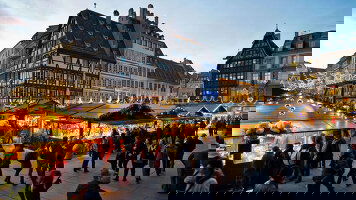
The largest port on the Upper Rhine, Strasbourg is the cultural center of France's Alsace region. Thanks to its location at the border of France and Germany, it boasts a convivial mix of cultural influences. The well-preserved old town is enclosed on all sides by the little Ill River, with sites so compact that it is easy to explore the “island” on foot. And there is plenty to explore: cobblestone streets lined with wooden houses and intersected by picturesque canals. Indulging in Alsatian café culture is central to any visit here; enjoy coffee and cake amid lovely half-timbered houses.
The quiet German town of Speyer lies on the west bank of the Rhine. The city features a Romanesque imperial cathedral, burial place of eight emperors including some of the most famous Holy Roman Emperors. Speyer was once a major Celtic center that traded hands several times between the Romans and the Huns. The term Protestant originated here at the Diet of Speyer in 1529, when 14 free cities of Germany and six Lutheran princes protested the Edict of Worms that had banned the writings of Martin Luther and labeled him a heretic and enemy of the state.
Mainz is part of the Rheinhessen wine region, Germany's largest wine region that is renowned for producing high-quality white wines, such as Riesling. Wine has long played a key role in the city's economy and culture, with numerous wine festivals and events throughout the year, including the Mainzer Weinmarkt and the Mainzer Weinwoche. The city is also home to the renowned Geisenheim University, which offers programs in viticulture and oenology. Mainz's wine culture and history continue to thrive today, with a strong emphasis on sustainability and innovation in winemaking.
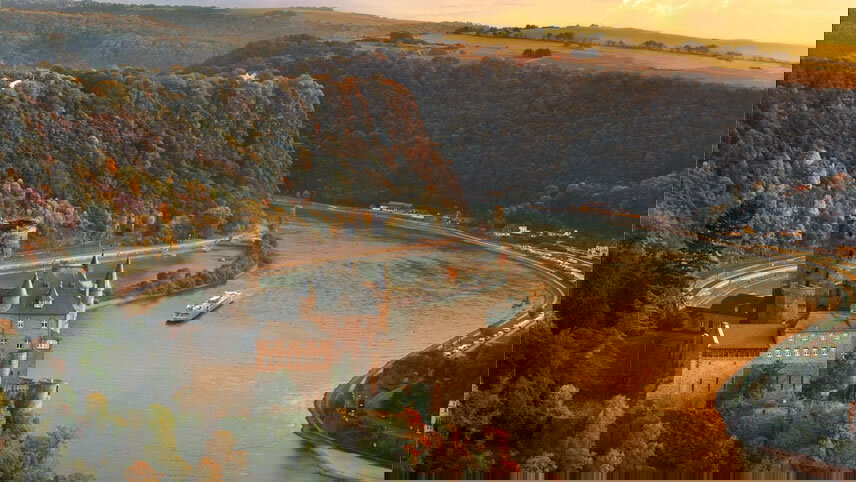
The Rhine River flows through one of Germany's most scenic regions. As you sail its most picturesque stretch, the UNESCO World Heritage Site of the Middle Rhine, you will pass vineyard-blanketed hills whose steep slopes require vintners to pick grapes by hand, keeping a centuries-old tradition alive. Splendid castles line the banks, all of which have stories to share, and the Lorelei Rock presides at a dramatic curve in the river. This infamous river maiden mesmerized sailors with her song and lured them to their demise at her feet.
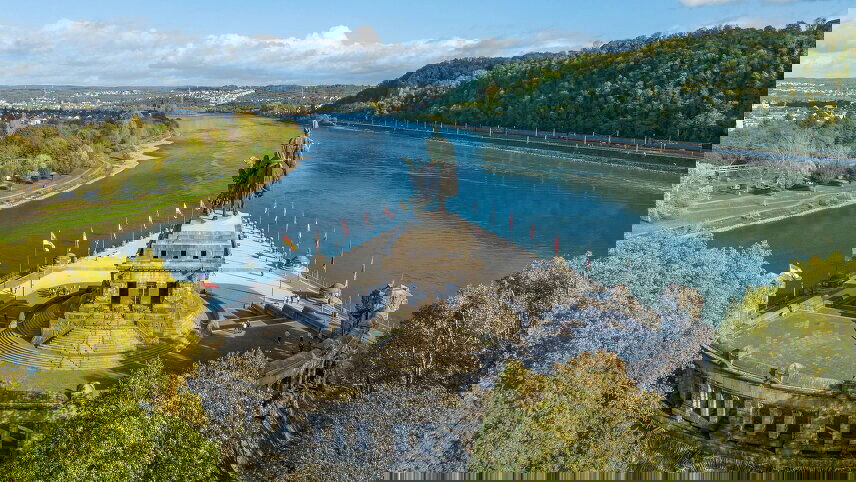
Koblenz is a traditional German city, founded more than 2,000 years ago. This former trading settlement rests on a massif of the Middle Rhine Highlands. Its cobblestone streets, wood-beamed houses adorned with flowers, ancient market square and medieval churches recall the fairy-tale Germany of old. At the German Corner, a massive equestrian statue of Prince William I observes the lovely riverside scene. The famed Teutonic Knights set up their first base here in 1216. The Romanesque Basilica of St. Castor, Koblenz's oldest building, dates to 836.
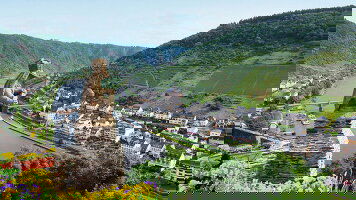
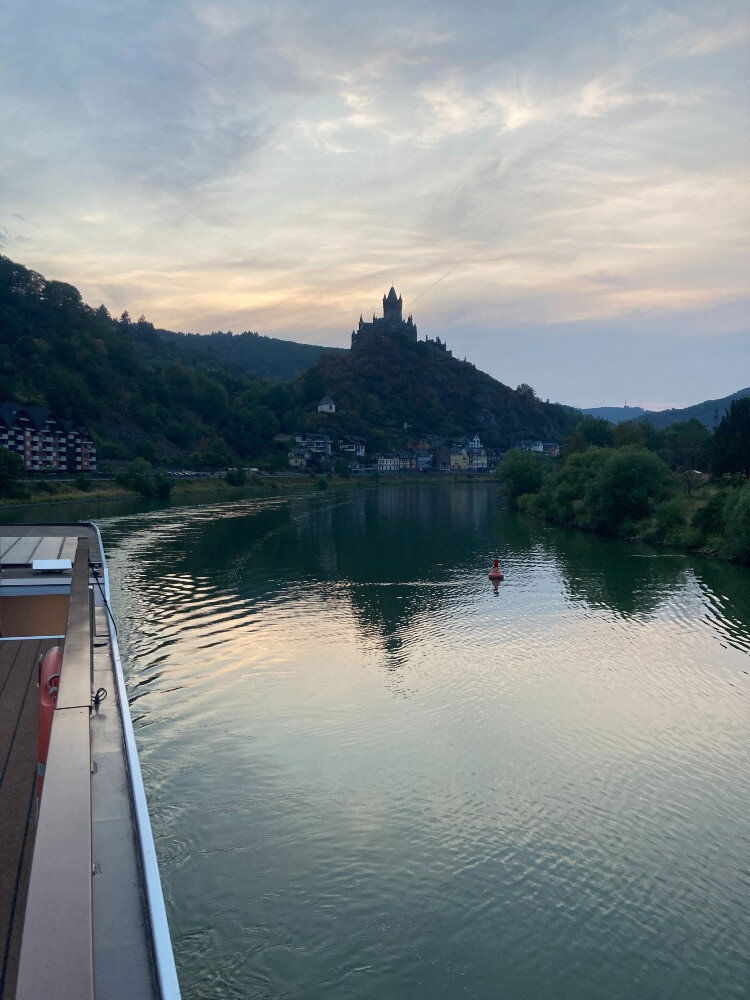
Perched on a hilltop above the city and the Moselle, a 1,000-year-old imperial castle is the signature landmark of Cochem. Its mighty rectangular keep and many small towers strike a dramatic pose against a curtain of green hills. In Cochem's lively Old Quarter, the market square boasts old timber-framed houses that overlook Martin's Fountain and the bay-windowed baroque Town Hall. In this historic center, the 15th-century St. Martin's Church and the Capuchin monastery, which now serves as an artistic and cultural center, are all beautifully preserved. Wine taverns along the river offer a “green wine,” a very young wine.
Nestled between soft rolling hills and the gently flowing Moselle River, Bernkastel, the “Pearl of the Moselle,” boasts medieval squares laden with charming half-timbered houses and inviting lanes and alleys. For much of their history, Bernkastel and its sister town of Kues across the river stood worlds apart. A bridge united them in 1874, paving the way for actual unification in 1905. Today, Bernkastel plays the charming host with history to share, while Kues pours the wine, more attentive to the sweet grapes of its fertile valley. Indeed, the twin towns produce some of Germany's finest vintages.
One of Germany's most treasured cities for its rich history, Trier was once the regional capital of the Holy Roman Empire. After Emperor Constantine the Great had a vision of Christ, he and his mother Helena built great churches and cathedrals here. A few still stand, the magnificent Romanesque Cathedral of Trier among them. The 20,000-seat amphitheater, the Roman Bridge and the massive Porta Nigra, the ancient city gate, are further relics of that time. Today, Trier is a picturesque town surrounded by forests and vineyards, known also as the birthplace of Karl Marx and as a vibrant university town.
Reims lies in the heart of France's renowned Champagne region. A testament to its rich history, which can be traced back to Gallo-Roman times, is its diverse collection of landmarks. Among its most iconic are the Abbey of Saint-Rémi, the final resting place of the archbishop who baptized Frankish king Clovis and initiated Reims's long line of coronations; the Palace of Tau, an archiepiscopal residence constructed in the Middle Ages; and Reims Cathedral, where 25 kings of France were coronated. These three monuments were collectively inscribed as a UNESCO World Heritage Site in 1991.
Long a hub of French culture and cuisine, Paris is one of the most romantic destinations in the world. Over the centuries, Parisian culture has been built on the wings of inspiration. Music, film, architecture, literature, dance and the visual arts all have their brilliant place in the museums, theaters, bookstores and remarkably preserved buildings of this magnificent city. At the center of it all is the Champs-Élysées. With its inviting riverside promenade, graceful bridges and splendid views of all things Parisian, from the Eiffel Tower to the Louvre Museum.
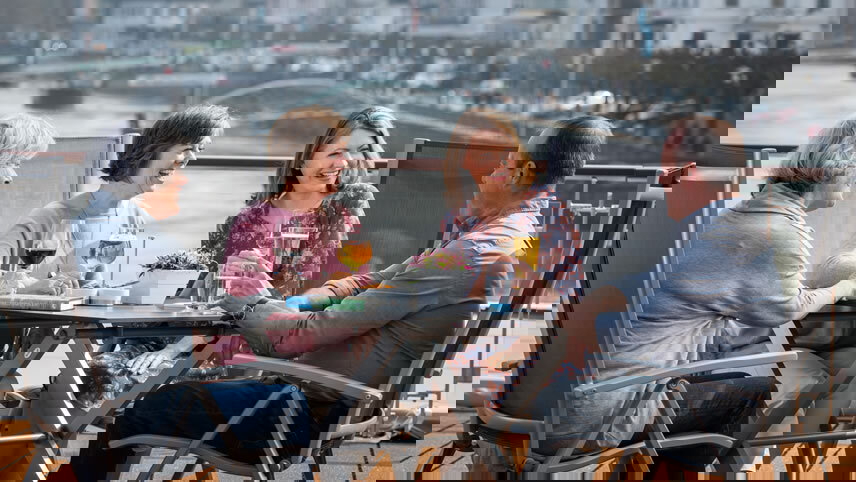
One of the most pleasurable activities in Paris is whiling away the time in one of the city's outdoor cafés. Whether you are sipping a café au lait or a kir royal, there is no better way to feel like a Parisian. The hub of social and culinary life, cafés have been part of the city's fabric since the 1600s. During the 20th century, literary and artistic figures—such as Ernest Hemingway, Colette and Pablo Picasso—famously met over drinks to share their works and ideas. Today, thousands of cafés line the pavements and squares to connect with France's culture and history.
Bid farewell to your fellow guests and journey home. Or spend more time exploring, perhaps joining one of our extensions.
Life On Board
Viking's award-winning Longships® showcase innovative engineering, streamlined Scandinavian design and understated elegance. Read more
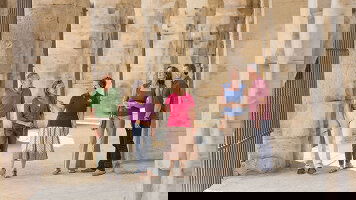
Every aspect of your Viking cruise is designed for the curious traveler seeking rich cultural immersion. Read more
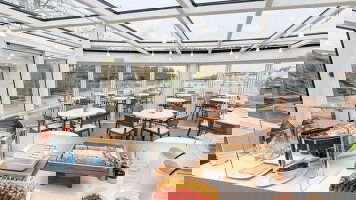
Elegant, light-filled ships thoughtfully designed to connect you to your destination. Read more
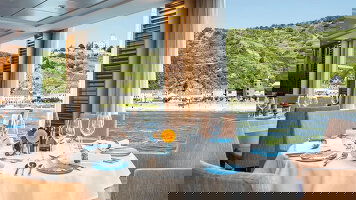
From relaxed, multi-course fine-dining to casual meals on the Aquavit Terrace. Read more
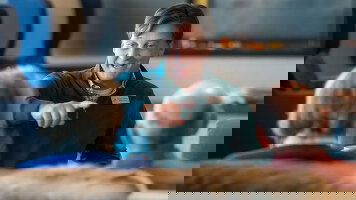
Viking proudly includes all that you need and nothing you do not and your river cruise fare. Read more
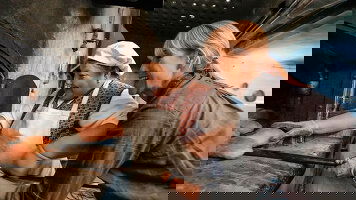
Viking offer behind-the-scenes insights and opportunities that set them apart from other travel companies. Read more
River Cruise Reviews (2)
Download Brochure

Viking River Voyages (2026-28)
Dates & Pricing
Viking Explorer Society
GJ Loyalty Discount
Cabin Layout Options:
Select Cabin Preference:
Tour & cruises prices are per person. Prices shown have savings applied, are subject to availability and may be withdrawn at any time without notice. Pricing and trip details are correct at this point in time, however are subject to confirmation at the time of booking and are subject to change by Viking. For cruise itineraries, cabin images are sourced from the cruise-line and should be treated as indicative only. Cabin inclusions, upholsteries and room layout may differ to the image(s) shown depending on the ship selected and your sailing dates.
Similar River Cruises