Overview



Itinerary
Our trip begins at Malta International Airport (MLA). There will be two complimentary transfers from the airport today, one at 12.30pm and one at 5.00pm. If you'd like to join the first departure, the latest your flight can arrive is 11.45am and if you plan to join the 5.00pm transfer, the latest your flight can arrive is 4.15pm. We'll book you on the transfer which is closest to your flight arrival time, however, if you're arriving early and would prefer to join the 5.00pm transfer, please inform us at the time of booking. We'll travel from the airport to our hotel as a group, driving for one hour to Cirkewwa where we'll catch a 25-minute ferry to the island. It's then a short 15-minute drive to our hotel. This evening, there'll be the opportunity to go for dinner as a group and our tour leader will lead a welcome meeting at the restaurant. Located in the Maltese archipelago and surrounded by the azure Mediterranean Sea, Gozo is a picturesque spot to get to grips with island life. Only 15 kilometres in length and seven kilometres wide, it's incredibly easily accessible, with stunning scenery stretching from coast to coast. The island's history weaves back through the Romans and Phoenicians and remnants from its rich past are scattered across it today - we'll spend the next week digging deeper.
Known locally as Rabat, Gozo's capital was renamed Victoria in 1887 in honour of Queen Victoria. We'll climb up to the city's imposing Citadel for a bird's eye view across the island before continuing to the old prison, where the Knights of Saint John once sent their rowdier members to cool off. The graffitied walls give a fascinating insight into the lives of those who were incarcerated here. Descending to the central square, It-Tokk, we'll have time to wander the cobweb of narrow streets and grab some lunch. After lunch, we'll head to the town of Xaghra to discover Ggantija - a megalithic temple complex dating back to around 3600 BC, making it older than Stonehenge and the Egyptian pyramids. Ggantija takes its name from the Maltese word for “giant”, based on the long-held belief that only giants could have moved the stones. Some of the colossal rocks measure over five meters long and weigh over 20 tons - the temple itself reaches up to seven metres tall. Predating the Pyramids, the UNESCO World Heritage Site is believed to be the world's oldest free-standing structure. Once we've marvelled at the stone temple, we'll continue to Tal-Mixta Cave is a natural cliffside cave located on the eastern headland of Ramla Bay on the island of Gozo, famous for its large rock opening that frames panoramic views of the red-sand beach and the Mediterranean Sea This afternoon we'll take a short drive from the Ta` Mixta Cave to Ramla Bay where we can enjoy a refreshing swim at the beautiful red sandy beach, if the weather permits, before heading back to the hotel. Please note that the Maltese bird hunting season runs from September until the end of January and during these months hunting activity may regrettably be seen on some of our excursions into rural areas of Gozo and Malta.
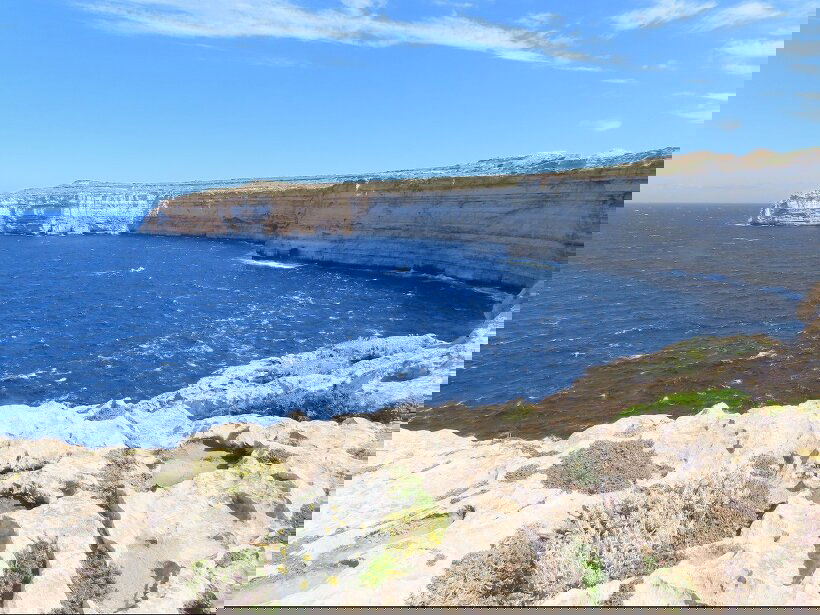
Today, we'll take in the landscape of Dwejra, perhaps Gozo's most spectacular natural landmark. Here, geology, time and the sea have combined to produce some of the island’s most remarkable scenery. We'll see Fungus Rock, named after the so-called “Maltese fungus”, which is in fact a rare parasitic plant, once prized by the Knights of Saint John for its medicinal properties. You'll then have the option to take a boat ride along the coast from the Inland Sea (weather permitting), a shallow inland lagoon linked to the sea via a 30-metre tunnel. From Zebbug, we'll take a walk to nearby Xwejni Bay. The coastal scenery along the way is varied - at times, we'll pass limestone outcrops sculpted into unusual shapes by the wind and sea, where traditional salt pans dominate the view. This section of the coast is one of the most remote and rugged on the island and our walk will be relatively steep downhill. Weather permitting, we might have the chance to swim before we return to the seaside resort of Marsalforn, our chosen location for lunch. This afternoon, we'll head back to Mgarr via Nadur for a brief photo stop of Comino and the Blue Lagoon before catching the ferry to Malta. Once we arrive, we’ll transfer to our hotel situated northwest of the capital in Sliema – which is home to a great range of local restaurants and bars. The capital stretches west from Valletta along scenic bays with busy marinas.
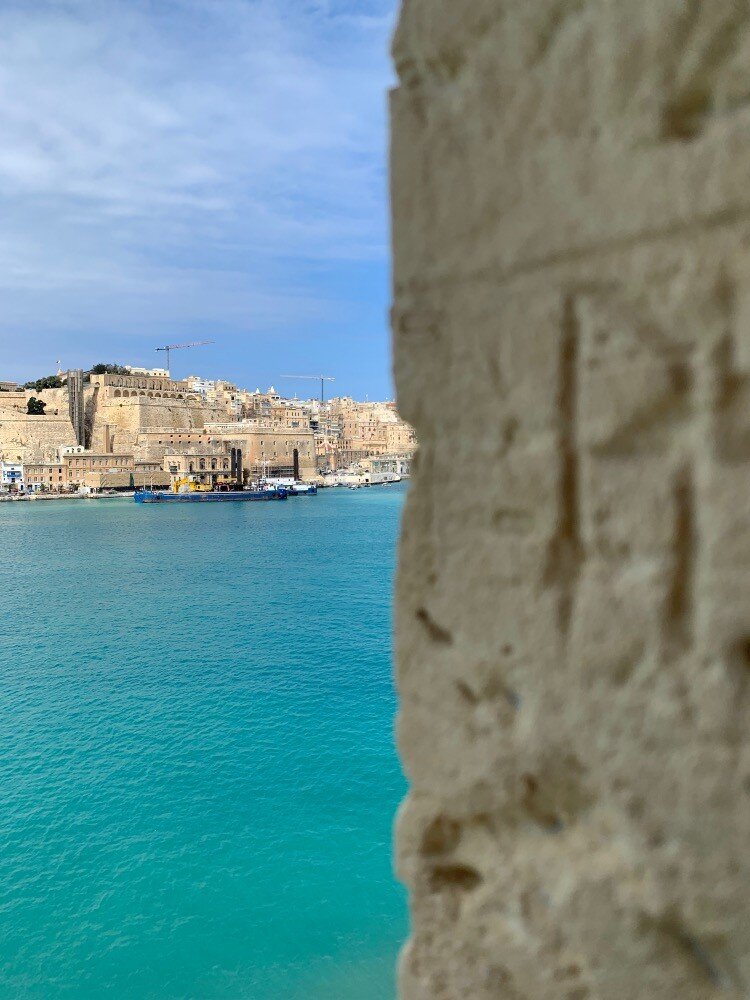
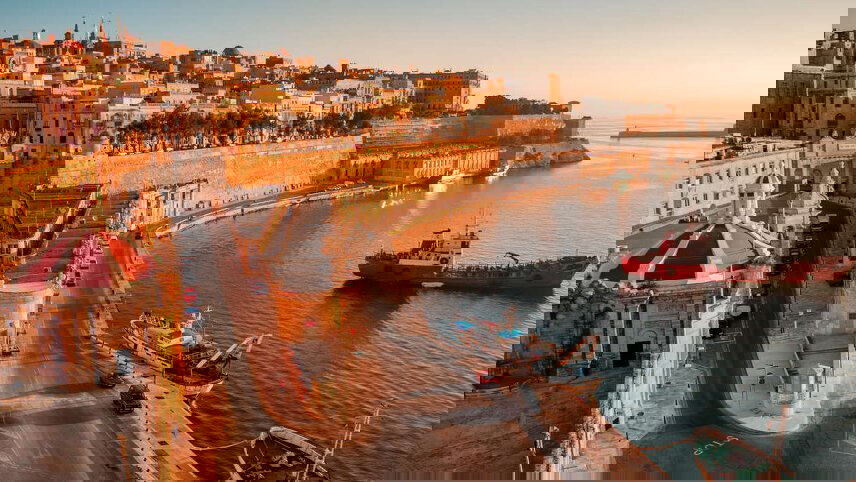
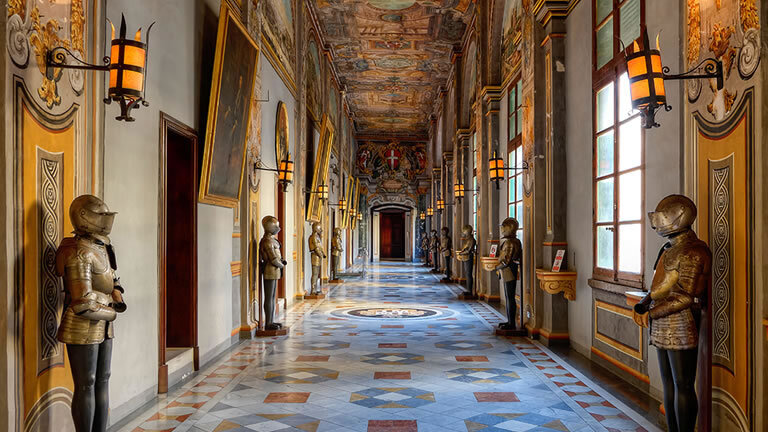
This morning, we'll drive from the hotel to the fortified Old City, where we'll have a walking tour. Originally built by the Knights of the Order of Saint John in the 16th Century, Valletta, a UNESCO World Heritage Site, is built on the steep slopes of the Sceberas Peninsula. It's surrounded by two huge natural harbours which have helped to make it such an important strategic port at the crossroads of the Mediterranean. Fort Saint Elmo guards the entrance to the harbours. Walking down Triq ir Republika - the main thoroughfare in the centre of the city, we'll visit the elaborately decorated Saint John's Co-Cathedral and the Grandmaster`s Palace State Rooms. During the Great Siege of Malta in 1565, over 400 knights perished and as a sign of remembrance, the floor of St John's Co-Cathedral is covered in skeleton tombstones. We'll also admire the views across the Grand Harbour from the Upper Barrakka Gardens. The afternoon is free for you to explore more at your own pace.
This morning, we'll visit the historic Three Cities of Senglea, Vittoriosa and Cospicua, considered to be 'the cradle of Maltese history' as settlers and rulers from the Phoenicians to the British all made use of the defences here. The Knights of the Order of Saint John settled in Vittoriosa in 1530 and used the city as their headquarters. The Three Cities have retained much of their romantic medieval charm, and we'll see the Inquisitor's Palace in Vittoriosa and admire the views from the Gardjola Gardens - a lookout post to guard the harbour entrance - in Senglea. Driving on to Marsaxlokk, we'll have some free time for lunch and exploration. This charming town is Malta's largest fishing port, and the harbour is littered with colourful boats and excellent fish restaurants. The best way to explore the creeks and dockyards in this area is by boat, so, after lunch, we'll transfer to Sliema for a harbour cruise. Only by travelling across the water can you appreciate the sheer magnitude of the ramparts and forts that protect the city.
A short drive this morning brings us to Hagar Qim and Mnajdra; another remarkable megalithic temple complex and UNESCO World Heritage Site. Between around 3600 to 3200 BC, the Maltese archipelago was home to a unique, temple-building civilisation found nowhere else in the world. Numerous statuettes have been discovered in the vicinity of Hagar Qim – often interpreted as fertility symbols, has shown to the site may have been associated with goddess worship, often referred to as the “Venus of Malta” or “the sleeping goddess”. Mnajdra is often considered the most atmospheric of all of Malta's temples, occupying an isolated position overlooking the rocky coastline. We'll walk between the two temple groups along a short, well-laid path before continuing a little further along a rough country path to the 17th-century Tal Hamrija coastal tower, where we’ll enjoy breathtaking views as the cliffs rise out of the blue Mediterranean Sea. We'll return to our bus and drive down to the Blue Grotto where there’ll be the opportunity to take a boat trip (weather permitting) to explore a series of natural caverns, their waters glowing with corals and sea sponges. In the afternoon, we’ll sample a range of local food specialities on a visit to a family-run farm. The family have been farming here for many years, and we’ll take a short walk to the greenhouses before visiting the wine cellar to get a real taste of Malta’s culture and agricultural traditions. Along the way, we'll learn how sun-dried tomatoes and local wine is produced before sampling these alongside a selection of seasonal vegetables farmed in the region, traditional Maltese bread and locally-pressed olive oil.
We'll start today with a short transfer to Malta's Medieval old capital, Mdina, where we'll have a walking tour of the preserved city. Its warren of winding, narrow alleys and fortified walls contain a number of impressive buildings such as the Palazzo Falzon and the cathedral dedicated to the Conversion of Saint Paul. We'll also take time to see Domus Romana (a townhouse usually belonging to Roman dignitaries) and Saint Paul's eerie catacombs (underground). After we visit Mdina, we'll drive to Mosta Dome and San Anton Botanical Gardens, the private residence of the President of Malta
Our trip ends after breakfast this morning at our hotel in Sliema. There are no activities planned today, so you're free to depart from Sliema at any time. If your flight is departing later in the day luggage storage facilities are available at our hotel. If you'd like an airport transfer today, you'll need to depart from Malta International Airport (MLA), which is about a 35-minute drive from our hotel.
Trip Inclusions
- Discover Gozo - Get to know Malta's unspoilt sister island, from the capital, Victoria, to the rocky coastline. Explore Valletta - Delve into the history of Malta's scenic capital, admiring fortifications, churches and the bustling Grand Harbour. Tour the temples - Visit the oldest freestanding structures in the world, the UNESCO-Listed temples of Ggantija, Hagar Qim and Mnajdra. Fancy visiting Sicily, too? - This trip can be combined with our Classical Sicily tour (code: MLAS) to make a two-week island adventure.
- Moderate pace tours are ideal if you want a holiday which combines exciting activities and experiences with plenty of time to relax and unwind. Typically you'll be active and busy for part of the day but then also have time to rest and recharge your batteries.
- Accommodation, itinerary and inclusions subject to change.
- Price is for land, cruise and internal flights as specified. Flights not specified are not included
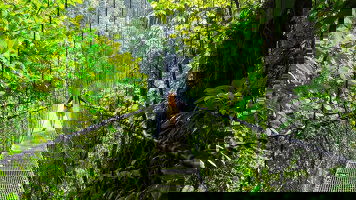
Launching in 1981, Explore Worldwide offer trips from over 130 countries - from classic small group tours. Read more

Explore's leaders are more than just your typical guide. They're your local expert are are passionate about sharing their expertise with you. Read more
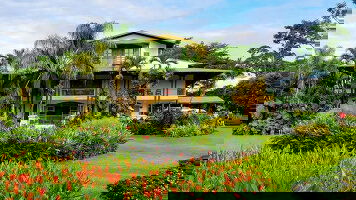
The places Explore stay are every bit as important as the sights they visit and the things you do. Read more
Trip Reviews (4)
The program was comprehensive and well paced and it allowed time for us to enjoy the delights of the local foods, and to relax and socialise with the rest of the group. The megalithic temples of Gozo and Malta were astounding and so well preserved. And the tour finished on what was a highlight for me - the old city of Mdina!
The accommodation was comfortable and we had the beach and restaurants close by. Excellent locations. Thanks for a delightful experience.
A guide was produced at 10 am who also did not want to be there, our entire ‘tour’ of Valletta took 2 hours only and then we were told to take the local bus home as the tour bus was leaving at 1pm!! After the complaint was made to the UK office, the next 3 days we had marvellous guides and the best driver ever who virtually saved the trip from total disaster. The accommodation was 3 star at best, however, was clean and breakfast provided. The group was made up of people from USA, UK and AUS. We all rubbed along quite well. From this experience, I have also emailed the UK head office with a more detailed description of the total lack of communication and attitude from the local Maltese office. Would I go on another Explore trip…. I would really have to think about it but at the moment, no.

Download Brochure

Explore Worldwide Small Group Adventures (2026-27)
Dates & Pricing
A definite departure means minimum numbers have been reached for this departure to operate. Your Global Journeys Travel Advisor will check the availability of your departure date when you Enquire. Additional savings may apply. T&C’s apply.
Tour & cruises prices are per person. Prices shown have savings applied, are subject to availability and may be withdrawn at any time without notice. Pricing and trip details are correct at this point in time, however are subject to confirmation at the time of booking and are subject to change by Explore. For cruise itineraries, cabin images are sourced from the cruise-line and should be treated as indicative only. Cabin inclusions, upholsteries and room layout may differ to the image(s) shown depending on the ship selected and your sailing dates.