


Itinerary
Avignon's narrow streets are lined with churches and remarkable medieval buildings. This “City of Popes” was the papal seat for 70 years during the 14th century after the sitting pope abandoned Rome and fled here. The massive church-fortress Palais des Papes, or Palace of the Popes, was the center of the Christian world during that controversial period. It remains a work of Gothic splendor. Another of Avignon's notable structures reaches into the Rhône, the ruins of the Pont d'Avignon. The 12th-century bridge, immortalized in folk song and dance, once spanned the river.
In the last days of the Roman Empire, Arles was the capital of Roman Gaul and boasts many Gallo-Roman ruins including Les Arènes; this ancient amphitheater seats 20,000 and is still used today for bullfights and plays. The town has an energetic feel, attracting farmers from the countryside to the frequent and famous Provençal market. It also enjoys a rich artistic heritage; the Mediterranean sunlight here inspired legendary Impressionist Vincent van Gogh to paint a number of works. Many of Arles's sights are immortalized in his paintings.
When the Catholic Church acquired Avignon during the 1300s, it quickly transformed the quiet riverside village into a major religious and cultural center. Evidence of the makeover is everywhere. In addition to the enormous palace, the church constructed a wall around Avignon and provided mansion-like residences to its cardinals. Avignon Cathedral was dwarfed by its neighbor, the Palace of the Popes. Centuries after the papacy returned to Rome, the Vatican called for a gilded statue of Mary to be placed atop the cathedral; her golden gaze still welcomes visitors today.
The sleepy town of Viviers was founded during the 5th century. This former Roman settlement became a bishop's seat, and conflicts during ensuing centuries required the town to be fortified. With the Renaissance came a more stable period of wealth that allowed many new houses to be built, including a fine example of the era that still stands, the Maison des Chevaliers. Some buildings date back to the Middle Ages, and time seems to stand still along the cobblestone streets of its Old Town, dominated by the 12th-century St. Vincent Cathedral with its beautiful windows.
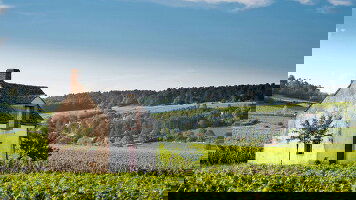
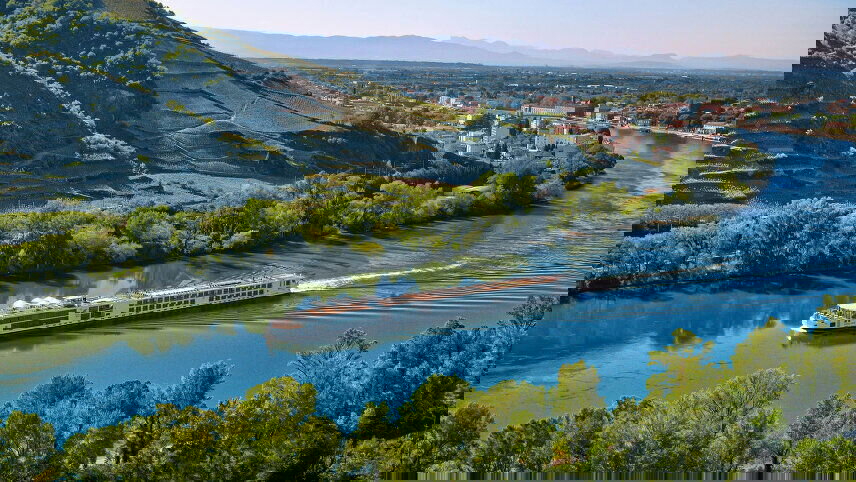
Tournon lies secluded between the river and the vineyard-blanketed granite slopes that nurture fine vintages. An ancient castle, built snugly into a rock, overlooks the riverside setting. A settlement has perched on this hill since Celtic times, but the stunning views from its overlook have never changed. The name of its neighboring wine-producing region, Tain-l'Hermitage, comes from the hermit who planted vines here after returning from the Crusades. Today, his vines are awash in sunshine and produce a port-like wine and some stellar whites.
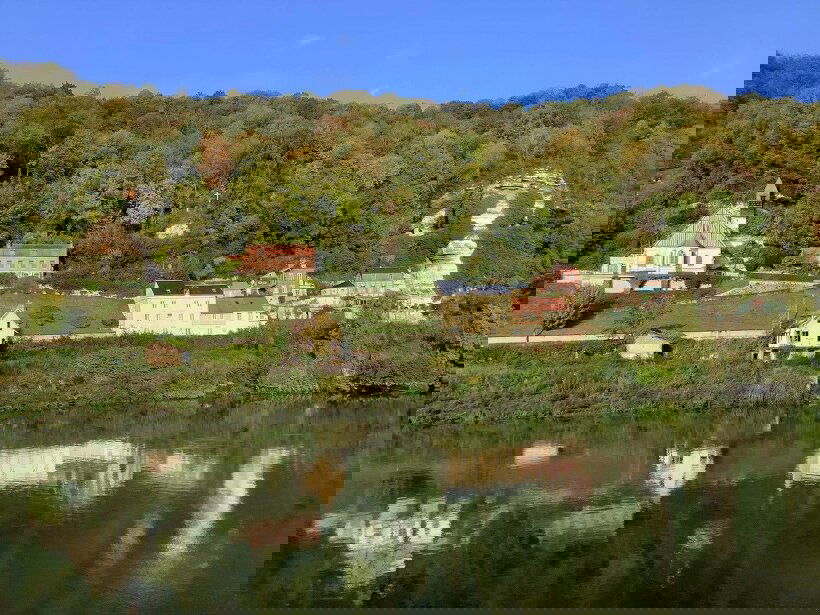
The lure of fine cuisine, charming villages and breathtaking vistas is never-ending along the Rhône River. Journey along this graceful waterway, meandering past vine-clad banks, and incredibly preserved echoes of medieval times and the days of the Roman Empire. The several locks through which the ship passes have helped to tame its waters, once unnavigable because of rapids, shallows and whirlpools. Today, a voyage along this stretch is a pleasant, gentle experience, surrounded by the hills and soaring mountains of the Rhône Valley.
Situated in France's Côtes du Rhône region, Vienne is the gateway to Lyon's countryside. It is one of the oldest towns in France, with a history that can be traced through its architecture. Among its Roman remains and artifacts, the Roman Temple of Augustus & Livia dates back to the 1st century AD. Its Roman amphitheater, nestled in the hills of Mont Pipet, is one of the best preserved in the nation. Vienne also boasts remarkably preserved medieval buildings and market ruins. Other landmarks include the Abbey of Saint Pierre and the Church of Saint-André-le-Bas.
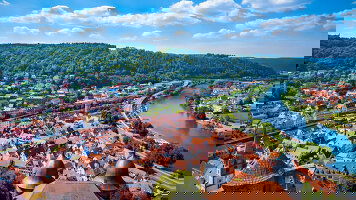
Lyon straddles the Rhône and Saône Rivers. After Paris, it is considered the country's most significant cultural center. Amid a cityscape of red-roofed buildings, tree-lined boulevards and riverside promenades, the cobblestone streets of Old Lyon host a rich collection of Renaissance architecture and intimate traboules, unique passageways through buildings that connect adjacent streets, all of it overlooked by the grand basilica atop Fourvière Hill. The city also boasts a wealth of outstanding museums, cultural treasures and excellent Lyonnaise eateries.
Lyon is known as the food capital of France. It is not uncommon for well-heeled Parisians to travel to Lyon for dinner. The city is surrounded by towns and villages that produce excellent fresh produce, and gastronomic outlets are plentiful here. The great chefs of Lyon enjoy celebrity status, whether they prepare classic recipes the traditional way or elevate them with their own signature touches. Their delicious meals may be paired with a glass of light, fruity Beaujolais from the north or a bold Rhône red from the south.
One of Europe's densest concentrations of urban Renaissance buildings, Old Lyon is pure pleasure to explore. The dwellings of this UNESCO site date back to the city's silk weaving success during the 15th century, when Italian merchants and bankers put their profits into building town houses; today some of their elegant residences house museums. St. Jean Cathedral lies in the heart of Old Lyon and is a stunning example of Romanesque and Gothic architecture. It has weathered periods of political turmoil and religious wars and is now one of the city's most prominent symbols.
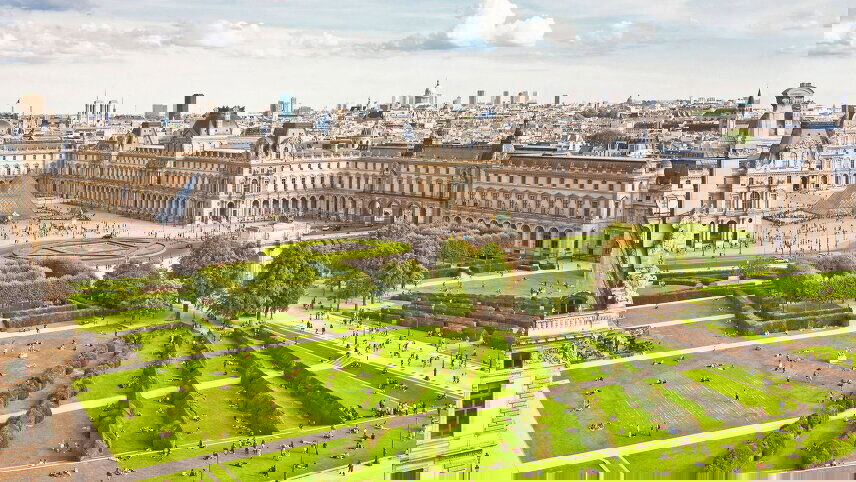
Long a hub of French culture and cuisine, Paris is one of the most romantic destinations in the world. Over the centuries, Parisian culture has been built on the wings of inspiration. Music, film, architecture, literature, dance and the visual arts all have their brilliant place in the museums, theaters, bookstores and remarkably preserved buildings of this magnificent city. At the center of it all is the Champs-Élysées. With its inviting riverside promenade, graceful bridges and splendid views of all things Parisian, from the Eiffel Tower to the Louvre Museum.
One of the most pleasurable activities in Paris is whiling away the time in one of the city's outdoor cafés. Whether you are sipping a café au lait or a kir royal, there is no better way to feel like a Parisian. The hub of social and culinary life, cafés have been part of the city's fabric since the 1600s. During the 20th century, literary and artistic figures—such as Ernest Hemingway, Colette and Pablo Picasso—famously met over drinks to share their works and ideas. Today, thousands of cafés line the pavements and squares to connect with France's culture and history.
The picturesque village of La Roche-Guyon lies within the verdant Vexin Français Regional Nature Park, bound between the meandering Seine River and a striking wall of white chalk. This idyllic setting is home to a number of historic monuments, including a 15th-century church dedicated to St. Samson; a 16th-century salt store; a public fountain presented to the village in 1742; and the town hall, inaugurated in 1847. The beguiling 12th-century Château de La Roche-Guyon, however, is undoubtedly the village's most emblematic landmark, once capturing the attention of poet Victor Hugo, impressionist Claude Monet and composer Joseph Kosma, among many others. The castle and its breathtaking surroundings still mesmerize all who visit it.
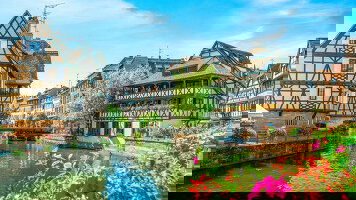
Vernon is a charming provincial town. Its cobblestone streets are reminiscent of the Middle Ages, and some of its half-timbered houses feature magnificent wooden carvings. The town was founded by the Viking Rollo in the 9th century, where an island in the Seine made for easy crossings. Because of its importance as a transit point between Paris and Rouen, the town was well fortified and frequently besieged. Ruins of its old medieval bridge still linger on the Seine's right bank. The remains of La Château des Tourelles are the last surviving witness to that era.
The Seine meanders through the mellow vistas of Normandy. As it makes its sleepy and serpentine way to the English Channel, it winds along for 240 miles from Paris, more than doubling the distance of a crow's flight. As you sail, swathes of fields unfurl toward groves of apple orchards, sources of the region's famed Normandy cider. Calvados apple brandy is also a regional specialty, and a celebrated staple ingredient in Normandy cuisine. You will also gaze upon picturesque villages and historic abbeys on these bucolic banks.
Founded by Romans, Rouen is situated amid chalk cliffs along the Seine. The Norman capital boasts many pleasures, from the 700 charming half-timbered houses of the Old Town to the glorious Rouen Cathedral, which so captivated Claude Monet that he painted it many times in varying light. Until the 17th century, Rouen was the second-largest city in France. Today, it is the country's fourth-largest port. The city is perhaps best known as the site of Joan of Arc's last stand; the patron saint of France was tried and condemned here for heresy and burned at the stake in 1431.
History focused its sights along the coast of Normandy, France—notably Omaha, Juno and Gold Beaches—on the early morning of June 6, 1944, as American, Canadian and British troops made landfall in their first European incursion during World War II. The entire operation was termed Operation Overlord, the code name for the invasion of Normandy. The remains of the concrete structures and steel causeway of Mulberry Harbor, built by the British, can still be seen on the beach near the village of Arromanches. The Arromanches Debarkment D-Day Museum presents animated 3D scale models to help visitors grasp this exceptional harbor and its contribution to the battle—considered perhaps the single greatest innovation that ensured victory for the Allies.
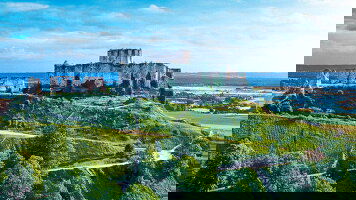
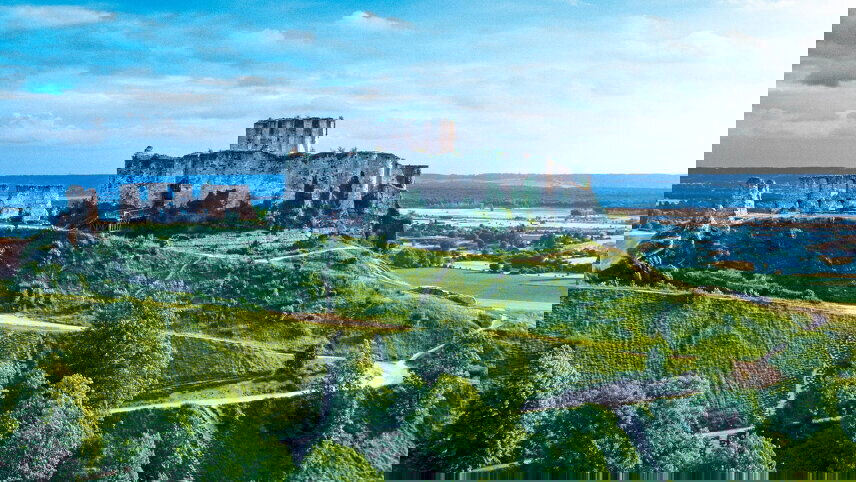
Les Andelys is best known for its imposing castle overlooking the city, the Château Gaillard. Built in 1196 by Richard the Lionheart, the castle and the village's strategic location bolstered the importance of Les Andelys throughout the Middle Ages. The town also gained notice for its Sainte Clotilde Miraculous Spring, where the wife of the first Frankish king, Clovis, turned well water into wine to serve the builders of her Benedictine monastery. Europe's devout, upon hearing of the act, flocked here on pilgrimages until the end of the 19th century.
The origins of Paris can be traced back to a Gallic settlement founded during the 3rd century BC. By the time Napoleon III established the Second Empire during the mid-19th century, it had expanded into a large city and was in need of a major transformation. What transpired was a division of Paris into 20 arrondissements, starting at the Île de la Cité and spiraling out in a consecutive numerical order—the city's present design. From the lively jazz bars of the Latin Quarter to the steep, ivy-clad streets of Montmartre, these charming districts are a delight to explore.
Life in Paris revolves around the Seine River, with 37 bridges crossing the river, each telling a story. Perhaps none are so extravagant as the Pont Alexandre III, a graceful span named for the Russian tsar who signed the Franco-Russian Alliance in 1892. Downriver, the five-arched Pont d'Iéna is beloved for its scenic location linking the Eiffel Tower to the Trocadéro district. The Pont des Arts, set between the Louvre and the Institut de France, was famed for its thousands of padlocks, attached by couples to the railing grate as a sign of their devotion to each other.
Bid farewell to your fellow guests and journey home. Or spend more time exploring, perhaps joining one of our extensions.
Life On Board
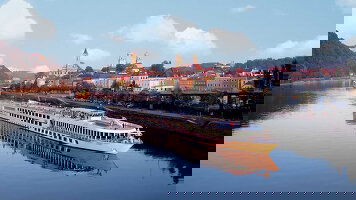
Viking's award-winning Longships® showcase innovative engineering, streamlined Scandinavian design and understated elegance. Read more
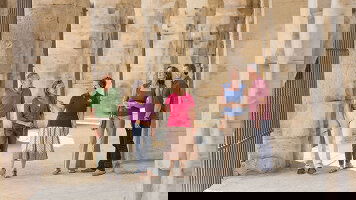
Every aspect of your Viking cruise is designed for the curious traveler seeking rich cultural immersion. Read more
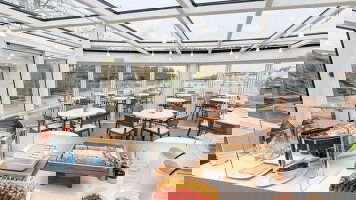
Elegant, light-filled ships thoughtfully designed to connect you to your destination. Read more
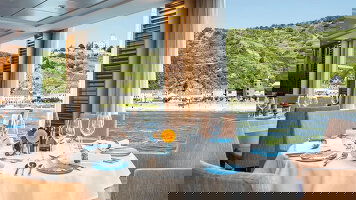
From relaxed, multi-course fine-dining to casual meals on the Aquavit Terrace. Read more
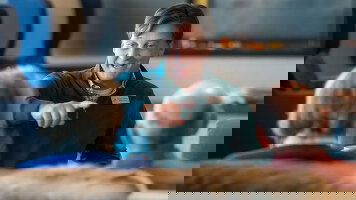
Viking proudly includes all that you need and nothing you do not and your river cruise fare. Read more
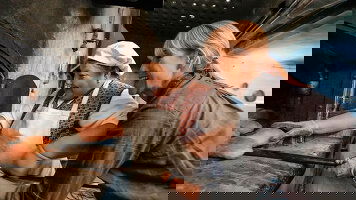
Viking offer behind-the-scenes insights and opportunities that set them apart from other travel companies. Read more
River Cruise Reviews (3)
Like many others, we have another cruise waiting for us in a few months time. Global Journeys Georgie does a great job with our bookings.
Everything onboard was amazing, from the friendly staff, the wonderful food & wine to the included tours, complete with excellent local guides. We couldn’t fault it. It was the perfect way to end a long trip abroad. France in Autumn was beautiful with the trees changing colour and the scenery we saw from our ship was spectacular. We chose the lower deck cabins as we were travelling with a group, so not in cabins much. Perfectly fine for our needs. Many thanks to Georgie for organising this part of our holiday. Nothing was too much trouble and she happily answered all our queries!😄
We chose 7 optional tours in addition to the included ones because we didn't want to miss out on anything. This did make for a full on itinerary and we've returned home quite tired but that was our choice and we don't regret it at all.
We also decided to include the 3-day Loire Valley extension which was wonderful but again, very full on. The accommodation was absolutely beautiful and once again our guide was superb.
A slight disappointment for us was the cabin we chose. On our last cruise we chose a French Balcony stateroom. This time and in order to save a bit of money, we chose a room on the lowest level which didn't have an opening window. We wish we had paid the extra as we felt a bit claustrophobic. We know other people who have had no problem at all with this so this is just a personal thing.
Also impressive is the way Viking looks after everything regarding the transfer to the airport at the end of the holiday with a guide accompanying us literally to the check in counter at the airport!
Unfortunately one of us was unwell during our holiday which put a bit of a dampener on things and when the Maitre d' at the restaurant on the ship was told he was so accommodating, providing warm and comforting soup. Nothing was too much trouble.
Juliet, from Global Journeys was a gem! Attention to detail and customer service was absolutely top notch. Whenever we had a query it would be answered almost immediately and definitely the same day. We have recommended Global Journeys to our friends as being a company which really takes an interest in their customers. We wouldn't book with anyone else now that we have experienced the professionalism and friendliness that was shown to us.
Thanks so much for a great holiday.
Download Brochure

Viking River Voyages (2026-28)
Dates & Pricing
Viking Explorer Society
GJ Loyalty Discount
Cabin Layout Options:
Select Cabin Preference:
Tour & cruises prices are per person. Prices shown have savings applied, are subject to availability and may be withdrawn at any time without notice. Pricing and trip details are correct at this point in time, however are subject to confirmation at the time of booking and are subject to change by Viking. For cruise itineraries, cabin images are sourced from the cruise-line and should be treated as indicative only. Cabin inclusions, upholsteries and room layout may differ to the image(s) shown depending on the ship selected and your sailing dates.
Similar River Cruises