Serengeti & Kilimanjaro



Itinerary
Jambo! Welcome to Kenya. Your adventure begins with a welcome meeting at 6 pm in Nairobi. If you arrive early, you can head out and explore the National Museum of Kenya, the Karen Blixen Museum or the highly recommended Bomas of Kenya, where traditional homesteads of several Kenyan tribes are displayed in an outdoor village.
Tonight, why not ask your leader for local dinner recommendations and head out to get to know your fellow travellers.
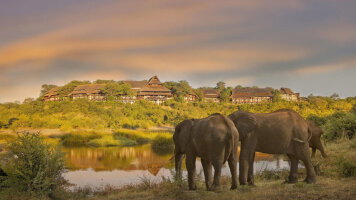
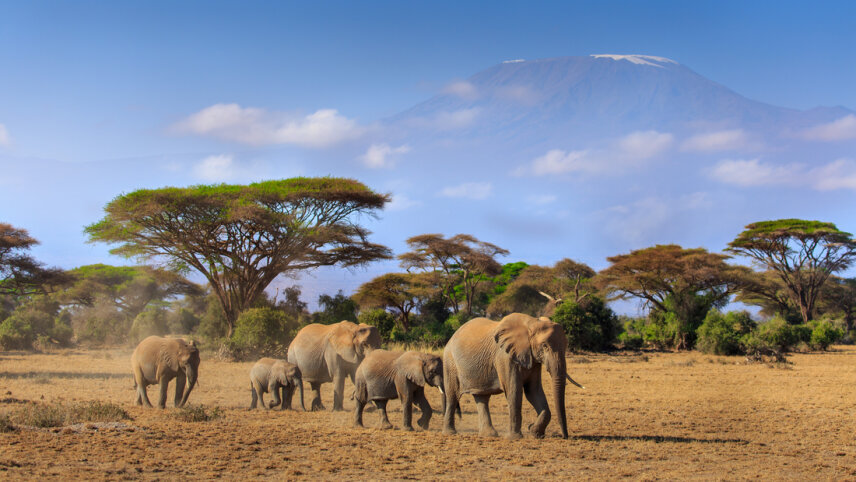
Today, you'll board your overland vehicle bound for Amboseli National Park. The park covers an area of about 392 square kilometres and is home to the largest population of African elephants in Kenya, many of which are ‘big tuskers’ (elephants with large tusks). You may even spot a ‘super tusker’ – a male bull elephant with tusks that weigh over 45 kg each, usually so long they scrape the ground. If you're lucky to visit on a clear day, you'll be treated to amazing views of Mt Kilimanjaro. When you arrive, you'll set off on a game drive in your overland vehicle to explore the park and discover the wildlife that calls this place home.
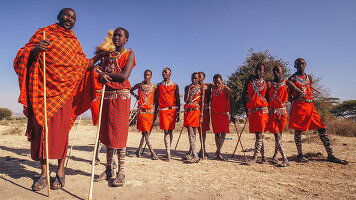
This morning, you'll travel toward the Kenya-Tanzania border, heading to Mto wa Mbu, a charming village that offers a glimpse into small-town African life.
In the afternoon, join the local community for a guided walk around the village, visiting farms, milling machines, and homes. You'll finish the day with a traditional dinner, experiencing local hospitality before settling in at your campsite in Mto wa Mbu.
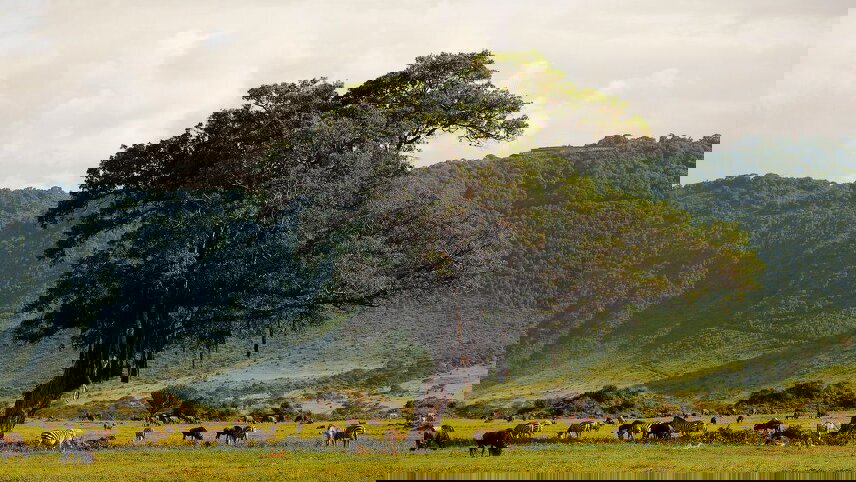
Wake up early, load your camping gear and personal belongings into a six-person jeep and head out to the Ngorongoro Crater. Enjoy a safari in the crater, spending 3 to 4 hours exploring this incredible, perfectly intact volcanic caldera. Keep an eye out for black rhinos, lions, leopards, elephants, impalas, zebras and hippos. The crater floor offers excellent wildlife viewing year-round (around 30,000 animals live here), and the photo opportunities are unrivalled. Next, continue to the wide-open plains of the Serengeti.
Green after the rains and brown and burnt during the dry season, this is perhaps the quintessential image of Africa – home to thousands of hoofed animals and fierce predators. Spend time in search of the Serengeti's abundant wildlife before continuing to your campsite within the national park. As night falls, listen out for the sounds of nocturnal animals as you drift off to sleep.
Awake at dawn and embark on a game drive. You will head out while the animals are at their most active, then head back to camp for brunch at around 11 am. After spending the middle of the day relaxing, just like the animals do, head out again as the day begins to cool. You'll return from this second game drive in time for dinner. There's also the option of a balloon safari over the Serengeti. If you have booked this activity, you will be picked up before dawn and driven to the launch site.
After a safety briefing, take off and glide through the dawn sky, sometimes at tree height, getting some amazing photo opportunities. Sometimes you'll ascend higher, giving you an overview of the vastness of the plains. After landing, celebrate with a glass of champagne before tucking into a special bush breakfast.
Enjoy a leisurely morning 4WD safari and picnic lunch on your way out of Serengeti National Park today. Soak up final views of this incredible spot before making the long drive to the town of Karatu – your base for the next two nights.
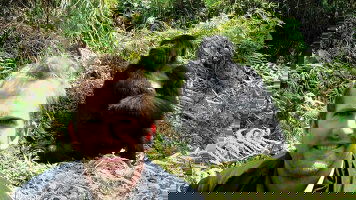
Kick off the day with an included visit to a local coffee farm, a hands‑on experience hosted at the farmer’s home. Pick a few ripe berries straight from the trees, see how the husk comes off, then roast, pound and grind the beans the traditional way, before enjoying a cup with your host.
After breakfast, board your overland truck for the final time and head back to Arusha.
Upon arrival, you'll be dropped off at the Impala Shuttle Office, where you'll say goodbye to your truck and crew. From there, you'll take an unescorted shuttle bus to Marangu, nestled in the foothills of Mt. Kilimanjaro (1300 m). The shuttle departs around 9 am. You’ll have a second welcome meeting at 6 pm tonight for a full briefing and kit inspection by an experienced Kilimanjaro climber. After the meeting, fuel up on a hearty dinner with your fellow trekkers and get a good night’s rest, ready to start your climb tomorrow!
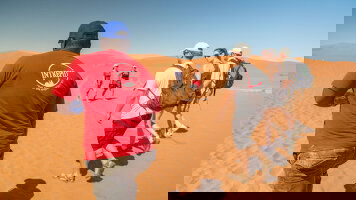
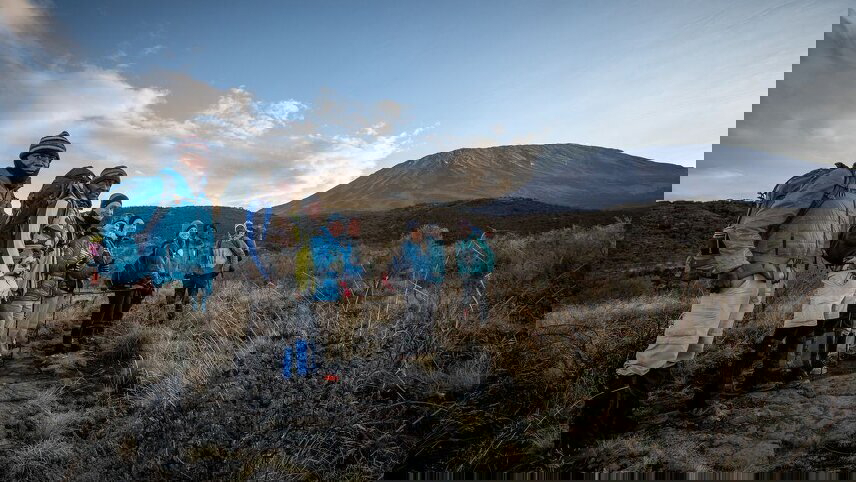
After a hearty breakfast, make your way to Marangu Gate, the entrance of the Mt Kilimanjaro National Park (1860 m) and meet your guides and porters. With introductions and assignment of porter loads taken care of, it’s time to embark on your trek. Commonly known as the 'Coca Cola' route, the Marangu Route is the oldest track on Kilimanjaro. Look out for the resident wildlife and enjoy the vast landscape as you walk.
Your second day on the mountain involves another long hike over a slightly steeper stretch. The total distance from Mandara to the Horombo huts is 12 kilometres (approximately 5 to 6 hours). Today you will see the rainforest give way to open and rolling alpine meadows dotted with giant heather trees.
Once out of the forest canopy, the twin snow-tipped peaks of Kibo and Mawenzi lie directly ahead. These are two of the three great cones of Kilimanjaro (the other being Shira). During the day’s walk we will traverse several ravines before reaching the hut, which is set in a rocky valley. There is time to enjoy a wide variety of vegetation and changing landscapes on the way to Horombo Hut (3720 metres). We will spend the next two nights here at the hut.
After breakfast, walk towards Mawenzi Hut, passing the unusual Zebra Rocks on the way. It’s a steep climb up a grassy slope, but well worth it: the views over the area towards Kibo are second-to-none.
Afterwards, return to Horombo for lunch. Spend the afternoon relaxing and acclimatising to the altitude, or ask your guides about short walks in the area. Take advantage of the rest day here and drink plenty of water – the next couple of days will be pretty intense!
Today you’ll walk the 10 kilometres or so from Horombo to Kibo Hut (approximately 5–6 hours). As the journey progresses you will notice the landscape gradually becoming more rugged and rocky, and the air noticeably thinner. We will have to soften our pace a little to accommodate these environmental changes. Marvel at giant groundsels and lobelias while you travel across the sparse moorland. Skirt Mawenzi Peak and marvel at the stark lunar landscape of the Saddle, reaching Kibo Hut in afternoon (4720 m), take the opportunity to have an early night in preparation for a very early (or late?) wake-up call.
Your guides will wake you up at 11 pm and hot tea will be served. Prepare for the last leg of the trek – to the summit. The distance from Kibo Hut to Uhuru Peak is six kilometres (approximately 6–8 hours), and the descent to Horombo will be approximately the same amount of time. The trek begins beneath the stars as you zigzag your way up a large scree slope, guided only by torch light, to reach Gilman's Point (5685 m). With some luck, arrive in time for breathtaking views of the sun rising behind Mawenzi Peak.
This is the stretch that most people find the hardest, and you should be prepared for a very cold morning. The dramatic spectacle of the sun rising over the ice fields of the crater will make the early start worthwhile. For those who still have the energy, it's a further walk (approximately 2 hours) along the rim of the crater to Uhuru Peak, the highest point in Africa. From here there are amazing views of the crater, ice fields and plains below. After photos and time to catch your breath, descend back to Horombo Hut for a well-earned rest.
Continue your descent through alpine meadows and rainforest to the park gate. The distance from Horombo to Marangu Gate is 20 kilometres (approximately 5–6 hours). Here your transport awaits and you will return to the hotel for a relaxing shower – a real treat after the physical exertions of the last few days! Over a celebratory meal we can relive and share our experiences of the past five days on the mountain.
There are no activities or trekking planned for today. A transfer to Kilimanjaro Airport or a shuttle to Nairobi can be arranged locally – please speak to your group leader about this at the welcome meeting.
Trip Inclusions
- Explore Serengeti National Park in depth with two early-morning and two late-afternoon game drives through this spectacular wildlife arena.
- Take a mind-blowing safari across the floor of the Ngorongoro Crater in an open-roof 4WD for a chance to see the endangered black rhinoceros.
- See it before you climb it! Not only is Amboseli National Park home to the largest population of African elephants in Kenya it also has exquisite views of Mt Kilimanjaro on clear days.
- Visit a local coffee farm for a hands‑on look at how coffee is prepared. Pick ripe berries, learn traditional techniques, then share a freshly brewed cup with your host for an authentic taste of everyday life.
- Hike Kilimanjaro's climactic last stretch by lamplight and give yourself as much chance as possible to watch a sunrise over ice fields from behind Africa’s highest peak.
- Camping (with facilities) (3 nights)
- Camping (with basic facilities) (3 nights)
- Hotel (3 nights)
- Mountain hut (5 nights)
- Overland Vehicle, Minibus, 4WD Safari Vehicle
- 13 Breakfasts included
- 12 Lunches included
- 13 Dinners included
- Accommodation, itinerary and inclusions subject to change.
- Price is for land, cruise and internal flights as specified. Flights not specified are not included
- Intrepid regularly update their itineraries throughout the year based on feedback and local conditions. Therefore the itinerary you see now may differ from when you booked. Global Journeys will provide you with detailed trip notes at the time of quoting, along with a finalised itinerary and trip notes before your trip departs.
Our Basix trips are designed for travellers of any age on a budget. Using simple, clean and centrally located accommodation (typically with a 2-to-2.5-star average rating), local transport where we can, along with plenty of free time.
This means you can do the things that suit your budget and interests, rather than paying for inclusions you don’t want. Meals are generally not included, but your experienced local leader will have some great suggestions!

Download Brochure

Intrepid Worldwide (2025-26)
Dates & Pricing
Flexible Deposit
GJ Loyalty Discount
A definite departure means minimum numbers have been reached for this departure to operate. Your Global Journeys Travel Advisor will check the availability of your departure date when you Enquire. Additional savings may apply. T&C’s apply.
Tour & cruises prices are per person. Prices shown have savings applied, are subject to availability and may be withdrawn at any time without notice. Pricing and trip details are correct at this point in time, however are subject to confirmation at the time of booking and are subject to change by Intrepid. For cruise itineraries, cabin images are sourced from the cruise-line and should be treated as indicative only. Cabin inclusions, upholsteries and room layout may differ to the image(s) shown depending on the ship selected and your sailing dates.