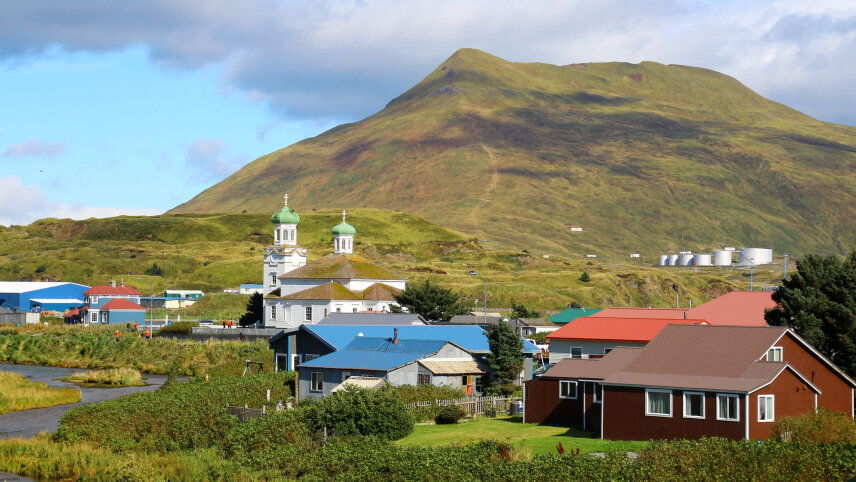

The Aleutian Islands arc westward across the Pacific, one of the most geologically active stretches on Earth. Visiting Dutch Harbor, remote island shores, and the bear wilderness of Katmai, this voyage traces Alaska’s wild Pacific edge from rainforest to volcanic tundra, ending in the dramatic fjords of Prince William Sound.

Itinerary
Set sail from Vancouver
Your adventure begins in Vancouver, a Pacific seaport framed by steep mountains and dense coastal forest. Wander the Victorian streets of Gastown, or walk the seawall past the towering cedar groves of Stanley Park, a first taste of the wilderness ahead. The seafood and farm-to-table dining here is exceptional. We'd recommend arriving a day early to give yourself time to explore the city.
Come evening, your ship awaits. Settle into your cabin, meet the Expedition Team, and attend the safety briefing. Tomorrow, we sail north.
Marine wildlife along the Pacific coast
The Inside Passage is one of the great coastal routes of the world, with over 900 miles of sheltered Pacific waterway, carved by glaciers and fringed by ancient forest. Today we venture beyond its shelter into the open waters of Queen Charlotte Sound and Hecate Strait, where the island of Haida Gwaii lies to the west.
These are productive seas. Keep watch for humpback and fin whales, orcas, minke whales, and Pacific white-sided dolphins. This is a voyage that rewards those who keep their eyes on the horizon.
Ancient rainforests and Łingít culture
These three days carry us deep into the rainforests of the Tongass National Forest. At Misty Fjords, a pristine wilderness of towering evergreens, waterfalls, and snowcapped peaks, we explore by Zodiac or kayak, watching for mountain goats, harbour seals, and bald eagles.
From there, we sail to Klawock on the western shore of Prince of Wales Island, where the Totem Park's 21 carved poles pay tribute to Łingít tradition.
We end at Sitka: Łingít homeland, Russian outpost, and American purchase, where Mount Edgecumbe volcano rises from the sea and the Russian Orthodox Cathedral stands at the heart of town.
Birdwatching and relaxing at sea
Your cruise continues across the Gulf of Alaska. Enjoy the infinity pool, hot tubs, sauna, gym, or even treat yourself to a spa treatment.
In the Science Centre, the Expedition Team invite you to join lectures on Alaska's wildlife, geology, glaciology, and history.
From the open deck, scan the horizon for seabirds. Three species of North Pacific albatross inhabit these waters: the laysan and black-footed are regularly spotted, while a glimpse of the rare short-tailed albatross would be the ultimate sighting of the voyage.
The ancestral homeland of the Sugpiaq
Known as the 'Emerald Isle', Kodiak rises from the Gulf of Alaska in a sweep of lush temperate forest and rugged shoreline. This is the ancestral homeland of the Sugpiaq people, whose connection to these islands runs thousands of years deep.
We'll spend two days here, visiting Kodiak town and a small coastal community to learn about local culture and traditions first-hand. Out on the water, we search for humpback whales, sea otters, and harbour seals. The Kodiak National Wildlife Refuge, covering roughly two-thirds of the island, is home to around 3,500 Kodiak brown bears, a subspecies found nowhere else on Earth.
Sailing toward the Aleutian arc
Enjoy a day at sea as we leave the Gulf of Alaska behind and turn west, toward the volcanic chain of the Aleutian Islands.
The sense of remoteness deepens as the coastline drops away and the Pacific horizon opens wide. Attend a lecture on Aleutian ecology and geology in the Science Centre, or take time on deck to watch the ocean. These are cold, productive waters. Watch for seabirds tracing the ship's route and marine mammals, who surface when you least expect them. The island chain that awaits is unlike anywhere else on Earth.
Ring of Fire
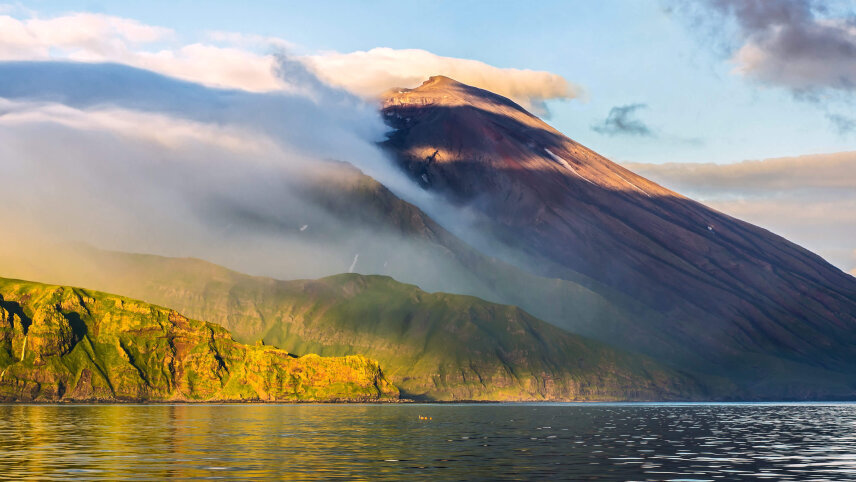
We arrive first at Dutch Harbor on Unalaska Island, the country's busiest commercial fishing port by volume, set against the looming profile of Mount Makushin, an active volcano reaching 6,680 feet.
You'll learn about the Unangan people have called these islands home for at least 9,000 years, visit the Museum of the Aleutians, the Russian Orthodox Cathedral, or the WWII museum commemorating the Battle of Dutch Harbor in 1942.
From there, we venture deeper into the chain: a world of volcanic ridgelines, cliff-nesting puffins, sea lions, and coast-skimming seabirds. We land by Zodiac where few ever travel.
After a day at sea, our final stop is Unga Island, where the ghost village of Unga — first settled in 1833 and abandoned in 1969 — stands slowly yielding to wildflowers and tundra. It's an eerie, affecting place.
Spot brown bears on the Alaskan coast
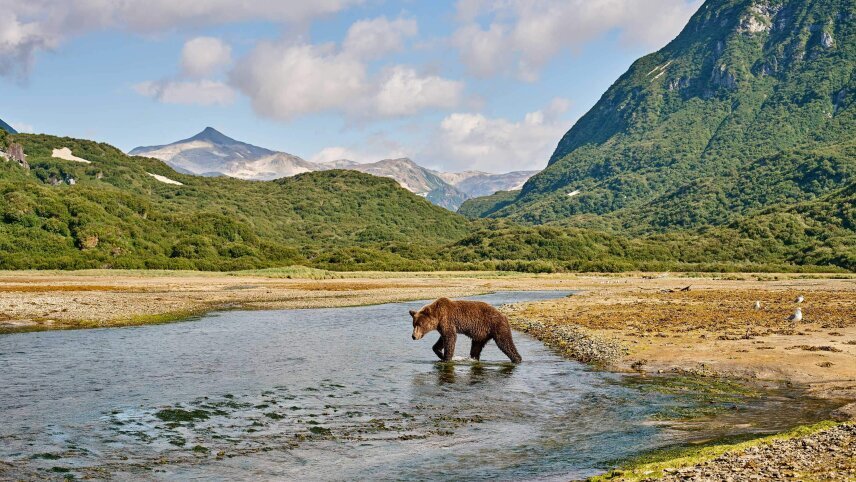
Katmai National Park spans roughly four million acres of the Alaskan Peninsula. It's home to around 18 volcanoes, including seven active since 1900, and shelters the world's highest concentration of protected brown bears: around 2,000 in total.
We scout from the ship deck and in expedition boats, watching bears work the shoreline: digging for clams, fishing in the shallows, moving through the coastal grasses with the unhurried confidence of a species at the top of the food chain. Depending on conditions, we explore Geographic Harbor, Kinak Bay, or Kukak Bay. Patience is richly rewarded here.
Sailing toward Prince William Sound
A final day at sea as we complete our passage along Alaska's Pacific coast, heading northeast toward Prince William Sound.
The mountains of the Kenai Peninsula are already visible on the horizon. Join the Expedition Team for final lectures and citizen science projects and take time to reflect on your journey over the past two weeks. Alaska often offers a parting gesture from its wildlife… Keep watch for sea otters, seabirds, and whales moving through these cold northern waters.
Disembark in Whittier's wild fjords
Your expedition ends in Whittier, a small town of a few hundred residents set between soaring mountains and the deep waters of Prince William Sound. This is one of Alaska's most dramatic settings: glaciers descend from the ranges above, waterfalls cascade down sheer rock faces, and the Sound stretches across 10,000 square miles of fjords, islands, and protected waterways, home to humpback whales, sea otters, and countless seabirds.
From here, a transfer takes you to Anchorage. To make the most of your time in this extraordinary region, we recommend joining our post-voyage programme.
Trip Inclusions
- Sail Alaska's wild Pacific edge, from the rainforests of Southeast Alaska to the volcanic arc of the Aleutian Islands along the Ring of Fire.
- Spend two days in Kodiak Island's communities, exploring the ancestral homeland of the Sugpiaq people and one of Alaska's richest ecosystems.
- Venture into the volcanic wilderness of Katmai National Park, home to the world's highest concentration of protected brown bears.
- Daily breakfast, lunch, and dinner. Coffee, tea, soft drinks, wine, beer, and spirits
- Fine dining in restaurant Lindstrøm included for suite guests on MS Fridtjof Nansen and MS Roald Amundsen
- Wine, beer and spirits available at meals and throughout the day and evening (subject to licensing laws, excludes premium drinks)
- Wind and waterproof expedition jacket
- A complimentary Ocean Bottle water bottle to refill on board and take home
- Use of sauna, hot tubs, pool, fitness room, lounges and more
- Complimentary Wi-Fi. Please note, streaming is not supported
- Professional photos from your trip taken by our onboard photographer
- Gratuities included. Fantastic service is standard at HX – though if you'd like to leave something extra, it's always appreciated
- Range of included activities
- Transfer from Whittier to Anchorage airport after the expedition cruise
- In-depth lectures and discussions hosted by our knowledgeable Expedition Team
- Use of our Science Centre, including the library and advanced biological and geological equipment
- The Citizen Science Program allows guests to assist with ongoing scientific research
- An onboard professional photographer will give tips and tricks for taking the best landscape and wildlife photos
- Informal gatherings with the crew for daily briefings
- Daily briefing with the Expedition Team about the plans for the next day
- Escorted landings with small expedition boats
- Necessary equipment for activities, such as walking poles, will be provided on board on loan. Rubber boots are provided (not mandatory) for wet landings. Your HX travel documents will have a recommended packing list.
- Expedition photographers on hand to assist you
- All planned activities are subject to weather and ice conditions
- Excursions and activities are subject to change
- Please make sure you meet all entry and boarding requirements
- Depending on your flight times, an additional overnight stay might be needed (not included)
Life On Board
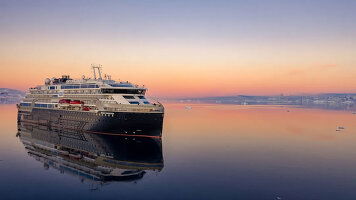
Hybrid powered, a warm and informal atmosphere, premium comfort, and state of the art technology. Read more
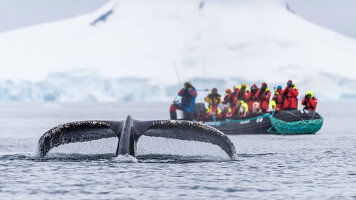
Passionate. Knowledgeable. Specialists in their field. Your dedicated Expedition Team bring each destination to life. Read more
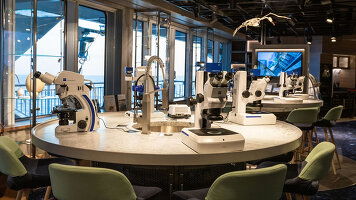
A dedicated space to enjoy fascinating lectures from the specialist team and get hands on with interactive fun. Read more

Three onboard restaurants serve up delicious international dishes, local cuisine, and traditional Norwegian favourites. Read more

Everything from daily excursions and activities to our onboard Science Centre, meals, gratuities, drinks and more. Read more
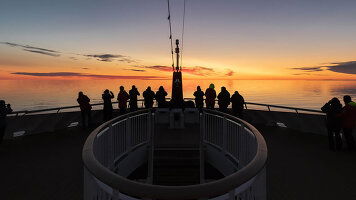
Take in the scenery from the comfort of your cabin, the pool, outdoor hot tubs, sauna, or light-filled public spaces. Read more
Ship Reviews (2)
I booked over a year in advance (Antarctica) and had a cancellation from the Hurtigruten end which she managed with ease. It was good to have the same person handle my booking. The trip we did had an extended time (11 days) in Antarctica including going below the Antarctic Circle which most ships do not do. It was a perfect experience of Antarctica. Thank you Global Journeys!!!!
Download Brochure

HX Expeditions (2027-28)
Dates & Pricing
Tour & cruises prices are per person. Prices shown have savings applied, are subject to availability and may be withdrawn at any time without notice. Pricing and trip details are correct at this point in time, however are subject to confirmation at the time of booking and are subject to change by HX Expeditions. For cruise itineraries, cabin images are sourced from the cruise-line and should be treated as indicative only. Cabin inclusions, upholsteries and room layout may differ to the image(s) shown depending on the ship selected and your sailing dates.
Similar Cruises
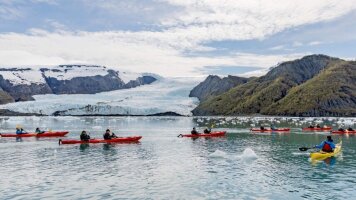
18 Days Vancouver to Vancouver
Canada, USA
HX Expeditions
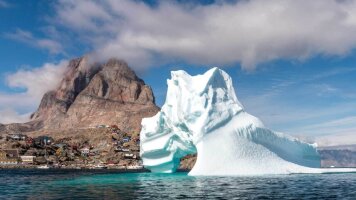
17 Days Copenhagen to Copenhagen
Denmark, Greenland
HX Expeditions
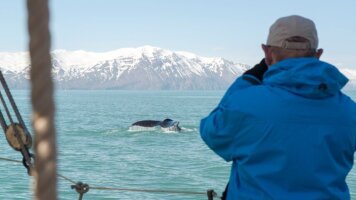
18 Days Oslo to Kiel
Norway, Iceland, Faroe Islands +2
HX Expeditions
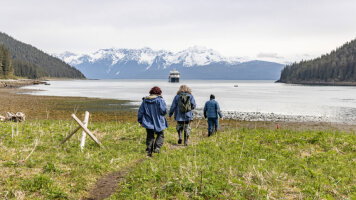
18 Days Seattle to Vancouver
USA, Canada
HX Expeditions
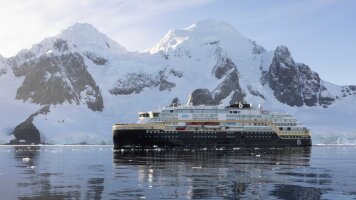
18 Days Valparaiso to Buenos Aires
Chile, Antarctica, Argentina
HX Expeditions
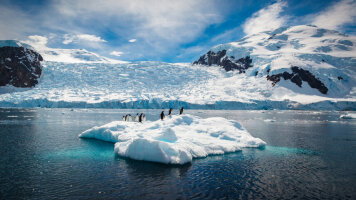
16 Days Buenos Aires to Buenos Aires
Argentina, Antarctica
HX Expeditions