Classic Serengeti & Zanzibar
Overview



Itinerary
Arrive at any time. There are no planned activities until an evening welcome meeting.
- Meet Your CEO and Group: Your opportunity to meet your CEO and fellow travellers, and learn more about your tour. Opt to join the group for a local meal afterwards. Don't forget to see the notice in the lobby (or ask reception) for the official time and place to meet up with the group.
- Bomas of Kenya Tour: This tour gives you a glimpse into the life of 42 different tribes of the country that make up Kenya's rich culture. Get a better understanding of village life by visiting homesteads and enjoy a display and sounds of folk dances performed. Entrance fee and hotel pick-up included.
- National Museum: Take a stroll through this museum to get a better understanding of Kenya's rich heritage through a range of cultural and natural-history exhibits. Learn more about the region's bird population at the Birds of East Africa exhibit, a huge gallery of at least 900 stuffed specimens. Get a refreshing take on Kenyan history counterpoint to colonial historiographies at the Historia Ya Kenya display. Entrance fee and hotel pick-up included. (1200-3000 KES per person)
- Karen Blixen Museum : Converted from the former home of pioneer coffee farmer and acclaimed writer Karen Blixen, this museum provides visitors insight into life of a Danish settler in pre-Independence Kenya. Take a walk through the home, and magnificent gardens that provide a stunning view of the Ngong hills. Hotel pick-up and entrance fee included. (34-75 USD per person)
- The Carnivore Restaurant: Feast on a range of familiar and exotic meats roasted over an open flame barbecue pit. Ever wanted to try ostrich or crocodile? Here's your chance to do so (at a world-renowned restaurant, at that). Price includes the price of a meal (without a beverage) and hotel pick-up.
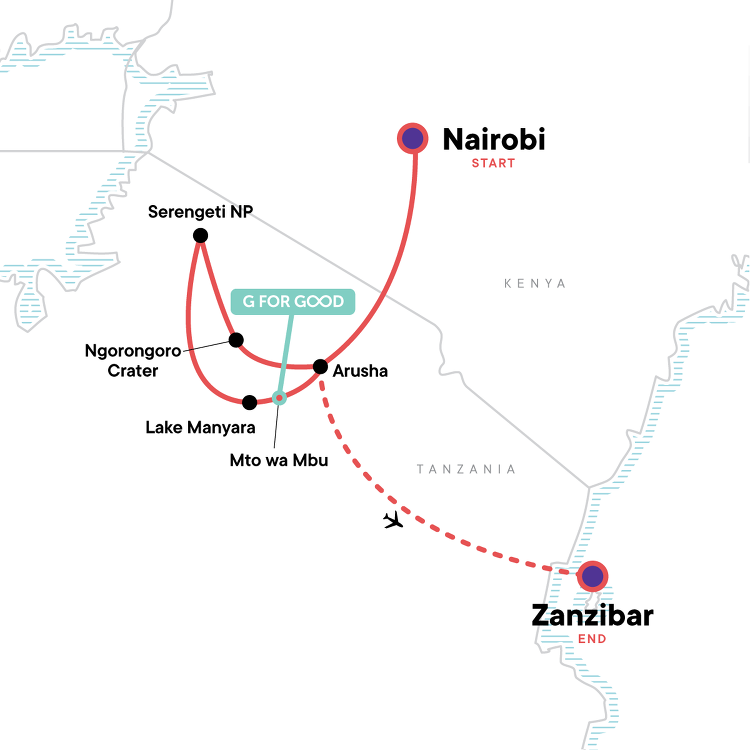
Spend the day travelling to Tanzania. Journey across the border into Tanzania, arriving in the picturesque town of Arusha in the afternoon. Spend some time exploring the town and its bustling markets, and have another night in the comfort of a hotel. Upon arrival into Arusha, you may be joined by other G Adventures travellers starting the Tanzania portion of the trip.
- Shuttle: Move efficiently from point A to point B aboard this dependable ride.
- Border Crossing (Kenya - Tanzania): Ready for a little more ink in your passport? Grab your bags and get ready to check another country off your bucket list.
Experience the Mto wa Mbu community with a guided cultural walk and traditional lunch with a local family. Take a wildlife safari drive in Lake Manyara NP. Travel to Mto wa Mbu and take part in a cultural walk to learn about life in the area. Meet the women who run the rural town's tours and enjoy a delicious home made traditional lunch. Spend the afternoon viewing wildlife along the main road that winds through a lush cool forests of Lake Manyara National Park, overgrown with ficus trees and covered with bromeliads. This area is truly stunning, as the western wall of the Rift Valley escarpment provides a gorgeous backdrop. Search for the phenomenal birdlife, tree-climbing lions, elephants, giraffes, and hippos.
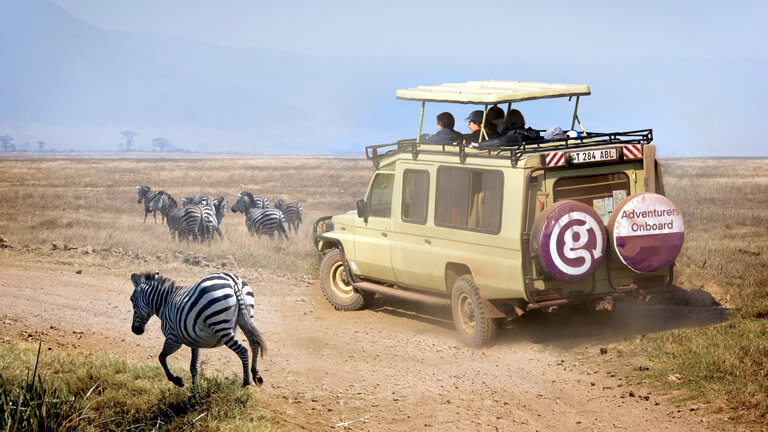
- 7-Seat 4x4 Safari Vehicle: Get a better view and take better snapshots aboard this off-road ride with a pop-up top.
- Mto wa Mbu Community Visit and Lunch: Take part in a cultural walk to learn about life in this East African town. Mto wa Mbu has attracted some 18,000 residents from 120 different tribes. During the two-hour tour, visit the community's local market, go right to the farmer's fields, see how huts are constructed, and meet artisans in their shops. Afterwards, sit down with our new friends and enjoy a traditional lunch of meat and plantains.
- Lake Manyara National Park Afternoon Safari Drive: This western wall of the Rift Valley escarpment is truly stunning. It provides a backdrop for your search for the park's phenomenal bird life (including raptors), tree-climbing lions, elephants, zebras, hippos, baboons, and buffalos. Look up and see some of the more than 400 species of birds, including pink flamingos, pelicans, cormorants, and storks. Beyond wildlife, Lake Manyara NP is home to giant fig trees, acacia woodlands, mahogany trees, and grassy flood plains. The contrasts of this area are simply breathtaking; the open plains, huge escarpment, central alkaline lake, dense woodlands, and distant volcanic peaks coming together in an area best described by Ernest Hemingway as “the loveliest I have seen in Africa.”

Enjoy a wildlife safari drive en route to the central Serengeti. Drive through the Ngorongoro Conservation Area and on to Serengeti National Park. En route marvel at the sheer vastness of this territory, and spot the multitude of animal and birdlife while cruising through this acacia-accented savanna.
- 7-Seat 4x4 Safari Vehicle: Get a better view and take better snapshots aboard this off-road ride with a pop-up top.
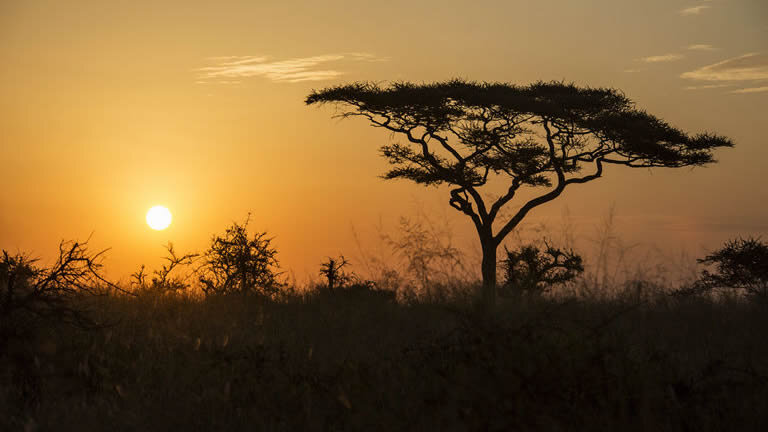
- Serengeti National Park Safari : This is the reason you came to Africa. Charge your camera, grab your binoculars, and set out on safari. Your eagle-eyed driver will keep an eye out for wildlife – buffaloes, elephants, lions, wildebeests, zebras, and more. Tanzania’s Serengeti tends to be less crowded than some of Kenya’s reserves, so enjoy the scenery, the vast expanse of the grasslands, the play of light and shadow, and the up-close look at wild Africa.

Rise early for a full-day wildlife safari drive in the Serengeti. Enjoy a picnic lunch in the bush and continue the search for the "big five" while taking in the vastness of the Serengeti plains.
If you have pre-booked a Serengeti Balloon Safari, your flight will be in the morning. You will miss the morning wildlife safari drive with the group, but you will have spectacular views from above. If you have not yet pre-booked, add it to your checkout page, or ask your GCO or travel agent for assistance.
- 7-Seat 4x4 Safari Vehicle: Get a better view and take better snapshots aboard this off-road ride with a pop-up top.
- Serengeti National Park Safari : This is the reason you came to Africa. Charge your camera, grab your binoculars, and set out on safari. Your eagle-eyed driver will keep an eye out for wildlife – buffaloes, elephants, lions, wildebeests, zebras, and more. Tanzania’s Serengeti tends to be less crowded than some of Kenya’s reserves, so enjoy the scenery, the vast expanse of the grasslands, the play of light and shadow, and the up-close look at wild Africa.
- Serengeti Balloon Safari: Spirited aloft in a hot-air balloon, view the wildlife and terrain of the Serengeti that only the birds see. Enjoy a champagne breakfast and keep that shutter-finger good and limber—you’ll be using it plenty over the course of your hour in the air. Please note, additional fees will apply for passengers exceeding the 120 kg (265 lbs) weight limit.
Take a morning wildlife safari drive as you depart the Serengeti, then continue wildlife viewing in the Ngorongoro Crater, before getting a spectacular view of the crater from your campsite on its rim. The rich pasture and permanent water of the Crater floor supports a resident population of more than 20,000 to 25,000 large mammals.
Please note that due to the high-altitude location of our camp, temperatures can drop at night. We recommend bringing extra layers to wear during the evening and following morning.
- 7-Seat 4x4 Safari Vehicle: Get a better view and take better snapshots aboard this off-road ride with a pop-up top.
- Serengeti National Park Safari : This is the reason you came to Africa. Charge your camera, grab your binoculars, and set out on safari. Your eagle-eyed driver will keep an eye out for wildlife – buffaloes, elephants, lions, wildebeests, zebras, and more. Tanzania’s Serengeti tends to be less crowded than some of Kenya’s reserves, so enjoy the scenery, the vast expanse of the grasslands, the play of light and shadow, and the up-close look at wild Africa.
- Ngorongoro Crater Afternoon Wildlife Safari Drive: Head down into the crater and to all the best spots to view wildlife. Spot zebras, gazelles, buffaloes and warthogs. The swamp and forest are home to hippos, rhinos, elephants, baboons and monkeys. Keep your eyes peeled and camera ready to capture a pride of lions or a lone leopard walking along the crater floor.

Visit an authentic Maasai village and the G Adventures-supported Clean Cookstove Project, then return to Arusha for the night.
- 7-Seat 4x4 Safari Vehicle: Get a better view and take better snapshots aboard this off-road ride with a pop-up top.
- Clean Cookstove Project Visit: Visit a Maasai village in the Monduli District and witness the benefits of the G Adventures-supported Clean Cookstove Project. In Tanzania, 95% of people rely on cooking with wood and coal. Women and girls spend hours walking to collect wood every day (making them vulnerable to assault and unable to use their time to go to school). Indoor smoke from open-fire stoves causes cancer, emphysema, pneumonia, blindness, and burns. Take a guided tour of these villages and meet the women that have been trained as stove engineers, visit bomas (traditional homes), and observe (or get your hands dirty) by helping the Stove Team build a stove in a home. See the beneficial impact of the clean-burning stoves on the health and daily lives of the Maasai villagers, especially the women.
A free day to explore Arusha, or relax at the lodge.
Fly to the beautiful island of Zanzibar and transfer to the hotel. Enjoy an orientation walk with your CEO in historic Stone Town, and opt to continue on for a longer walking tour, or explore on your own. Transfer to the airport for a short, but scenic flight to this island paradise. Arrive in Stone Town in time for lunch and an orientation walk. If you opt to continue on for a longer tour of Stone Town, you will be visiting the Old Slave Market and Palace Museum; entrance to these sites are optional and are to be purchased on site.
The flight from Arusha/Kilimanjaro Airport to Zanzibar is unaccompanied, and you will be met by your local Zanzibar CEO on arrival. Your CEO/driver will give you all the relevant flight information.
- Plane: Look! Up in the sky! It's a bird! It's a plane! It's... yup, it is a plane, actually.
- Stone Town Orientation Walk: This orientation walk is just a brief introduction. If you'd like to learn more in depth information about Stone Town, we recommended going on a guided city tour.
- Stone Town Walking Tour: Enjoy a walking tour along the bustling narrow streets of Stone Town and admire the historical old buildings and homes that are part of a preservation program funded by UNESCO and the Aga Khan Foundation. Also, visit the historical site of the slave market and learn about this dark aspect of history. Continue to the local fruits and vegetable market, fish market, Tip tipu house, and National Museum.
- Christ Church Cathedral & Old Slave Market: Tour the site of what was once one of East Africa's most notorious slave markets, and the Anglican cathedral that was constructed in its place.
- Sultan's Palace Museum: Tour this opulent palace built by the second sultan of Zanzibar in 1883 as an extravagant Arab mansion.
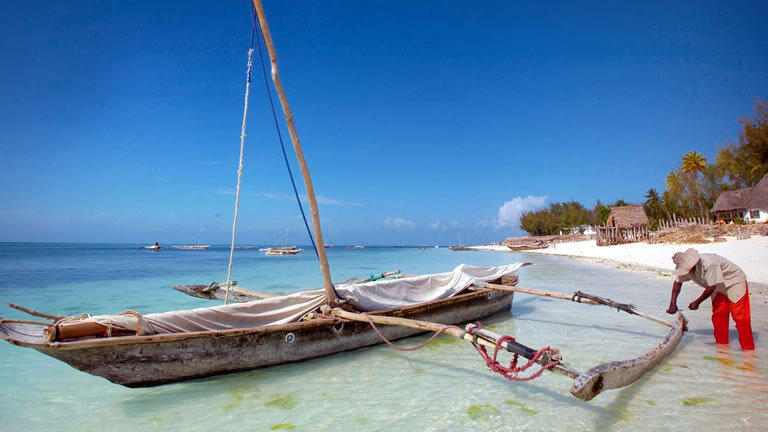
Visit a local spice plantation for a guided tour. Continue to the white-sand beaches and turquoise waters of Zanzibar's beautiful coast.
- Spice Plantation Guided Tour: Delight your senses with a guided tour and learn about an assortment of spices, such as cloves, black pepper, cardamom, cinnamon, nutmeg, breadfruit, jackfruit, vanilla, and lemongrass, and their various uses. It was the spice plantations that brought the beginnings of Zanzibar’s infamous slave trade dating back to the 1840s.
- Free Time: Settle into island life and explore during some free time.
- Swimming: Grab your bathing suit and go for a refreshing swim.
Enjoy free time to lounge on the beach, snorkel, or tour the island.
- Free Time: Do as much or as little as you'd like on this island slice of paradise.
- Swahili Cultural Tour: Take a couple of hours to get to know the life of a Zanzibarian by being immersed in the local culture. Follow a guide through a rural village to see elements of day to day life, sit with men of the village to see how they weave palm fronds to make the thatch roofs for their huts, opt to play a game of Bao (Zanzibar favorite game past time), and enjoy a traditional dance performance. (70-200 USD per person)
- Swimming: Grab your bathing suit and go for a refreshing swim.
- Scuba Diving: Take a boat to Mnemba, a small island surrounded by a circular reef boasting an an abundance of colourful coral and marine life. Suit up and enjoy the excellent visibility allowed by the turquoise waters of this region. If you are lucky, you just might be able to spot the bottlenose dolphins that are known to visit this area.
- Snorkelling: Enjoy a day of snorkelling in the safety of an experienced snorkel guide in the area of one of Zanzibar's most well-known reefs surrounding Mnemba island. Lifejackets, short wetsuits and buoyancy aids available. Price is dependent on pick-up location.
- Jozani Forest Tour: Known for the red colobus monkeys, a visit Jozani forest is a highlight when in Zanzibar. Explore the nature trails while following in the footsteps of a guide who will inform about the impressive flora and fauna surrounding you. (36-160 USD per person)
Morning group transfer from the beach. Depart Stone Town upon arrival in the late morning. Onward travel should be booked no earlier than 2:30pm.
- Departure Day: Not ready to leave? Your CEO can help with any onward travel arrangements you require.
Trip Inclusions
- Enjoy wildlife drives in the Serengeti.
- Savour traditional cuisine in a local village.
- Take in the views at Ngorongoro Crater.
- Meet local artisans on a village walk.
- Explore the UNESCO World Heritage Site of Stone Town.
- Take in the aromas of a spice plantation tour.
- Relax on a tropical beach.
- Your G for Good Moment: Mto wa Mbu Community Visit and Lunch, Mto wa Mbu
- Your G for Good Moment: Clean Cookstove Project Visit, Mto wa Mbu
- Your Welcome Moment: Meet Your CEO and Group
- Lake Manyara wildlife safari drive
- Serengeti wildlife safari drives
- Ngorongoro Crater wildlife safari drive
- Scenic flight from Arusha to Zanzibar
- Orientation walk in Stone Town
- Spice plantation guided tour
- All transport between destinations and to/from included activities
- Public shuttle, 7-seat 4x4 safari vehicle, plane, minibus, walking
- CEO (Chief Experience Officer), certified safari driver/guide, camp crew, local guides
- Simple Hotels (8 Night), Full-service Camping (4 Nights)
- 12 breakfasts, 5 lunches, 4 dinners
- Accommodation, itinerary and inclusions subject to change.
- Price is for land, cruise and internal flights as specified. Flights not specified are not included.
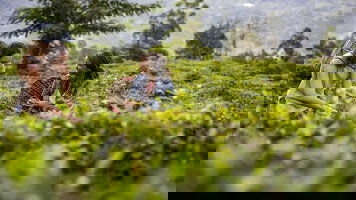
Get the best of both worlds with G's Classic trips as your knowledgeable CEO (Chief Experience Officer) leads you to iconic highlights and hidden gems, while ample free time lets you discover what excites you most. Enjoy included meals showcasing local flavours, plus opportunities to dive deeper into the food scene independently. Stay in comfortable hotels, authentic homestays, and unique accommodations that capture the spirit of each destination.

Dates & Pricing
The Great Adventurers Club
GJ Loyalty Discount
A definite departure means minimum numbers have been reached for this departure to operate. Your Global Journeys Travel Advisor will check the availability of your departure date when you Enquire. Additional savings may apply. T&C’s apply.
Tour & cruises prices are per person. Prices shown have savings applied, are subject to availability and may be withdrawn at any time without notice. Pricing and trip details are correct at this point in time, however are subject to confirmation at the time of booking and are subject to change by G Adventures. For cruise itineraries, cabin images are sourced from the cruise-line and should be treated as indicative only. Cabin inclusions, upholsteries and room layout may differ to the image(s) shown depending on the ship selected and your sailing dates.
Similar Tours
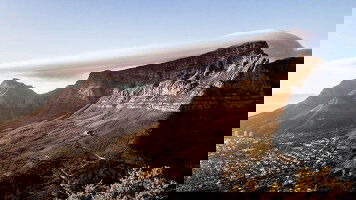
14 Days Cape Town Johannesburg
Operated By: G Adventures
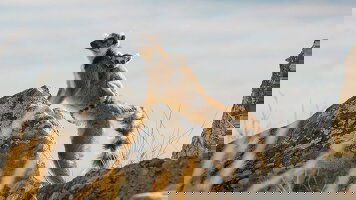
14 Days Antananarivo Antananarivo
Operated By: G Adventures
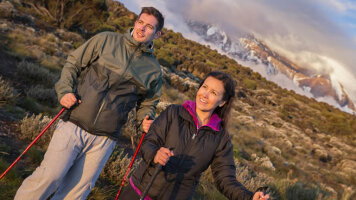
14 Days Moshi Stone Town
Operated By: G Adventures
12 Days Moshi Stone Town
Operated By: G Adventures
