Discover Tibet


Itinerary
Begin your adventure in Beijing, the capital of China, a modern megacity with a history stretching back more than 3,000 years. Around 6pm, say hello to your tour leader and fellow travellers, when we gather as a group for the first time to get to know each other and learn more about the adventures ahead. Your tour leader then ensures a big welcome by arranging a group dinner. Want more time in Beijing? Secure pre-tour hotel nights through your sales representative.
Bid farewell to Beijing this morning, catching a high-speed train for the journey (around 6hr 45min) to Lanzhou, the capital of the Gansu province. Arriving at the station, we transfer (three hours) to Labrang, a town few tourists visit, but one well worthy of exploration as, despite sitting outside the borders of the present-day Tibet Autonomous Region, it's rich in Tibetan culture and tradition. Our stay here also gives us time to adjust to the altitude.
Spend a day among the highland pastures of the Ganjia Grassland (approximately a one-hour drive away), the traditional pastoral homeland for Amdo Tibetan herdsmen. Our first stop is the historic military fortress known as Bajiao Ancient City, where we see the unusual layout of the defensive walls before continuing to the Baishi White Cliff and the monastery beneath it.
After lunch in Ganjia town, we walk across the grassland and visit Zohai Monastery, where our tour leader introduces us to Tibet's Bön religious tradition. A short hike (1hr 30min) along the Ganjia Sky Ladder, a loop trail revealing canyon scenery and alpine meadows, before a final stop to admire the White Cliff at sunset from a viewpoint. We then return (approximately one hour) to Labrang.
We visit Labrang Monastery, a major centre of Tibetan Buddhist learning with six monastic colleges and home to more than 2,000 monks. Among the temple halls, we gain an insight into a scholarly tradition encompassing philosophy, medicine and religious debate. We then drive through the Ganjia Grassland to Tongren in Qinghai Province, a region celebrated for its Tibetan Buddhist art. In nearby Wutun village, we visit the monastery and watch monks painting thangkas (religious scroll paintings).
Following precise designs passed from master to apprentice, these intricate works form part of the UNESCO-listed Regong arts tradition, bringing Buddhist teachings to life through colour and detail.
Driving (3hr to 3hr 30min) to Xining, we visit Kumbum Monastery (also known as Ta'er Temple) this morning. Home to more than 800 monks, it's also the birthplace of Tsongkhapa, founder of the Yellow Hat sect of Tibetan Buddhism. Like Labrang, it's one of the six great Tibetan monasteries from the Yellow Hat sect. Visit the 600-year-old Dongguan Mosque after, before exploring vibrant Mo Street, known for its foodie offerings, and enjoying a delicious dinner.
Tonight, we board the sleeper train to Lhasa, the capital of the Tibet Autonomous Region. It's an epic 1,240mi (2,000km) ride that takes us up to 16,640ft (5,072m) at the Tanggula Pass, making it the highest railway line in the world and earning it the nicknames the Sky Train and the Road to Heaven. We sleep in soft sleeper berths, the comfiest beds on the train. The train journey takes around 21 hours in total.
Waking on the Sky Train, we spend most of today enjoying the views of vast desert, boundless grassland, snow-capped mountains, and glistening lakes, while also chatting together and dining. En route, your local guide can teach you Tibetan words or how to play the popular Chinese tile game of mahjong. Arriving in Lhasa at 5. 40pm, transfer (30 minutes) straight to our hotel for dinner. En route, enjoy highland views of the Lhasa River.
On our first full day in Tibet, we start with a visit to Jokhang, the most sacred temple in Tibet, which always attracts a steady stream of pilgrims. Spend time exploring this large World Heritage site, including the golden Buddha which stands in the centre, and learn about its rich history. After, join the pilgrims walking around Barkhor Street in a clockwise direction, considered a sacred kora by Tibetans. Then, in the late afternoon, we visit the great university monastery of Sera, where you witness lively philosophical debating (except Sundays).
Begin with a visit to a local market for a glimpse of everyday life in Lhasa, before continuing to Pawang Monastery, traditionally associated with Tonmi Sambhota and the development of Tibetan script. The highlight of our day is our visit to Potala Palace, its immense white walls and red upper halls rising above the city on Red Mountain.
Once the winter residence of the Dalai Lamas and seat of Tibetan government, this UNESCO-listed complex reveals the close relationship between faith and power in Tibet. With our guide, we explore the palace's contrasting roles: the White Palace housed living quarters and government offices, while the Red Palace contains richly decorated chapels, sacred shrines and the tombs of past Dalai Lamas. Intricate murals and religious artworks help us understand the beliefs and history behind this extraordinary building. Finally, we turn our attention to Tibetan flavours with a cooking class, preparing specialities such as vegetarian momos (dumplings), Tibetan yak cheese and yak butter tea.
Leave Lhasa this morning, driving to the town of Gyantse. Our route takes us down the Kyichu Valley to the Yarlung Tsangpo river before ascending to the Khamba La (Pass). The views are outstanding: in the foreground is the vast freshwater Yamdrok Tso or Turquoise Lake; to the south, the snow-capped ranges merge with the main Himalaya. We drive along the western shores of the lake before crossing the Karo La 16,550ft (5,045m) to reach Gyantse. Here, we visit Pelkhor Choede monastery, famous for its Kumbum Pagoda, an eight-level, three-dimensional mandala containing 100,000 images. Total drive time: 3hr 30min.
A one-hour drive takes us through small villages to Shigatse, the second-largest city in Tibet.
Upon arrival, we first visit Tashilumpo Monastery, home to the Panchen Lamas. Tour the buildings, each with their own intricate decorations, legends and religious imagery. After, you can opt to do a kora around the monastery or visit the local market.
Transfer (three hours) to the town of Sakya, where we visit the principal monastery of the Sakyapa sect. It's home to a colossal collection of Tibetan Buddhist scriptures, murals and thangkas. Most of the murals are from the Yuan Dynasty (1271-1368) and include some of the most precious mural portraits of the Sakya ancestors and Phakpa's meeting with Kublai Khan, the founder of the Yuan Dynasty.
We're off to Sakya Nunnery, a community dedicated to the study and practice of the Sakya school of Tibetan Buddhism. Our visit brings a different perspective on Tibet's religious life, focusing on the women who sustain its monastic traditions. Within the compound, we see the red, white and grey bands characteristic of Sakya religious buildings, while our tour leader helps explain the significance of the shrines and the nuns' devotion to prayer and study. We then continue (four hours) by road to Zhaxizong, where we spend the night.
Set off early for an extraordinary day of mountain scenery, climbing by road to Pang-la pass. In clear weather, the horizon reveals four of the world's highest mountains: Everest, Lhotse, Makalu and Cho Oyu. Across the foreground of bare ridges, their snow-covered summits form a magnificent Himalayan skyline. We then continue to Rongbuk Monastery, the world's highest monastery, where Everest commands our attention. From this remarkable vantage point, the mountain's immense north face rises beyond the valley, its rock and ice laid out before us when the clouds clear. We visit the monastery and take time to appreciate the scale of the world's highest peak — a view that deserves far more than a quick photograph.
In the afternoon, we begin the long drive to Shigatse, arriving for the night. Today is an extremely long day, with many hours on the road, balanced by the opportunity to see some of the most extraordinary mountain scenery of our adventure. Total drive time: 7hr 30min.
We leave Shigatse and drive to Lhasa airport for our late-afternoon flight to Chengdu.
On arrival, we meet our local guide and transfer to the hotel to check in.
After a short rest, we head out for a guided walk through Kuanzhai Alley, where restored courtyard buildings, teahouses and snack stalls introduce us to the city's appetite for good food. There's plenty to tempt us, from sticky rice cakes and spicy chicken skewers to sweet rice jelly and fried beef pancakes. Seasoned rabbit heads are another distinctive local speciality. For our final dinner together, we gather around a Sichuan hot pot, sharing stories from our journey as ingredients cook in the simmering broth — a fittingly sociable finale to our adventure.
You've marvelled at Tibetan Buddhist monasteries, gazed over the Himalaya, and ridden the highest railway line in the world, but now it's time to begin your return journey home. Alternatively, if you'd like to extend your adventure, speak to your sales representative to discuss our large range of extension options, including time in Chengdu, where you could visit the Panda Breeding Centre.
Trip Inclusions
- Explore Potala Palace, an architectural marvel of 1,000 rooms and Dalai Lama tombs
- Gaze over Everest from the highest monastery in the world
- Ride the Sky Train, the highest railway in the world, enjoying breathtaking views
- Immerse yourself in Tibetan culture and tradition in the lesser-visited town of Labrang
- Master Tibetan cuisine with an expertly guided cooking class in Lhasa
- 12 Comfort nights (hotels), 2 Simple nights (1 sleeper train, 1 hotel)
- All breakfasts, 11 lunches, 14 dinners
- Immersive itinerary with all transport (private minibus, internal flight and train) and listed activities
- Expert tour leader to enhance your adventure
- Itinerary and inclusions are subject to change
- Price is for land, cruise and internal flights as specified. Flights not specified are not included
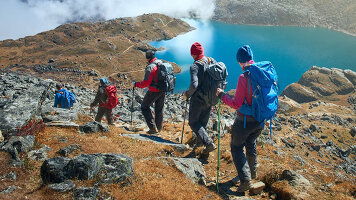
From classic small group tours & family adventures, to walking holidays, cycling trips and active adventures. Read more
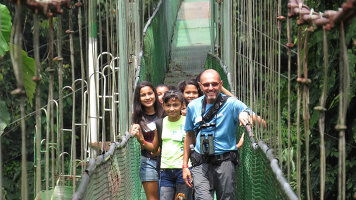
Exodus chooses their Leaders carefully. Professional, dedicated and are passionate about sharing their home countries. Read more
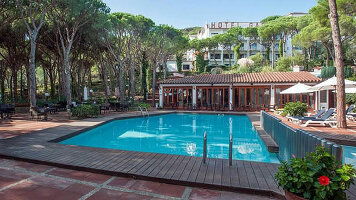
Wherever possible, Exodus chooses properties that are locally owned and that reflect the area you are visiting. Read more
Dates & Pricing
A definite departure means minimum numbers have been reached for this departure to operate. Your Global Journeys Travel Advisor will check the availability of your departure date when you Enquire. Additional savings may apply. T&C’s apply.
Tour & cruises prices are per person. Prices shown have savings applied, are subject to availability and may be withdrawn at any time without notice. Pricing and trip details are correct at this point in time, however are subject to confirmation at the time of booking and are subject to change by Exodus. For cruise itineraries, cabin images are sourced from the cruise-line and should be treated as indicative only. Cabin inclusions, upholsteries and room layout may differ to the image(s) shown depending on the ship selected and your sailing dates.
Similar Tours
14 Days Ho Chi Minh City to Bangkok
Vietnam, Cambodia, Thailand
Exodus