Scandinavia & the British Isles



Itinerary
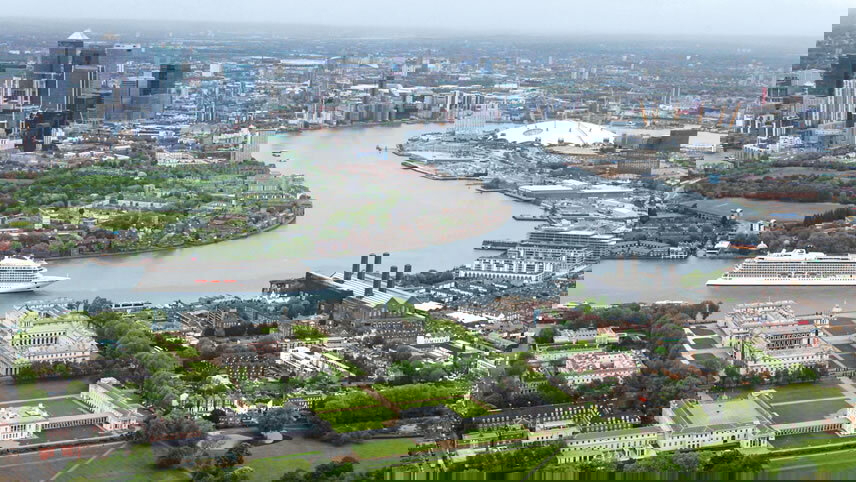
Embark your ship and settle into your stateroom. Greenwich, a borough of London, is home to the Royal Observatory. From here, the world's longitude is measured from the prime meridian, and Greenwich Mean Time sets the global time standard. At the port, the clipper ship Cutty Sark, one of Greenwich's renowned historic landmarks, is preserved as a fascinating museum. Upriver, London is home to Buckingham Palace, the Houses of Parliament and Westminster Abbey. In addition, this major economic and cultural hub boasts a long tradition of arts and architectural innovation—from Shakespeare's Globe Theater to West End musicals.
Greenwich is home to several iconic maritime institutions. Royal Naval College is a major symbol of Britain's seafaring heritage and the architectural centerpiece of Greenwich. It opened as a hospital for sailors in 1712 and served as the Royal Navy's educational institution from 1873 to 1998. Today, its hallowed halls whisper of the days when Britannia ruled the waves. The National Maritime Museum is the world's largest, chronicling England's seafaring endeavors in its compelling collection of art, maps and countless memorabilia, including the first marine chronometer.
Most famously known for its dramatic white-chalk towering cliffs, Dover is the nearest city to France across the English Channel. Its strategic location as a doorway into England has earned it the moniker “Key to England.” As the port was under constant threat because of its location, the massive Dover Castle overlooking the channel grew over the centuries to become the nation's largest edifice and remains so today. Dover also served as a bastion and command center during World War II.
About 350 miles long, the English Channel separates southern England from northern France. William the Conqueror crossed these waters to become king of England after the Norman Conquest of 1066. The most triumphant crossing unfolded on D-Day, when Allied troops landed on Normandy's shores. The channel's narrowest point stretches about 20 miles between Dover and Calais. Dover's famed cliffs can be seen from a distance as a long white strip resting on the horizon.
Dún Laoghaire is a suburb of Dublin, Ireland's UNESCO City of Literature. Famed as the birthplace of many of Ireland's finest writers, from James Joyce and Oscar Wilde to Samuel Beckett, Dublin and its people have long celebrated the written word. The library of Trinity College is the hallowed home of the inspiring 9th-century illuminated Book of Kells, yet there is much more to explore. From the soaring St. Patrick's Cathedral, the nation's spiritual touchstone, to Dublin Castle, the city is a vibrant hub of cultural gems.
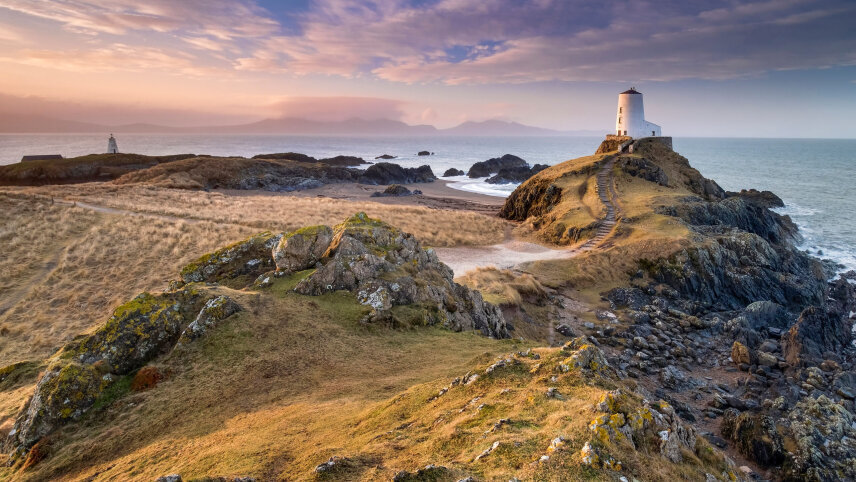
Holyhead is a cozy coastal enclave on the isle of Anglesey off the northwestern tip of Wales. This region boasts the greatest concentration of ancient burial chambers and standing stones in Britain. Holyhead is contained within one of the few three-walled Roman forts in Europe, protected on the fourth side by the sea. The historic St. Cybi's Church lies at the fortress's center and the excellent Maritime Museum chronicles local seafaring history. Locals are as likely to speak Welsh as English; almost two-thirds of the youth speak this fascinating tongue.
Liverpool is celebrated as the “World Capital of Pop;” 56 musicians born and bred here have had #1 singles. Most notably, the legendary Beatles—John, Paul, George and Ringo—hailed from this port city. But it is more than music that has put Liverpool on England's cultural map. Long an important center for maritime commerce, its storied waterfront is home to many buildings of historic, architectural and cultural significance, including a spectacular trio of palatial, early 20th-century buildings known as the “Three Graces,” and the revitalized Royal Albert Dock.
A major port heralded for its shipbuilding heritage, Belfast has undergone a cultural and architectural renaissance unrivaled in the rest of Europe. The influence of Britain is everywhere in this polished capital of Northern Ireland. Some of its most striking buildings exude Victorian flair and cosmopolitan elegance amid its famous Irish charm. Along the Golden Mile, high-end boutiques are reminiscent of those found in Paris, and the opulent Grand Opera House stands as a hub of Belfast culture.
Ullapool enjoys one of the most remote settings in the United Kingdom on the pristine shores of Loch Broom. This tiny town, dotted with distinctive New Zealand cabbage trees, is the largest community for miles surrounded by the stunningly scenic Western Isles, dramatic mountain peaks piercing the sky and unspoiled wilderness. Ullapool's beauty lies in its tranquility. A launchpad for ferries to the stunning Western Isles, this former herring port village is also a popular gateway for walkers, adventurers and nature lovers.
The history of the Scottish Orkney Islands dates back millennia. Neolithic remains, including the ancient site of Brodgar, predate Stonehenge and the Egyptian pyramids. The 13th-century Norse Orkneyinga Saga told of Vikings who ruled here. Later, the earls took over, and the French Renaissance palace that remains is a legacy to their grandeur. Another castle, Balfour, stands regally in a stark landscape. While the northern Europeans greatly influenced this hauntingly beautiful archipelago, consider the Italian Chapel, built by the hands of Italian prisoners during wartime.
Edinburgh has been Scotland's capital since the 15th century, despite the fact that the Union of the Crowns moved it to London in 1603. There is no capital quite like Edinburgh, with its gorgeous setting on green rocky hillocks and splendid views of the sea. Edinburgh Castle, home of the Scottish Crown Jewels and countless medieval treasures, overlooks the city from Castle Rock. The Royal Mile unfurls Edinburgh's architectural gems in all their finery, from the Canongate to St. Giles's Cathedral to the Palace of Holyroodhouse, the Scottish residence of British royalty.
Scotland's third-largest city embraces a strong coastal culture. Torry Battery, a 19th-century artillery battery, offers one of the UK's best places to spot bottlenose dolphins. The region's maritime history is on full display at the quaint former fishing district of Footdee, where narrow lanes between stone cottages lead to a surfing hotspot, Aberdeen Beach. In the heart of the city, with its thriving culinary scene, artisanal producers are flourishing; two of Aberdeen's best-loved are Mackie's ice cream and Six North, one of Scotland's leading craft brewers.
The Shetland Islands are characterized by cultural traditions and dramatic landscapes. An incredibly scenic land, this archipelago is one of Scotland's most remote island outposts. Lerwick is a gateway to some of the Shetland Islands' most beloved residents—the Shetland pony. These diminutive equines can grow up to 46 inches in height and are distinguished by their short, shiny coat in the summer, and thick double coat in the winter, with a long mane and tail. These delightful ponies can be seen grazing and roaming freely throughout the archipelago.
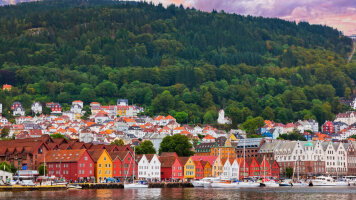
Bergen is home to the Hanseatic League's only kontor (trading enclave) still in existence. Bryggen wharf, a row of timbered Hanseatic warehouses along a quaint quay, is a UNESCO World Heritage Site. Narrow wooden walkways are flanked by parallel rows of small, vibrantly painted buildings overlooking the picturesque Vågen Harbor. This is perhaps the most charming district of Bergen and a delight to explore, from its tight-knit community of workshops where artisans sell their wares to its cafés where freshly prepared smørbrød, or open-faced sandwiches, are on the menu.
Bergen, an ancient city with deep Viking roots, is located in the heart of western Norway, nestled between seven gargantuan mountain peaks. It is also the gateway to the country's magnificent fjords, including the Hardangerfjord and Sognefjord. Founded in 1070 on what was a Viking settlement, Bergen was Norway's capital during the 13th century; today, it is the second-largest city in Norway. Not to be missed is a stroll through the picturesque outdoor fish market, Fisketorget, where the fresh catch of the sea awaits—from cod and prawns to local caviar and icy oysters.
Bergen's Bryggen has come to serve as an important window into both Norway's maritime legacy and architectural traditions. Totaling more than 60 buildings, with the earliest dating to the 18th century, these distinct structures are all that remain after the numerous fires that have ravaged Bergen. They were largely reconstructed within their original property lines, with their restoration and continual preservation staying true to medieval Norwegian building techniques, materials and tools. A UNESCO World Heritage Site, it is a delight to explore.
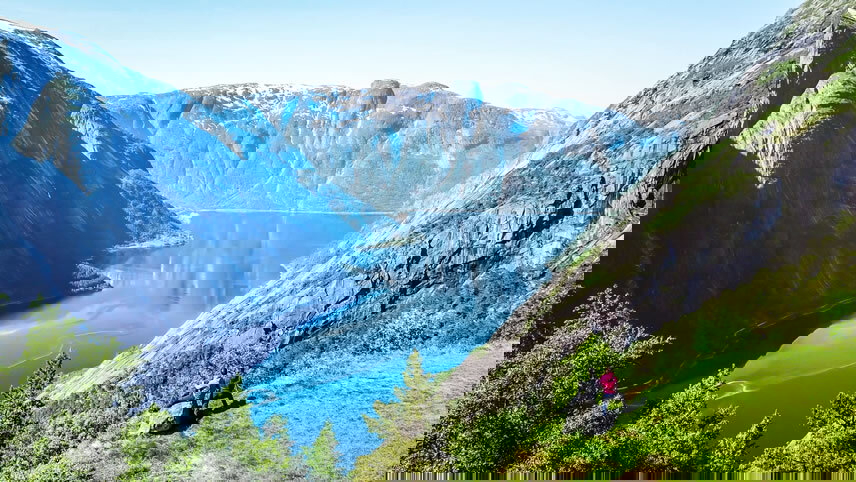
The quaint village of Eidfjord is nestled in the heart of one of Norway's most scenic regions. From the Norwegian Sea, the waters of the expansive Hardangerfjord lead to the smaller Eidfjorden and to this charming mountain hamlet. Eidfjord embodies the Norway of every traveler's dream, the gateway to Hardangervidda, Europe's largest mountain plateau of soaring beauty. Wild reindeer roam here, among stunning, treeless moorlands dotted with pools, rivers, streams and the Vøringfossen Waterfall, a 550-foot cascade that plummets into the cavernous Måbødalen Canyon.
Stavanger, set on Norway's southwest coast, boasts a rich history dating to the end of the last ice age. Known as one of Europe's most interesting old towns, Gamle Stavanger's cobblestone streets are adorned with a collection of wooden buildings from the 17th and 18th centuries. Norway's fourth largest city, it flourished early on, thanks to its strategic location and bountiful fjords. More recently, it has experienced an economic boom from offshore drilling, transforming from a tranquil town into a vibrant city, culminating in the European Capital of Culture honor in 2008.
Oslo is one of Scandinavia's most vibrant cities. Situated along the stunning Oslofjord and famed for its rich Viking heritage and maritime industries, it was founded by Norse King Harald III in 1040. The city is centered around the lively waterfront district, featuring a backdrop of forested hills and architectural gems, including the Oslo Opera House and the Munch Museum. Several other notable museums celebrate Oslo's cultural treasures; perhaps the most renowned, the National Museum, is home to the largest collection of public paintings in Scandinavia.
Oslo's skyline is an eclectic blend of old and new. The city's waterfront Barcode Project features numerous examples of contemporary design, while the old town, or Gamle Oslo, preserves its historic architecture. Dating back to the 13th century, the medieval Akerhus Fortress has played a significant role in Oslo's development and is one of Gamle Oslo's most notable landmarks. The Nobel Peace Center, a thoughtfully redesigned space housed in a former railway station, celebrates Alfred Nobel, who bequeathed his fortune to establish the prestigious Nobel Peace Prize.
Historic ? lborg enjoys a picturesque setting. The best-preserved Renaissance architecture in all of Denmark is here, most famously at the Jens Bang's House, built in 1624. Its clean symmetry helped lay the foundation for today's Scandinavian design. ? lborg, the nation's fourth-largest city, was founded as a trading post by the Vikings during the late 900s. The wealth that poured into merchants' accounts helped build many half-timbered mansions that still stand today. ? lborghus Castle, the seat of the modern-day governors of Northern Jutland, is perhaps the finest example.
Copenhagen charms visitors like a Danish fairy tale. Among the Baltic's most beautiful cities, it began as a fishing village and boasts more than 850 years of history. It has been an important Scandinavian port since the Viking Age and remains one of Europe's most enchanting places, thanks to Tivoli Gardens, the world's second-oldest amusement park, and The Little Mermaid statue sitting in the harbor at Langelinie. Grand palaces also grace the cityscape, including Amalienborg Palace, the royal winter residence, and Rosenborg Castle, home to the Danish Crown Jewels.
After a long postwar rift both between Berlin and the world and within the city itself, Germany's capital has been reunified and undergone a remarkable rebirth as a center of art, culture and architecture. Still riding a wave of newfound energy, exploring its streets feels akin to browsing a newly opened museum. Risen from the ashes of war, many of its buildings that once stood for division now embrace unity. Among them, the Reichstag parliament building embodies a new transparency with its glass dome, and the city's Museum Island celebrates self-expression and creativity.
Founded as a fishing community on the Danish island of Bornholm around the year 1000, the picturesque village of Rønne has played an important role in the maritime trade of the Baltics. Germans, Swedes and Soviets variously overtook the island throughout its history. Today, Rønne is famed for its half-timbered houses and renowned for its celebrated and talented artisans who uphold a long tradition of glassblowing. Along Laksegade and Storegade streets, historic cobblestone lanes and the low-timbered, red-roofed houses of merchants exude the Rønne of yesterday.
Gdańsk is widely known as the city of glowing amber and Gothic cathedrals. Its luster harkens back to medieval times when it was one of the most prosperous cities in the Hanseatic League, the mercantile powerhouse of the Baltic. The city's rich history is on display in the remarkably restored old town, a splendid mix of Gothic, Renaissance and Baroque styles—from the royal residence of Green Gate to the 15th-century Artus Court, a merchant's palace. Traditional Polish pierogies or a glass of Goldwasser, a liqueur created here during the 16th century, round out any visit.
Sail one of the world's most historic waterways, where maritme battles unfolded in a bid to control Northern Europe.
The capital of Estonia, Tallinn is located along the coast of the Baltic Sea. Its well-preserved old town, a UNESCO World Heritage Site, is surrounded by a ring of 17th-century historic fortifications that were built to protect the city from invaders. Inside its walls are the upper town, where the regal castle and the cathedral are located, and the lower town, a maze of merchants' houses, guilds, churches and public buildings. Some of the most notable landmarks include the Town Hall Square, Alexander Nevsky Cathedral, St. Olaf's Church and the Kumu Art Museum.
Elegant Stockholm is nestled where Lake Mälaren's cobalt waters meet the Baltic. This stunning cultural capital extends over 14 islands linked by 57 graceful bridges. Hailed as one of the world's cleanest cities, it boasts numerous green parks. The well-preserved 13th-century Gamla Stan, or old town, boasts gabled merchant houses and an array of architectural styles, from the enormous baroque Stockholm Palace to the art nouveau Royal Dramatic Theater. Strandvägen is one of Europe's loveliest waterfront esplanades and the ideal place to sample some traditional smoked salmon.
Bid farewell to your fellow guests and journey home. Or spend more time exploring, perhaps joining one of our extensions.
Life On Board
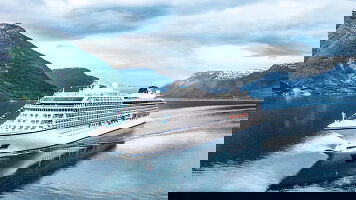
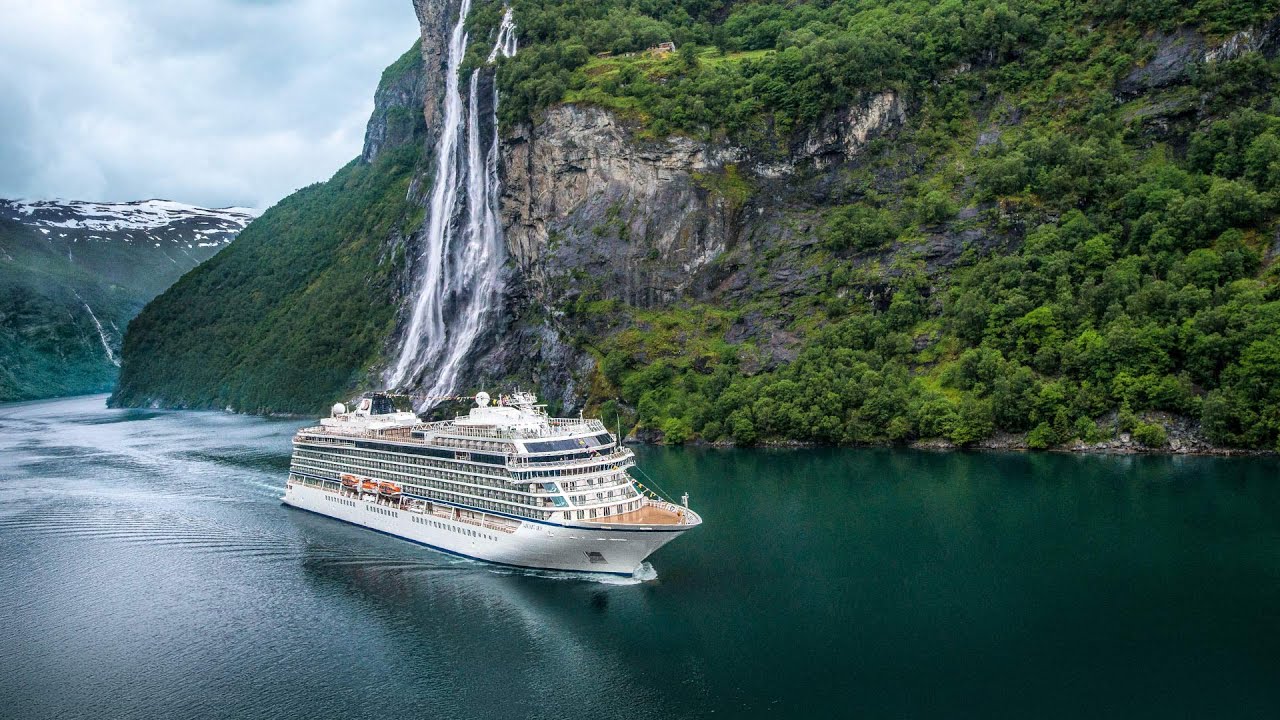
Launched in 2025, Viking Vesta is an all-veranda ship, part of Viking's fleet of award winning, state of the art ships incorporating all the comforts & luxuries you'd expect from Viking. Read more
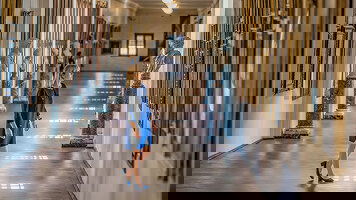
Viking are destination experts. With no casinos or children on board, you can be assured that the focus is firmly on enrichment and education. Read more
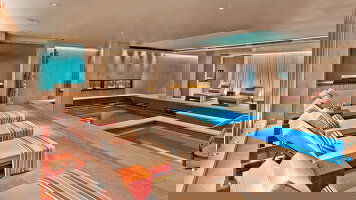
After a day of exploration or just to enhance the relaxation of a day at sea, the on-board Spa will leave you feeling recharged and revitalized. Read more
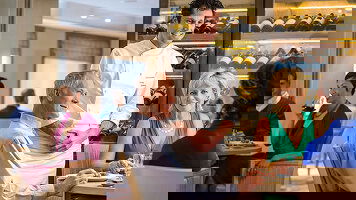
Viking offer eight on board dining options. Beer, wine and soft drinks are available with lunch and dinner at no additional charge of fee. Read more
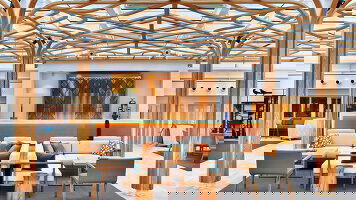
Viking proudly includes all that you need and nothing you do not. A variety of features and services valued at $200 per person per day are standard inclusions in your cruise. Read more

Viking include one complimentary shore excursion in every port of call. Enjoy exclusive entry to cultural treasures and seldom-seen collections around the world. Read more
Download Brochure

Viking Ocean Voyages (2026-27)
Dates & Pricing
Viking Explorer Society
GJ Loyalty Discount
Cabin Layout Options:
Select Cabin Preference:
Tour & cruises prices are per person. Prices shown have savings applied, are subject to availability and may be withdrawn at any time without notice. Pricing and trip details are correct at this point in time, however are subject to confirmation at the time of booking and are subject to change by Viking. For cruise itineraries, cabin images are sourced from the cruise-line and should be treated as indicative only. Cabin inclusions, upholsteries and room layout may differ to the image(s) shown depending on the ship selected and your sailing dates.