Overview

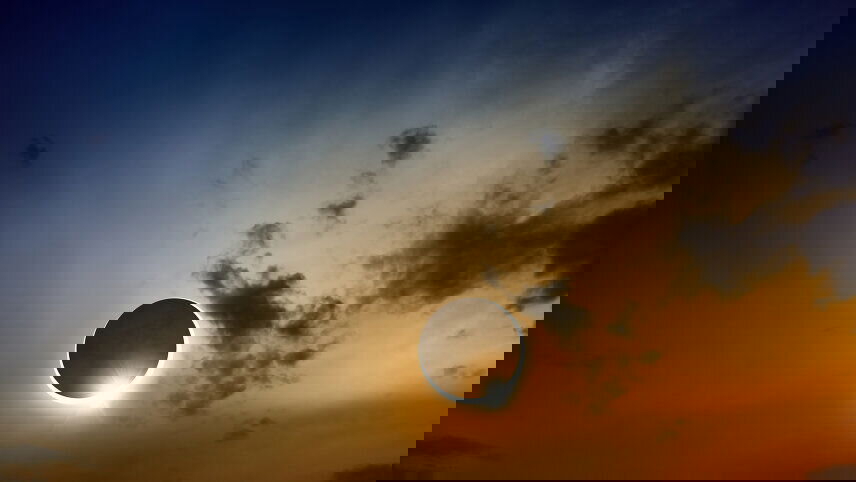
On that day, we provided 100 people, from 17 different nations, the experience of becoming the first-ever humans to witness a total solar eclipse in Antarctica. Now we’ve decided to achieve a comparable feat in the Arctic. However, with innovation as our DNA, we set out to make it distinct from any other eclipse-viewing experience in the industry.
We’ve assembled a taskforce of eclipse experts, a meteorologist read more and members of our Expedition Team to research the geography, terrain, angles of the sun, and Arctic weather patterns to prepare for one of the rarest experiences on the planet – observing a total solar eclipse in the High Arctic.
In addition, you’ll discover the natural wonders of the Westfjords – the unsung wonder of West Iceland. Our journey also takes us into the immense Northeast Greenland National Park, where we cruise the 70mi (110km) King Oscar Fjord. You’ll also get to unleash your inner adventurer on thrilling heli-flightseeing adventures over remote Greenland on Ultramarine’s state-of-the-art helicopters.
Special Guests
David Baron: The veteran science journalist, broadcaster and umbraphile – who has witnessed nine total solar eclipses across the globe – is also the author of the award-winning American Eclipse: A Nation’s Epic Race to Catch the Shadow of the Moon and Win the Glory of the World. Baron has travelled to every continent and more than 50 countries for work and pleasure.
Michael Zeiler: The highly respected author, geographer and eclipse cartographer is a member of the International Astronomical Union Working Group on Solar Eclipses – with an asteroid named in his honour. Zeiler has been witnessing solar eclipses since 1991 and was among the first to develop eclipse maps online.


Wildlife

16-99 Years

127

PLX
Itinerary
Arrive in Reykjavik and transfer independently to your included hotel for the night. Depending on your arrival time, you may wish to explore the fascinating capital of Iceland. .
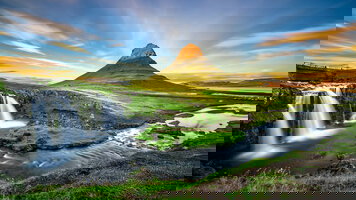
After breakfast, you are transferred to your ship, the technologically advanced Ultramarine. Today we set sail for what's often referred to as “Iceland's best-kept secret” – the Westfjords. This rugged peninsula, on the remote northwestern tip of Iceland, is a stunning region of mountains and fjords. Mountains slope down to the sea in a dramatic fashion, providing plenty of opportunities for incredible landscape photography.
We spend the day exploring the fjords and shores of one of Iceland's oldest regions (home to volcanic rocks dating back 16m years) by Zodiac and ship, and during guided shore landings. The views are diverse: dramatic cliffs, gushing waterfalls, colourful beaches, rolling green hills, high moorlands dotted with rocky outcrops and tiny lakes. You'll likely spot Icelandic ponies and shaggy sheep grazing the hillsides. A few outposts include small fishing communities nestled on the edges of the fjord and along the shores of the Denmark Strait.
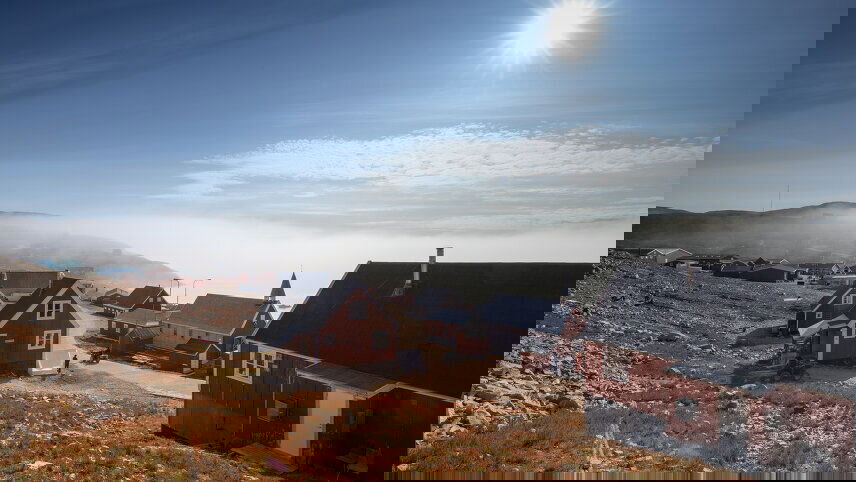
These modest settlements preserve a maritime heritage that dates to the Viking era. Possible community visits include Vigur island in Safjarðardjúp fjord, and the little town of Ísafjörður, noted for its wooden houses, fishing boats and hospital-turned-community hub. .
As we sail north across the Denmark Strait between Iceland and Greenland, your Expedition Team prepares you for the exciting adventures ahead – both on and off the ship. Our team of polar experts present on a wide range of topics, including Arctic history, wildlife, geology and climatology. The team also searches for seabirds soaring about the ship – and they'll most certainly alert you whenever there's a whale sighting. .
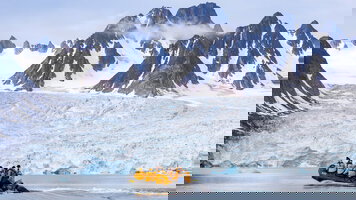
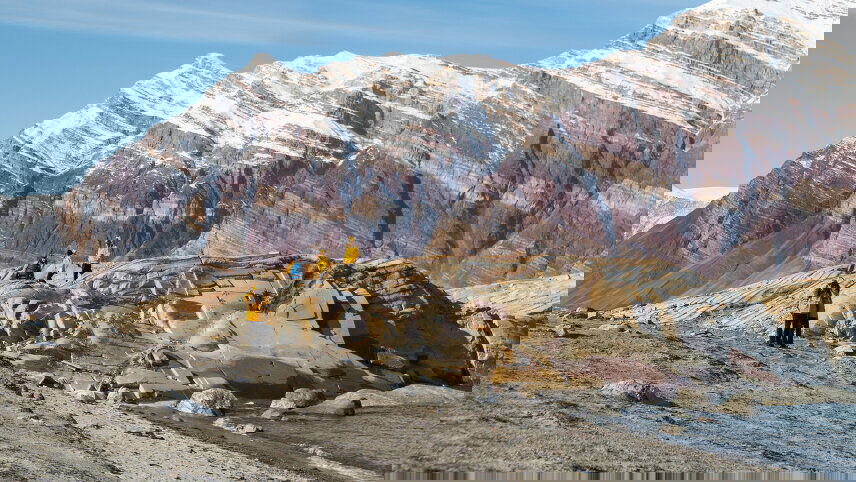
Navigating within the boundaries of the Northeast Greenland National Park, the planet's largest national park, we sail into Kangerluk Kong Oscar, also known as King Oscar Fjord, on the northern border of Scoresby Land peninsula. This major fjord system, poplar for its famously bright sandstone, stretches 70mi (110km) long and 6mi-15mi (10km-25km) wide. When conditions allow, guests can hike in Skipperdal Valley, where mineral deposits have painted the hills red and magenta – landscape photographers take note. As we prepare to position the ship to maximise views of the solar eclipse on Day 7, we can also visit Blomsterbugten (also known as Flower Bay) on Ymer Island.
The floral name was chosen by noted archaeologists Gunnar Seidenfaden and Arne Noe-Nygaard during the Lauge Koch expedition in 1929 upon discovering an abundance of specimens for their botanical collection. Blomsterbugten is also home to a little hut known as Varghytten (the wolf hut). Built in 1929, it is still used by the Sirius Patrol, a special military unit of the Danish Armed Forces. It's possible we'll also hike to the seldom-visited Noa Lake. There will be a palpable sense of excitement in the air as anticipation builds for our much-awaited eclipse viewing.
Behind the scenes, your Expedition Leader, guest eclipse cartographer Michael Zeiler and the Ship Captain will work closely together, monitoring sea and ice conditions and atmospheric forecasts, to strategically position Ultramarine in the best location possible to view the solar eclipse. Relatively few humans get to experience the awe of a polar expedition, even fewer get to combine the wonders of an Arctic expedition with a solar eclipse viewing. Expect presentations by our two special guests, eclipse experts David Baron and Michael Zeiler, in the leadup to the 12 August solar eclipse.
These veteran eclipse enthusiasts will draw on their vast knowledge to ensure you have an eclipse viewing like no other. On the evening of Day 6, guest expert David Baron delivers a keynote presentation titled Scientific America: The Eclipse That Enlightened a Nation, during which he'll delve into the societal impacts of eclipses. Baron will discuss how epic events such as a solar eclipse have spurred societies (and individuals) to scientific greatness. .
Ultramarine sails further into King Oscar Fjord where the team will identify the optimal viewing point along the path of totality. With the total eclipse of the sun lasting 2 minutes and 17. 2 seconds, this region of the Arctic provides the longest duration of totality along the entire eclipse path. The eclipse will begin at 2:34pm; totality will begin at 3:34 pm and end at 3:36 pm.
The eclipse viewing experience, a duration of two hours, one minute and three seconds, concludes at 4. 35pm This 2026 eclipse is part of Saros series 126, which is a cycle of solar eclipses that repeats approximately every 18 years. It's worth noting that total solar eclipses in Polar regions are relatively rare due to the smaller land area and the fact that the sun only illuminates each pole for part of the year. To reiterate, the last total solar eclipse observable north of the Arctic Circle was 2008.
The Quark Expeditions team and guest eclipse experts have been and will continue to research the geography of this region as we prepare for the event. Right up until the day of the eclipse itself, our team will study the mountainous terrain, the angles of the sun, and weather patterns to determine the best possible viewing experience. Your Expedition Leader will outline the day's agenda in the days and hours leading up to the total eclipse. .
As we begin to make our way home, we visit Scoresby Sound (Scoresby Sund), a large fjord system on the eastern coast of Greenland. Except for a small population of Inuit at Ittoqqortoormiit, near the mouth of the fjord, Scoresby Sund is largely uninhabited. Warm water polynyas (areas of open water surrounded by sea ice) near the mouth of the fjord support diverse ecosystems of flora and fauna, which is unusual for the Arctic. Numerous mountains, valleys and glaciers line the fjords, giving rise to a spectacular collection of icebergs.
We also plan to journey through Bjornar (Nannut Qeqertaat), a group of islands (also known as Bear Islands) located northeast of Milne Land, named during the 1891-92 Den Østgrønlandske expedition. The collection of 11 main islands fascinates visitors with its network of channels, steep cliff faces and fascinating geology. While exploring this area, you'll enjoy Zodiac cruises and shore visits to several locations.
We also watch for grazing muskoxen as 40 percent of the world's population lives in Northeast Greenland National Park. Sailing through spectacular Scoresby Sund, where many icebergs are birthed, you'll immediately appreciate why previous visitors have described it as the most beautiful fjord system on the planet. We visit sites such as Vikingbukta, known for its shoreline of basalt columns, and Sydkap, where you can explore the tundra and remains of ancient Thule settlements. .
Our Arctic adventure winds down as we sail back across Denmark Strait, southbound this time. We invite you to use your remaining time onboard to attend an educational presentation by one of our experts, share your photos, book a massage in Ultramarine's Tundra Spa, sip an icy cocktail in the bar or ask any questions you may have for our enthusiastic Expedition Team, who will also alert guests of any wildlife sightings. .
You'll disembark in Reykjavik, Iceland's bustling capital, at the end of your journey. If you have booked post-expedition accommodation, we provide a transfer to a central downtown location.
Trip Inclusions
- Witness a total solar eclipse from a polar ship in the High Arctic
- Learn about the cultural and scientific significance of solar eclipses from guest experts
- Take a heli–flight over remote Greenland
- Cross the Arctic Circle twice, southbound and northbound
- Explore the seldom-visited Westfjords, the hidden gem of West Iceland
- Witness the wildlife of Northeast Greenland National Park
- 11 nights on the ship, 1 night hotel in Reykjavik
- All meals while on the ship, plus beer and house wine during dinner
- All transport and listed activities
- Tour leader throughout and qualified Expedition Staff
- Itinerary and inclusions are subject to change
- Price is for land, cruise and internal flights as specified. Flights not specified are not included
Operator
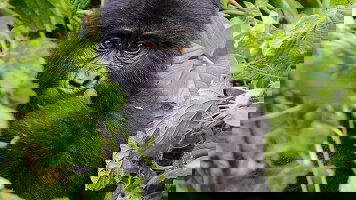
Enjoy thrilling animal encounters from the isles of the Galapagos to the plains of Africa. Read more
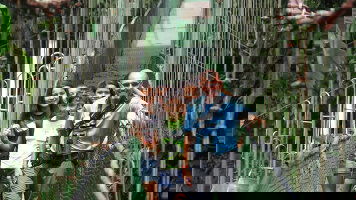
Exodus chooses their Leaders carefully. Professional, dedicated and are passionate about sharing their home countries. Read more
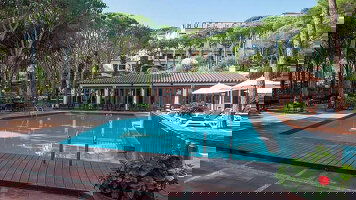
Wherever possible, Exodus chooses properties that are locally owned and that reflect the area you are visiting. Read more
Prices & Dates
There are currently no departures available on this trip. Either it's the end of the season and new departures will be released shortly, or this itinerary has been changed and is not operating this season. Feel free to contact us for information about when next seasons dates will be released or click here to view general release dates for all destinations.
Tour & cruises prices are per person. Prices shown have savings applied, are subject to availability and may be withdrawn at any time without notice. Pricing and trip details are correct at this point in time, however are subject to confirmation at the time of booking and are subject to change by Exodus. For cruise itineraries, cabin images are sourced from the cruise-line and should be treated as indicative only. Cabin inclusions, upholsteries and room layout may differ to the image(s) shown depending on the ship selected and your sailing dates.