Bayous, Blues & Bluegrass
Overview



Itinerary
The birthplace of American jazz, New Orleans exudes a festive atmosphere along the balcony-lined Bourbon Street. Here, in the heart of the French Quarter, soulful rhythms lift the spirit, especially during the city's Mardi Gras celebration. Founded by French colonists in 1718, New Orleans served as a territorial capital before the Louisiana Purchase of 1803. Its distinctive St. Louis Cathedral—named for King Louis IX of France—is the oldest cathedral in the country. The city's French, African and other influences flavor its vibrant culture and tantalizing Creole cuisine.
The Lower Mississippi region is dotted with historic mansions; Darrow is the gateway to these grand homes, meticulously kept to preserve the memory of early Southern American history. Here, imposing houses share the riverscape with moss-draped oak trees and farm fields. It is easy to imagine steamboats and other vessels delivering supplies and materials to these stately front doors. Today, several properties are designated National Historic Landmarks for their architecture, their landscaping, and the contributions of those who maintained the houses and the lands.
Boasting more than 140 buildings on the National Register of Historic Places, St. Francisville is set along one of the most historic bluffs of the Mississippi. The town is said to be “two miles long and two yards wide” because it was originally built on a narrow ridge overlooking the river. Founded in 1809, it is the oldest town in Louisiana's Florida Parishes. Remarkably, many of St. Francisville's structures are not its own; rather, they were moved upriver from Bayou Sara in the 1920s after the small settlement was destroyed by years of flooding.
Baton Rouge paints a historic picture on the eastern bank of the Mississippi. Its early success was due to its flood-free location upon the first natural bluff north of The Delta. French explorer Pierre Le Moyne, Sieur d'Iberville, named the city after a red-hued pole that marked the area's tribal hunting grounds. Its cultural diversity—from its Cajun and Creole music and cuisine to its art offerings—reflects the influences of those who settled and lived here throughout Baton Rouge's history. The city boasts the tallest capitol building in the United States.
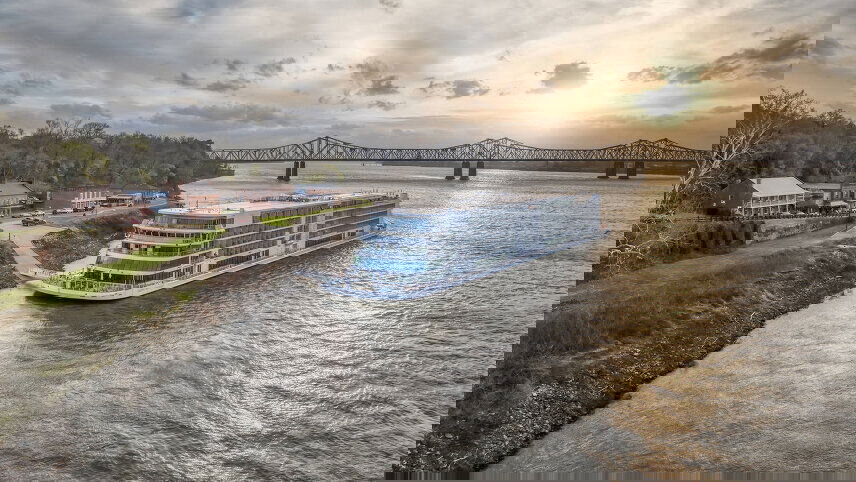
Natchez has one of the highest concentrations of historic Southern estates in the country. More than 200 perfectly preserved homes line its avenues. It is the oldest city on the Mississippi, established in 1716 by French colonists and named for the Natchez tribe who once called it home. With its ideal locale, the city became a crossroads among Native American and European cultures. Famously, Natchez was the southern terminus of the Natchez Trace, the overland route to Nashville that allowed traders to bypass the strong upriver currents. Today, it evokes small-town America.
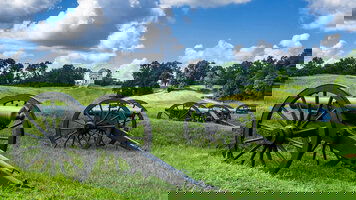
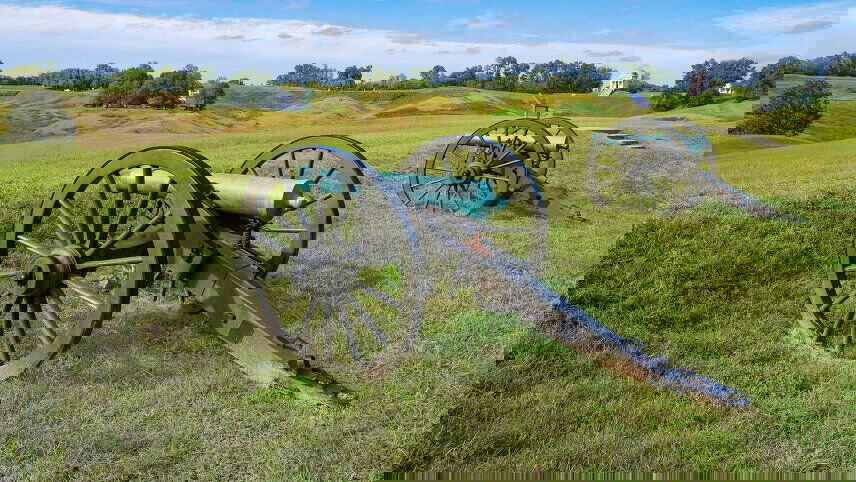
Located on a high bluff where the Yazoo River flows into the Mississippi, Vicksburg is the epitome of Southern heritage and charm. It was incorporated in 1825 and, with its prime locale on the Mississippi, grew into an important port. During the Civil War, Abraham Lincoln called it “the key to the South.” And it indeed proved to be the site of the conflict's most pivotal battle, the Battle of Vicksburg, after which the Confederates surrendered to Ulysses S. Grant. The Vicksburg National Military Park preserves the battle site's rolling green fields and grand monuments.
Greenville is Mississippi's largest river port, set atop the highest point along the Mississippi River between Vicksburg and Memphis. Its rural setting belies a diverse artistic heritage. The Muppets creator Jim Henson was born here, and the city has been home to numerous authors, including noted historian Shelby Foote. Greenville is also steeped in the blues; famed songwriter W.C. Handy was inspired to popularize the genre after seeing pioneering musician Prince McCoy perform at a nearby dancehall and neighboring Indianola was the hometown of the legendary B.B. King.
Teeming with a wide variety of birdlife and a breathtaking array of picturesque landscapes—including deep-green forests, lush wetlands and a patchwork of fertile farmlands—the Lower Mississippi abounds with natural beauty. This portion of America's great waterway is also rich in history and culture, as reflected in the classic literature and music that have drawn inspiration from it.
Situated on the Chickasaw bluffs overlooking the Mississippi River, Memphis is revered for its blues music and barbecue. Some of the most famed names in blues, including B.B. King, got their start in Memphis, and the city has a well-deserved reputation as the home of this classic American music genre. Memphis is also celebrated for its culinary heritage and is renowned for its traditional barbecue restaurants serving flavorful dry rub ribs. Rich in history and culture, Memphis's many notable museums include the National Civil Rights Museum and Elvis Presley's Graceland.
The “Queen City of the South” is the birthplace of Memphis blues, popular in vaudeville shows of the early 20th century. With its strong trade in agricultural goods and other natural resources, it grew into one of the South's largest commercial centers. Memphis famously boasts a wealth of civil rights history, much of it along Beale Street and at the Lorraine Motel, site of Dr. Martin Luther King, Jr.'s assassination. It is also the home of Graceland, the mansion where Elvis Presley, “the King of Rock 'n' Roll,” lived.
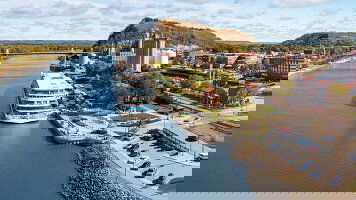
The rich and varied landscape along the Mississippi River is characterized by wide floodplains, rocky outcroppings and sandy beaches nestled between fertile farmland and bustling bankside cities. Indigenous peoples used the river for thousands of years before Europeans began exploring the region during the 16th and 17th centuries. It became an important trade route during the 19th century, with the rise of steamboats and river commerce. Today, the river is an important ecological region, with diverse wildlife and habitats, including wetlands and forests.
Located at the confluence of the Tennessee and Ohio rivers, Paducah is one of Kentucky's hidden gems. A UNESCO Creative City, Paducah is famed for its preserved 19th-century architecture and historic buildings that line the main street. The city's Downtown streets are a delight to explore on foot. The National Quilt Museum houses a superb collection of contemporary style quilts by artists from around the globe. Paducah is also famed for its “Wall to Wall” murals, colorful paintings by different artists that document the heritage and history of the city and the region.
Nestled on the banks of the Ohio River, the natural landscapes of Henderson have been an inspiration for many of its residents, including the naturalist John James Audubon and blues musician W.C. Handy. Audubon State Park features a museum dedicated to the naturalist's work, while bronze sculptures inspired by his paintings can be found in the vibrant downtown area. Handy's legacy is celebrated annually alongside the city's barbecue tradition at the W.C. Handy Blues and Barbecue Festival, which has hosted performers, including Bill Monroe and Emmylou Harris.
Set on the south side of a deep bend in the Ohio River, Owensboro is considered by many to be the cultural and entertainment hub of western Kentucky. Its dedication to music is deeply rooted in its past. Bill Monroe, known as the “Father of Bluegrass,” was born and raised nearby, and the Bluegrass Music Hall of Fame and Museum attracts visitors from around the world. Owensboro is also famed for its barbecue and distilleries; it is home to both an international barbecue festival and the Green River Distilling Company, one of the oldest distilleries in the state.
Renowned for its southern charm and rich history, Louisville is set along the Ohio River and is the largest city in the state of Kentucky. Perhaps best known as host city for the Kentucky Derby, one of the world's most prestigious horse races, the city attracts more than 150,000 visitors to the event annually as well as a television audience of millions across the globe. Beyond the racetrack, Louisville's sports heritage includes boxing. The city was the birthplace of legendary boxer Muhammad Ali and visitors can explore his legacy at the Muhammad Ali Center.
Bid farewell to your fellow guests and journey home. Or spend more time exploring, perhaps joining one of our extensions.
Life On Board
Viking's award-winning Longships® showcase innovative engineering, streamlined Scandinavian design and understated elegance. Read more
A Mississippi River cruise offers you the rare opportunity to sail through America's heartland. Read more
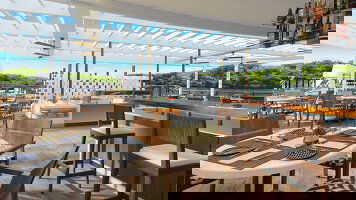
Elegant, light-filled ships thoughtfully designed to connect you to your destination. Read more
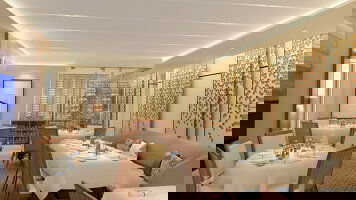
From relaxed, multi-course fine-dining to casual meals on the Aquavit Terrace. Read more

Viking proudly includes all that you need and nothing you do not and your river cruise fare. Read more

Viking offer behind-the-scenes insights and opportunities that set them apart from other travel companies. Read more
Download Brochure

Viking River Voyages (2026-28)
Dates & Pricing
Viking Explorer Society
GJ Loyalty Discount
Cabin Layout Options:
Select Cabin Preference:
Tour & cruises prices are per person. Prices shown have savings applied, are subject to availability and may be withdrawn at any time without notice. Pricing and trip details are correct at this point in time, however are subject to confirmation at the time of booking and are subject to change by Viking. For cruise itineraries, cabin images are sourced from the cruise-line and should be treated as indicative only. Cabin inclusions, upholsteries and room layout may differ to the image(s) shown depending on the ship selected and your sailing dates.
Similar River Cruises