


Itinerary
Embark your ship and settle into your stateroom. With a thriving arts scene, lush beauty and magnificent seaside vistas, Bali has long beckoned travelers in search of ultimate beauty. The island's rich Hindu culture has forever held that gods live in all things natural—from mountains to streams to pebbles on the beach—lending the island a peaceful air. Denpasar is the island's thriving capital. Founded as a market town, it still bustles with colorful stalls and vast emporiums selling bright sarongs and intricately patterned batik.
With its distinct flavors and traditions, Bali's food culture stands apart from that of the rest of Indonesia. Indigenous ingredients, recipes and techniques blend with influences from the island's Chinese and Indian heritages to create dishes found nowhere else. For many, a daily ritual may involve shopping for ginger, turmeric and kaffir lime in spice markets or for fruits, vegetables and meats in a pasar pagi. Traditional warungs, tiny family-owned food stands, often specialize in a particular dish, such as babi guling (suckling pig) or bebek betutu (crispy duck).
Surabaya played a central role in the Indonesian War of Independence. The memorials to that struggle stand as soaring testaments to the will and courage of the Javanese. Today, Surabaya is a diverse patchwork of vibrant cultures. Mosques stand proudly in the Arab district and elegant churches adorn the European quarter. But perhaps the most authentic way to fully experience Java's varied cultural influences is by tasting them. A stroll through the Pasar Pabean traditional market reveals fresh fish, vegetables, spices, incense and countless other specialties.
Java is Indonesia's repository of history and island culture. The bustling port of Semarang was founded by the Dutch and hints of the island's colonial past dot the cityscape. Outside the city, Borobudur, the largest Buddhist monument in the world, strikes a dramatic pose against a backdrop of four volcanoes. A popular place of pilgrimage and a UNESCO World Heritage Site, the massive pyramidal temple towers to a great height. The devout walk up a clockwise path to the pinnacle, passing 2,672 reliefs and 504 Buddha statues along the way.
Sail one of the world's most successful commercial trade routes in history. The countless crates of spices carried over the Java Sea reportedly contributed to the famed Dutch Golden Age.
Singapore is the world's only island city-state. Established in 1819 for the East India Company by Sir Stamford Raffles, after whom the famed hotel is named, it grew from a secluded backwater into a shabby port city before transforming itself into a sophisticated metropolis. The technology and economy are highly advanced here, yet the islands host plentiful green parks with tree-lined footpaths and the stunning National Orchid Garden. For a panoramic view of it all, the observation deck of the Marina Bay Sands towers offers the perfect solution.
Singapore transformed from a sparse island to the economic giant of Southeast Asia. Malays, Indonesians, Indians, Sri Lankans and Chinese have all contributed to the city's rise as one of the world's most technologically advanced cities. Buddhist, Hindu and Taoist temples rub elbows with Muslim mosques and Christian churches, alongside street signs in English, Chinese, Tamil and Malay. Singaporean cuisine, too, has been shaped by the many cultures that have converged here; there is no better place to sample local fares than at one of the city's many open air food courts.
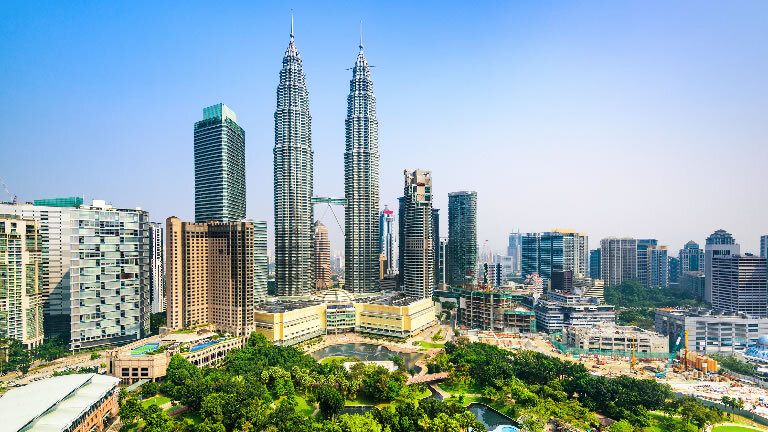
The capital of Malaysia, Kuala Lumpur was built by Chinese tin prospectors in the mid-1800s. Since then, the city of KL, as the locals call it, has grown into a stunning mix of colonial, Moorish, Tudor, neo-Gothic and Grecian-Spanish architecture. The two-story shophouses of Old Market Square, with storefronts below and residences above, reveal the lives of merchants. The magnificent Petronas Towers are the centerpiece of this fascinating city; the side-by-side twin spires resemble a pair of rockets, connected by a two-story sky bridge that spans the 41st and 42nd floors.
This narrow passage between Malaysia and the Indonesian island of Sumatra was a major route for early traders shipping glassware, precious stones, camphor, ivory and sandalwood. Today, it is one of the busiest shipping channels in the world, linking the Indian and Pacific Oceans. Along this historic waterway, the lush shores of Sumatra grace the horizon to the south, stretching out to lowlands, mangroves and swamps. The more urban skylines of Malaysia—George Town and Kuala Lumpur among them—shimmer in the distance to the north.
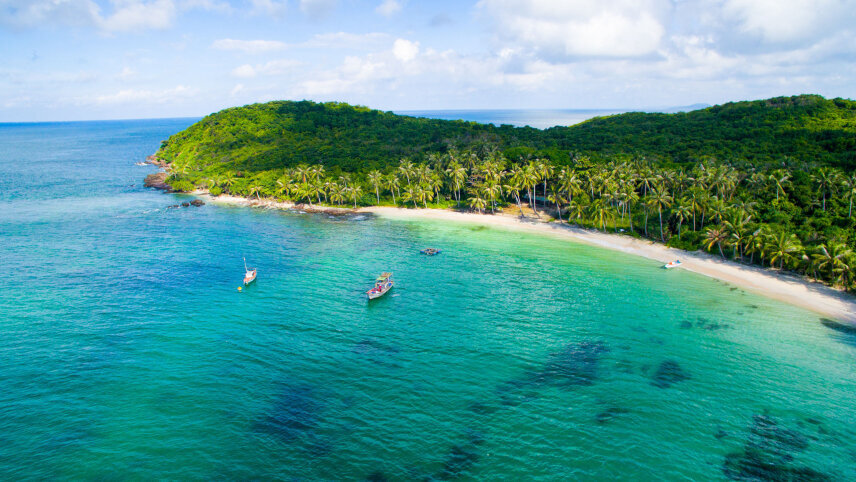
The Gulf of Thailand, the massive sea basin bordered by Vietnam, Cambodia, Thailand and Malaysia, is still known as the Gulf of Siam to the Malay and Khmer people. Long stretches of sandy beach, low-lying emerald hills and soaring mountains surround this oval-shaped gulf. The lush hills of Botum Sakor National Park unfold north of Sihanoukville, Cambodia. Along Thailand's shores, several beach-ringed islands point the way to Laem Chabang port.
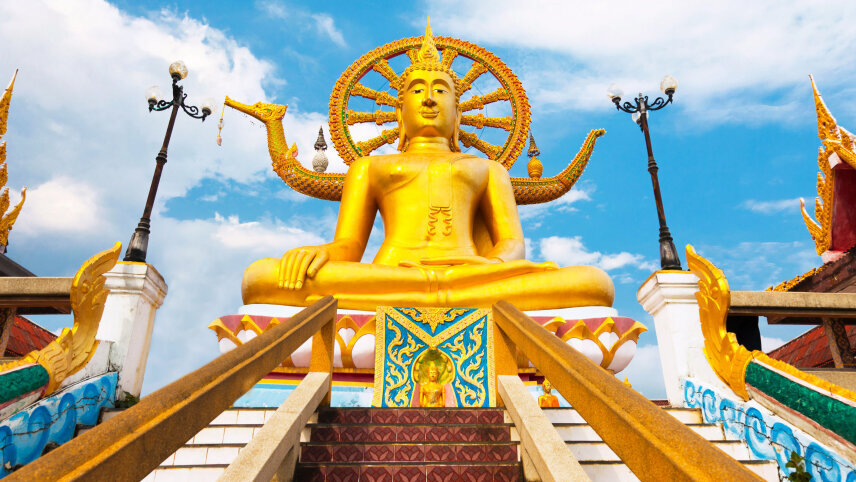
Koh Samui is Thailand's second-largest island after Phuket and a paradise of swaying palms and scenic beaches. Sun-loving beachcombers from Thailand and beyond come to the island to wade, swim and lounge in the lapping tides. Until the early 1970s, this self-sufficient community had no roadways; crossing the island required a full-day trek across nine miles of mountainous jungle. Today, Koh Samui retains the slower pace of simpler times. The cherished traditions of old Siamese fishing villages, too, are preserved as tiny boats gently bob on turquoise waters.
Often called the “City of Angels,” Bangkok is Thailand's largest and most populous city. A sprawling and heady mix of modern skyscrapers, floating markets and longtail boats skimming the Chao Phraya River, the scintillating capital of old Siam engages all the senses. Yet it all seems devoutly grounded by the presence of its revered gilded wats, or temples. Wat Arun, in particular, can be seen from all corners of the city. This majestic riverside “Temple of Dawn” catches the first light of each day like a pearl, casting a soft glow on one of Asia's most remarkable cities.
Bid farewell to your fellow guests and journey home. Or spend more time exploring, perhaps joining one of our extensions.
Life On Board
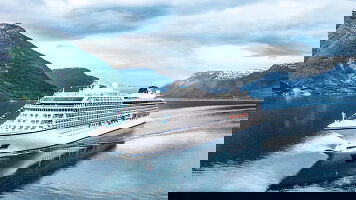
Launched in 2018, the Viking Orion is an all-veranda ship, part of a fleet of award winning, state of the art ships incorporating all the comforts & luxuries you would expect from Viking. Read more
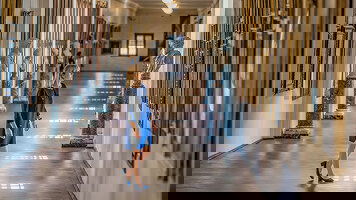
Viking are destination experts. With no casinos or children on board, you can be assured that the focus is firmly on enrichment and education. Read more

After a day of exploration or just to enhance the relaxation of a day at sea, the on-board Spa will leave you feeling recharged and revitalized. Read more
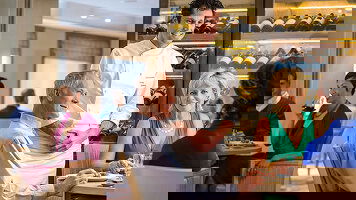
Viking offer eight on board dining options. Beer, wine and soft drinks are available with lunch and dinner at no additional charge of fee. Read more
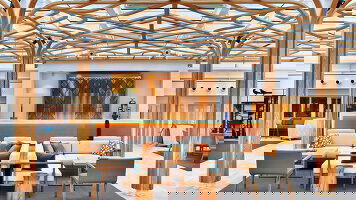
Viking proudly includes all that you need and nothing you do not. A variety of features and services valued at $200 per person per day are standard inclusions in your cruise. Read more
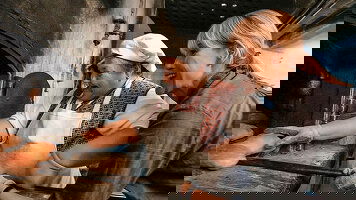
Viking include one complimentary shore excursion in every port of call. Enjoy exclusive entry to cultural treasures and seldom-seen collections around the world. Read more
Cruise Reviews (1)

Download Brochure

Viking Ocean Voyages (2026-28)
Dates & Pricing
Viking Explorer Society
GJ Loyalty Discount
Cabin Layout Options:
Select Cabin Preference:
Tour & cruises prices are per person. Prices shown have savings applied, are subject to availability and may be withdrawn at any time without notice. Pricing and trip details are correct at this point in time, however are subject to confirmation at the time of booking and are subject to change by Viking. For cruise itineraries, cabin images are sourced from the cruise-line and should be treated as indicative only. Cabin inclusions, upholsteries and room layout may differ to the image(s) shown depending on the ship selected and your sailing dates.
Similar Cruises