The Silk Road of Kyrgyzstan & Uzbekistan



Itinerary
Our tour starts today in Bishkek, a former Silk Road settlement. Kyrgyzstan's capital is a young city, starting life as a clay fort built by the Khan of Kokand in 1825, only to be destroyed by the Russians 43 years later and rebuilt in 1878. For those arriving on time today, our tour leader plans to meet you in the hotel reception at 11am for a welcome meeting, followed by a sightseeing tour by bus and on foot. We'll learn about the main monuments and buildings of the city and take a leisurely walk through Oak Park. If you'd like an airport transfer today, you'll need to arrive into Manas International Airport (BSZ), which is a 50-minute drive from the hotel. For those arriving on flights in the early hours of this morning or for anyone arriving before today, please contact us to book additional nights' accommodation. Please note, if you'd like to join the Bishkek City Tour today, you'll need to arrive at the hotel by 11am. If you're booking your own flights, we recommend giving yourself at least one hour to clear the airport. From the airport to the hotel is around a 40-minute drive, so the latest your flight can arrive is 9am. If you miss the welcome meeting, our tour leader will inform you of any essential information at 6pm.
Leaving behind the city this morning, we'll head into the heart of this small nation. At its centre lies Issyk Kul Lake, surrounded by the Tien Shan Mountains. Along the way, we'll visit the Burana Tower, all that remains of the ancient city of Balasagun. The tower is believed to be the oldest minaret in Central Asia with a detailed external pattern of relief work in brick. We'll also see the petroglyphs in Cholpon-Ata where stones vary in size from 30 centimetres to 3 metres. Ancient drawings on the stones date from the 7th century BC to the 3rd century AD, many of them figures of hunters, ibex, goats and reindeer. From here, we'll also enjoy views of Issyk Kul Lake. We'll then follow the shore along the north of the lake arriving in the city of Karakol in the evening. Strategically located, this was once a Russian military outpost, and the gateway of expeditions into the Tien Shan and beyond. This evening, we'll enjoy a meal cooked by a family from an ethnic minority group, either Dungan or Uygur; both groups are Muslim people of Chinese origin. We'll sample their hospitality and learn about their traditions and lifestyle.
The great Russian explorer Prjevalsky died in Karakol before an expedition to Tibet and the small museum dedicated to him gives a great insight into the 19th century Central Asian explorers. While in the city, we'll have the opportunity to see the Chinese influence at the Dungan mosque built in 1910 in the style of a Buddhist pagoda (it is made of wood without any nails) whilst the strong Russian influence is evident at the Orthodox Cathedral. After sightseeing in the morning, we'll drive to visit the Valley of Seven Bulls, at Djety-Oguz, where large red sandstone rock formations tower over the valley. During Soviet times this area became known as a health retreat, and the sanatorium remains. It became famous when after his first flight in space Yuri Gagarin came here to decompress.
Today, we'll continue along the southern shore of Issyk Kul Lake where we'll stop to take a bracing dip into the cold waters of the lake. Continuing on, we'll stop again to see the waterfalls within the dramatic Barskaun Gorge, as well as having an opportunity to spot birds whilst we enjoy a river-side picnic. In the afternoon we continue to make our way, and our final stop of today's journey is in Bokonbayevo where we meet an Eagle Hunter. Here we will see how this form of falconry has been practiced and perfected over centuries. Central Asia is the birthplace of the ancient tradition of eagle hunting. The nomads who roamed the Central Asian steppes began to tame these birds of prey thousands of years ago and the tradition was passed on from generation to generation. Kyrgyzstan is one of the few countries that still follow some traditions of the nomadic civilization and there are a handful of expert hunters left to this day who are determined to keep this ancient practice alive. Later today we'll reach Kochkor, a typical Kyrgyz town where we'll spend the night in local guesthouses, a great way to get to know the locals. Depending upon size, we might find the group split between guesthouses.
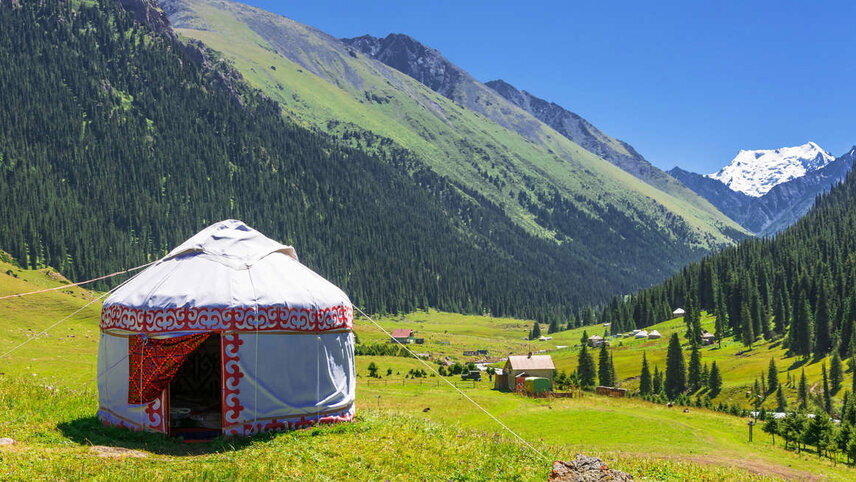
The women of Kochkor are famous for felt-making and this morning, we'll have the chance to see how 'shirdaks', traditional felt applique rugs, are made by hand. We'll then set off along a dramatic mountain road via Kalmak-Ashu Pass at a lofty 3,346 metres/10,977 feet where we can drink in our surroundings as we journey to Song Kul. The lake itself is spectacular and the second largest in Kyrgyzstan, situated at an altitude of 3,013 metres/9,885 feet above sea level. Surrounded by dramatic snow-covered mountain peaks, it's hidden in a flat, plate-like 'jailoo' (the Kyrgyz word for mountain pasture) which is covered in Edelweiss flowers at certain times of the year. In the summer the shepherds drive the livestock (sheep and/or horses) up into the mountains for pasture and establish a camp for the season. After settling into our yurts, we'll have the opportunity to relax and unwind or perhaps go on a walk by the lake. Yurts are circular dwelling structures made from felt and insulated with sheepskins, traditionally made to be portable and accommodate up to four people. Basic long drop toilets are available in a separate building along with an outdoor basin for washing and are shared with the camp. The experience is very basic, however, gives a unique insight into how local nomads traditionally live and allows us to wake up the next morning in the middle of nowhere.
This morning, you can choose to relax by the lake or - weather permitting - hike into the surrounding mountains. Leaving the camp, we'll walk along grassy, undulating slopes through the Moldo-Toor range. Song Kul Lake offers a spectacular backdrop to the north and we hope to meet locals along the way to get a further glimpse into this traditional lifestyle. The walk takes around four hours and reaches an altitude of 3,300 metres/10,826 feet. After lunch, we'll leave our yurts and make our way back to Kochkor for the night, this time taking a different route crossing the Teskey-Topok Pass, arriving in town in the late afternoon. Then, this evening, we'll head out to enjoy a musical folklore ensemble performance with a wide repertoire of traditional ballads, love songs, work songs and lullabies, accompanied by Kyrgyz national instruments.
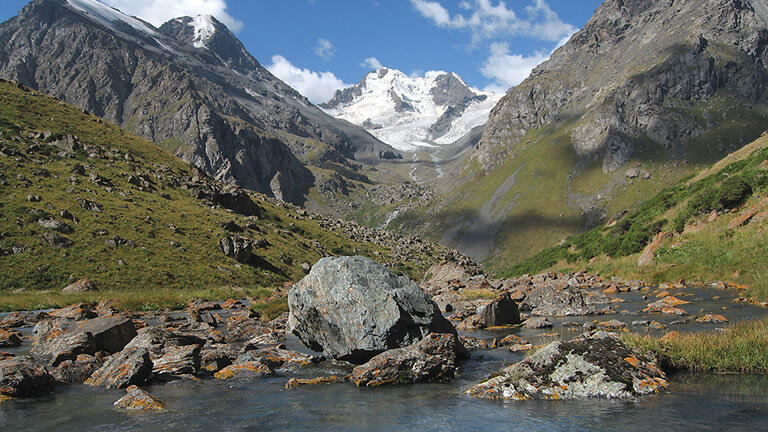
Today we travel west through the dramatic landscapes of the inner Tien Shan Mountains, passing through some of Kyrgyzstan's most striking high-altitude scenery. Our route takes us across the broad Suusamyr Valley, a vast alpine basin lying at elevations of around 2,000-3,200 metres (6,560-10,500 feet) between the Kyrgyz Ala-Too and Talas Ala-Too mountain ranges. Stretching for approximately 155 kilometres (96 miles), the valley is carpeted with alpine grasses in summer and covered in deep snow during winter. There will be plenty of opportunities to stop for photos as we cross mountain passes and take in the changing scenery. Later in the afternoon, we cross the Ala-Bel Pass before following the Chychkan River to the confluence with the It-Agar River. From here, we set out on a mostly easy walk along a stony earth trail, following the river uphill to the small alpine lake of Saz-Köl. Depending on timings, this walk may take place the following morning instead. Overall driving time approx. 8 hours.
After breakfast, we'll leave Chychkan and continue south through Kyrgyzstan's wild and memorable landscapes towards Jalal-Abad. We'll drive through the wild landscapes that make Kyrgyzstan so memorable and along the way we will stop at the Toktogul Reservoir to take in the beautiful views and a photo stop opportunity. Our destination is Jalal-Abad, located at the north-eastern end of the Fergana Valley and nestled in the foothills of the Baba Ata Mountains. The city is well-known for its spas and is responsible for producing several brands of mineral water sold across Central Asia. It's also an important agricultural hub, providing the majority of the fruit and vegetables for the region. Upon arrival, the rest of the afternoon is free to either explore or relax after the long drive. Overall driving time approx. 7 hours.
This morning we'll travel approximately 90 kilometres/56 miles north to the charming village of Arslanbob. Here, we'll spend the day with a local guide exploring the vast walnut forests, often referred to as the “'84 Royal Woods of Kyrgyzstan”'84. These remarkable trees can reach up to 30 metres/98 feet and grow wild across the mountain slopes, offering spectacular views throughout the walk. We'll begin in the centre of the village, where our visit coincides with the lively Wednesday bazaar, giving us a glimpse into local life. From here, we'll set off on foot towards the waterfall, covering a distance of around 2.5 kilometres. At the waterfall, there are steps that allow us to get closer, although conditions can be wet and slippery, particularly after rain. Our guide will advise on the safest approach, and you'll always have the option to stay on higher paths where the views remain excellent, or to turn back earlier if you wish. Reaching the walnut forest involves an uphill walk of approximately 500 metres, followed by a descent on the return. The path can be uneven and, at times, slippery, with no alternative route in certain sections, so we'll need to take care and wear sturdy footwear. If you'd prefer a more relaxed pace, you can choose to shorten your walk, remain in the village, or travel part of the route by jeep at an additional cost. Overall, we'll spend around three to four hours walking, and the day is generally graded as easy, although the terrain underfoot should be considered. Despite this, the walnut forest remains one of Kyrgyzstan's most distinctive natural highlights and a rewarding experience. Later in the afternoon, we'll make our way back to Jalal-Abad.
In the morning, we'll depart from Jalal-Abad and drive to Osh, Kyrgyzstan's second-largest city and one of Central Asia's oldest continuously inhabited settlements. Often referred to as the country's southern capital, Osh has been an important crossroads of cultures and trade for more than 3,000 years, thanks to its strategic location along the historic Silk Road. Upon arrival, we'll visit the iconic Sulayman-Too (Sulayman Mountain), a UNESCO-listed sacred site and one of the most important pilgrimage destinations in Central Asia. Revered in Islamic tradition and associated with the prophet Sulayman (Solomon), the mountain has attracted travellers, merchants and pilgrims for centuries. A paved path with steps leads to the summit and, although the climb can feel tiring in Osh's summer heat, the effort is rewarded with sweeping views across the city and the surrounding Fergana Valley. Following our visit, we'll leave part of the afternoon free to relax and enjoy Osh at your own pace. As summer temperatures can become particularly hot, this is a chance to rest at the hotel, cool off, or explore independently. Those who wish to venture out may enjoy strolling through Osh's tree-lined streets, stopping at a shaded café, or browsing the lively Osh Bazaar, one of Central Asia's oldest and most vibrant markets, filled with spices, dried fruits, traditional breads and local handicrafts. In the evening, we'll learn how to prepare boorsok, Kyrgyzstan's much-loved national bread and a staple of traditional hospitality. Made from soft dough and deep-fried until golden, boorsok is cooked in generous quantities, often serving as both food and decoration. Overnight at hotel in Osh for our last night in Kyrgyzstan. Overall driving time approx. 4 hours
Leaving Osh behind this morning, we'll make our way into the expansive Fergana Valley. We'll travel to checkpoint 'Dostlik', on the Kyrgyz-Uzbek border, where we'll go through immigration and customs formalities. We'll also bid farewell to our Kyrgyz leader as we meet our tour leader from Uzbekistan. From the border, we'll drive to our overnight stop in Fergana City.
This morning, we'll set out to start the final leg of our journey. We'll travel in a convoy of smaller vehicles as we cross over Kamchik Pass before stopping at Rishtan town, famous for its ceramics, where we'll visit a workshop. The Silk Road introduced Chinese ceramics to Uzbekistan, and while craftsman initially emulated Chinese designs, they soon evolved their own, now traditional, Uzbek geometric style. Later, we'll make a brief stop in Kokand town, the former residence of Kokand Khan, before finally arriving in Tashkent.
This morning, we'll head out with a local guide to explore Tashkent, the capital of Uzbekistan. Although much of it was destroyed in the earthquake of 1966, it has been rebuilt as a modern model city, with spacious avenues. Our sightseeing tour includes various points of interest around the city, like the Independence Square, Navoi Theatre, Old City, Abu Khasim Madrassah and the Earthquake Monument. We'll also hop on the Tashkent Metro to see some of the flamboyantly decorated stations. The afternoon is free for you to explore more solo and the Centre of Islamic Civilisation is a great option.
Today, we'll have a little free time to explore more of the city before our flight to Urgench in the early evening. Please note that in order to secure your space on the internal group flight, we require your passport details at the time of booking. On arrival, a further 40-minute bus journey will take us to the remarkable ancient city of Khiva, which will be our base for the next two nights. The early history of this area is sketchy. We do know that, by the time the Arabs arrived in the 8th century, Khiva was one of three important cities which dominated the region. The city's strategic location on the Volga branch of the Silk Route made it a much sought-after imperial asset, with the British and Russians vying for sovereignty throughout the 19th century as part of the 'Great Game'. In 1873, it fell to the Russians as both Samarkand and Bokhara had already done. A 1970s Soviet conservation programme restored much of the city, turning it into what is effectively an open-air museum.
On this morning's walking tour, we may well feel like we are stepping into a scene from the film 'Arabian Nights' as we explore the majestic Old Citadel. This 12th-century fortress dominated the city before a palace, harem, barracks and mosques were constructed. It is worth climbing the steps of the Dzhuma Minaret for a panoramic view of the maze of streets below. The rest of the afternoon has been left free to explore the mosques, tombs and palaces of this well-preserved city, which has hardly changed since ancient times. This evening, you may choose to explore a bit more of the city after dark, when magical moonlit silhouettes make it even more spectacular.
Today's drive to the fabled city of Bukhara will take up the day but is broken up with plenty of stops as we travel through expansive plains and past old caravanserais. As home to the famous Islamic poets, Firdausa and Rudaki, Bukhara is considered by some to be the 'Bastion of Islam'. The town retains much of its Uzbek character and has more than 140 unique monuments. We will spend the next three nights here to explore this fabulous city.
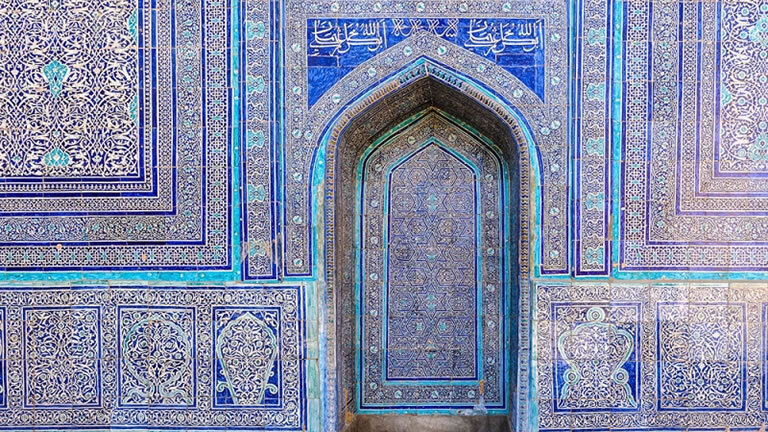
Today's day of sightseeing starts off with a walking tour. Highlights include the Lyab-i Hauz which once supplied the city's water; the striking blue-tiled Abdul Khan madrassah and the 9th century Mghoki Arrar Mosque. We will also visit the Kalyan minaret, which, as the tallest monument in town, is known as the 'Tower of Death' because prisoners were once hurled to their deaths from here. In addition, we will take in the trading domes that are the most famous symbol of Bokharan architecture. This afternoon, we will drive to The Ark - a massive citadel which was used as a fortress from the 5th century until its fall to the Russians in 1920. Today it houses several small museums connected with Bokhara's history. Bokhara was the site of the imprisonment of two British soldiers during 'The Great Game' - an epic battle fought between Victorian Britain and Tsarist Russia across the vastness of Central Asia. We also plan to visit the summer palace of the Emirs of Bukhara, which is known as the 'Palace of Moon-like Stars'. Here, we will see the famous White Hall, which took 30 architects two years to construct. Finally, we will take in the Char Minar Mosque - the impressive entrance to a now-demolished madrassah, and wander the backstreets of the old town maybe stopping off at a 'chaikhana', a local tea house.
Today has been left free for you to spend as you wish. You may choose to climb the 46-metre-high Kalyan minaret for stunning views over the city. Alternatively, you may like to explore the Taqi-Sarrafon market - one of the four domed bazaars in Bukhara. Used as a money exchange during the height of the Silk Road, it is now home to plenty of souvenir shops.
We'll begin the day with our departure from the hotel and prepare for an exciting journey into the mountains. We'll need to pack an overnight bag, as we'll be spending the night in a guesthouse at Hayat Village. Our drive takes us across approximately 310 kilometres towards the Nuratau mountain region, with scenic views and several interesting stops along the way. Our first visit will be in Gijduvan, where we'll visit a traditional ceramic workshop and museum to learn about the town's famous pottery-making traditions. We'll then continue to Nuratau village, where we'll have lunch at a local guesthouse. Famous for its sacred Chashma Spring, the town attracts visitors from across the Islamic World. According to legend, this healing spring, containing gold, silver and bromide, was formed by a meteorite hitting the ground. Our host will prepare a home-made meal for us. After lunch, we'll explore the area, visiting the holy spring, the mosque, and the ancient fortress that overlooks the settlement. In the afternoon, we'll continue our journey to Hayat Village, a peaceful community set in the quiet, mountainous landscape of the Nuratau range. We'll stay overnight in a family-run guesthouse, offering a genuine look into traditional village life. The rooms are simple yet charming, decorated in a traditional Uzbek style. The village benefited from an international tourism initiative aimed at expanding the positive economic and social impacts of tourism in Uzbekistan to less-visited areas. The project sought to empower people in remote parts of the country to earn a living by running guesthouses in their own villages while learning new skills such as hospitality, accounting, and maintenance. Before dinner, we'll enjoy a bread-baking demonstration, where we'll have the opportunity to take part in the process and taste the freshly baked bread with our evening meal. Dinner will be prepared by our hosts at the guesthouse, who will cook a selection of local dishes, such as dimlama - a hearty stew of meat (often beef or chicken) steamed with vegetables and aromatic spices. Guests are welcome to help in the preparation or simply watch and enjoy the atmosphere. Alternatives for dietary restrictions are available. Afterwards, we'll have some free time to relax and wander around the village. During the warmer months (May to September), it stays light until late in the evening, giving us a chance to enjoy a peaceful walk and meet local residents before resting for the night.
After breakfast, we'll set out from our guesthouse for a gentle walk and easy hike through the surrounding countryside, heading towards the nearby village of Ukhum and the petroglyphs of the Tykchasay Valley. Along the way, we'll pass through Hayot Village, stopping to meet local residents and gain a deeper insight into traditional village life in this remote mountain region. We'll return to the guesthouse for lunch, we'll continue our journey towards Samarkand. The drive takes us through a landscape of small towns and cotton fields, offering a revealing glimpse into rural life in Uzbekistan. Despite being stormed by Alexander the Great and later reduced to ashes by Genghis Khan, Samarkand was transformed into the most glittering city in Transoxiana by Tamerlane, who made it his capital in the 14th century. Even today, the monumental scale and grandeur of the city's architecture leave a lasting impression. On arrival, we'll begin our exploration with visits to the vast Bibi-Khanym Mosque and the Guri Amir Mausoleum, the richly decorated tomb of Tamerlane himself. We'll also visit the iconic Registan Square, one of Central Asia's most impressive architectural ensembles, framed on three sides by magnificent blue-tiled madrassahs. After our first introduction to this legendary Silk Road city, the remainder of the afternoon is free to relax or continue exploring before settling in for the evening.
This morning's sightseeing is accompanied by a local guide and takes us to the Shah-i-Zinda - a beautifully tiled necropolis of tombs, mosques and mausoleums belonging to Tamerlane's family, friends and the prophet Mohammad's cousin. We will also visit the Ulug-Beg Observatory, considered to have been one of the finest observatories in the Islamic World. It was here that Ulug-Beg, the great medieval astronomer, built his gigantic sextant which enabled him to calculate the length of a year within just 10 seconds. We see the Bibi-Khanym Mosque, once the largest in Central Asia; it was built by Tamerlane with loot from Indian campaigns and named after his favourite Mongolian wife. This afternoon has been left free to explore more of the city at your own pace. You may choose to soak up the atmosphere of the charming old town by wandering its winding, narrow alleys whilst traditionally dressed locals perform their daily rituals. A stop-off at a tea house offers the opportunity to relax with a cup of traditional 'kokchai' tea. Alternatively, you may choose to visit ancient Afrosiab - the original site of the town in northeast Samarkand, dating back to the late Stone Age.
Today, there is more free time for further exploration. Later this afternoon, we transfer to the train station for our modern high-speed train back to Tashkent. Arriving just after 7pm, we will have time to enjoy our last evening of the tour.
The trip ends after breakfast at our hotel in Tashkent. There are no activities planned today, so you're free to depart from Tashkent at any time. If your flight is departing later in the day, luggage storage facilities are available at our hotel. If you'd like an airport transfer today, you'll need to depart from Islam Karimov Tashkent International Airport (TAS), which is a 20-minute drive from the hotel.
Trip Inclusions
- Suusamyr Valley - Drive through remote mountain scenery and past lush alpine valleys passing nomadic families. Song Kul - Stand on the shores of sublime alpine lakes and sleep in a traditional yurt. Arslanbob - walk amongst ancient towering walnut forests and discover hidden waterfalls.
- Full on paced trips are for travellers who like their holidays packed with activities and experiences, moving on quickly from place to place with lots of early starts and long, busy days. Some may find them tiring, but others get a buzz from packing their precious holiday-time as chock-a - block full of new experiences as possible.
- Accommodation, itinerary and inclusions subject to change.
- Price is for land, cruise and internal flights as specified. Flights not specified are not included
Launching in 1981, Explore Worldwide offer trips from over 130 countries - from classic small group tours. Read more
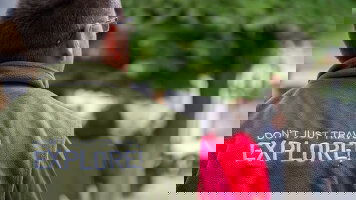
Explore's leaders are more than just your typical guide. They're your local expert are are passionate about sharing their expertise with you. Read more
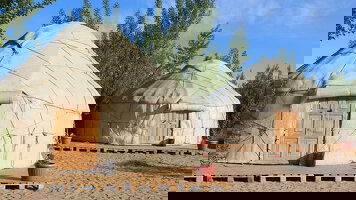
The places Explore stay are every bit as important as the sights they visit and the things you do. Read more

Download Brochure

Explore Small Group Adventures (2026-27)
Dates & Pricing
A definite departure means minimum numbers have been reached for this departure to operate. Your Global Journeys Travel Advisor will check the availability of your departure date when you Enquire. Additional savings may apply. T&C’s apply.
Tour & cruises prices are per person. Prices shown have savings applied, are subject to availability and may be withdrawn at any time without notice. Pricing and trip details are correct at this point in time, however are subject to confirmation at the time of booking and are subject to change by Explore. For cruise itineraries, cabin images are sourced from the cruise-line and should be treated as indicative only. Cabin inclusions, upholsteries and room layout may differ to the image(s) shown depending on the ship selected and your sailing dates.