Panama and Costa Rica: Crossing the Canal
Overview

Stretching 65 kilometres (40 miles) from shoreline to shoreline, the Panama Canal slices through one of the world’s most captivating isthmuses. Join us for a remarkable crossing as we navigate the locks and lakes of this engineering marvel. Beyond the canal, we journey into the heartland of Central America’s wildlife-rich rainforests and waterways and meet its warm and welcoming people. This voyage blends the marvels of human ingenuity with the wonders of the natural world in a region where wildlife, culture, and biodiversity combine to create read more the ultimate travel experience.


Itinerary
Welcome to Panama City. On arrival at Panama City airport make your way to the Arrivals Hall to meet our representative, followed by a transfer to our group hotel. At the hotel, visit our hospitality desk in the lobby to meet our team who will provide you with useful information regarding pre-embarkation procedures and about your time in Panama City. You will also receive cabin tags for your luggage. Please clearly label the tags with your name and your cabin number on the ship.
This evening offers time to relax in preparation for our journey.
This morning, we join a local guide to stroll the cobbled streets of Casco Viejo, Panama City's historic ‘Old Town’. Colonial facades, vibrant plazas, and centuries-old churches tell stories of Spanish conquests and marauding pirates, as the tour winds through this UNESCO-listed gem, where the aroma of Panamanian coffee mingles with the sweet scent of hojaldres, a sugary fried treat, from the districts open-air cafés. Our tour leads to the Museo del Canal Interoceánico de Panama, a beautifully restored building that chronicles the epic saga of the Panama Canal. Inside, exhibits trace its tumultuous history, from failed French ambitions to American triumph, and its profound impact on global commerce.
Choose to return to the hotel, or linger longer, to explore further at your own pace. This evening, we gather at a Welcome reception to meet our host and fellow travellers.
Meals: Breakfast, Welcome reception (drinks and canapes)
Departing Panama City, we stop en route to boarding our own engineering marvel, at the Miraflores Locks - a testament to the ingenuity that transformed global shipping. Built on a site chosen for its elevation and proximity to the Pacific, the Miraflores Locks allow gravity-fed chambers to manage sea level differences, making them an indispensable facet of the canal. This extensive lock system lifts and lowers ships up to 16 metres (52.5 feet) using massive concrete chambers and sluice gates that control water flow. Constructed in the early 20th century, they were engineered with precision to handle vessels of varying sizes, using hydraulics and gravity rather than pumps. Without them, the Canal simply couldn’t operate, with ships being unable to cross the hilly terrain and freshwater lakes that separate the oceans.
The Miraflores Visitors Center offers a compelling insight into the strategic and mechanical core of the Panama Canal. Our visit begins with an award-winning IMAX documentary that highlights the Canal’s global significance and the formidable engineering challenges overcome during its construction. Afterwards, we move to the observation terraces on the ground and first floors, where we watch vessels as they are raised and lowered through the locks in an intricate process that showcases the Canal’s precision and power.
With our curiosity piqued by our visit, we board the Douglas Mawson at the port of Colon ready to experience our own Panama Canal transit firsthand tomorrow.
Today we experience one of the most extraordinary engineering achievements in history, on a daytime crossing of the Panama Canal from Colon to Balboa.
After an initial French attempt to build the canal, the United States completed it in 1914, transforming global shipping. Before its existence, vessels had to sail up to 15,000 kilometres (9,300 miles) around Cape Horn — a journey that could add up to 15 days of travel time. With the canal in place, ships could slip through the Isthmus of Panama in a matter of hours, dramatically improving trade logistics. But behind the brilliance, construction was gruelling and dangerous. During the American phase alone, over 40,000 workers laboured through treacherous terrain and battled tropical diseases. The toll was staggering with more than 25,000 people dying over the entire period of construction.
Today, approximately 11,500 ships pass through the Panama Canal annually, with many designed to fit the dimensions of its original locks—a testament to its enduring influence on global shipping. Today, our own Douglas Mawson makes the iconic transit across the Isthmus, accompanied by expert commentary from a local canal specialist, offering insight into every stage of the journey and the remarkable engineering behind it.
We offer two distinctly different ‘Your Choice’ experiences this morning. Choose to immerse yourself in the culture of the Emberá people, or ride in a tramway high in the tropical forest canopy, before we sail west to Costa Rica, late afternoon.
- Morning experience: Emberá village visit
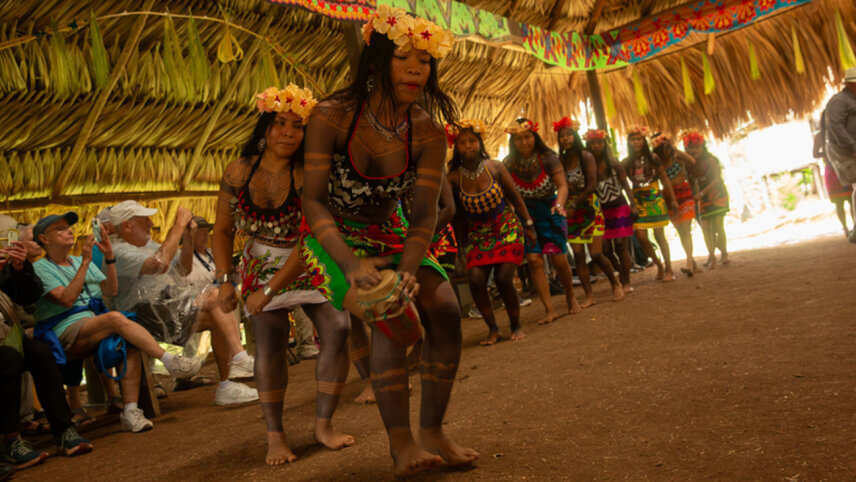
Our journey takes us on land and river today, when we visit an Emberá village on a journey into the heart of Panama’s indigenous heritage. Nestled deep within the rainforest, the community lives in stilted wooden homes with thatched roofs, surrounded by lush greenery. The Emberá people maintain a lifestyle closely tied to nature, fishing in nearby rivers, cultivating crops like yucca and plantains, and crafting baskets and carvings from local materials. Their lives are guided by ancestral knowledge, passed down through oral storytelling, music, and dance. Children learn through observation and participation, while elders serve as cultural guardians. The village operates with a strong sense of cooperation and respect, where decisions are made collectively and traditions are honoured. We are welcomed to the village not just as guests, but as students, invited to learn about a way of life that values simplicity, sustainability, and a deep connection to the land.
- Morning experience: Treetop rainforest experience
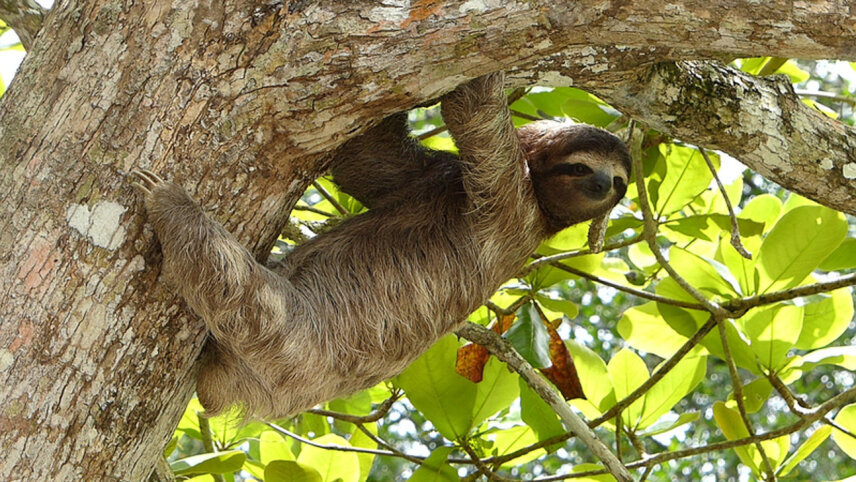
Board an aerial tram for a fascinating ride through Panama’s rainforest canopy, revealing a world few get to see from the ground. The tram travels around 600 meters (approximately 1,970 feet) through the jungle, rising gradually above the forest floor, passing towering trees like the kapok and Panama tree, tangled vines, and bursts of orchids. Wildlife sightings are common, with howler monkeys, toucans, and sloths often appearing among the branches. The ride is guided as an audio feed, making this a fascinating journey for nature lovers. The tram is smooth, quiet, and ideal for anyone wanting a close-up rainforest experience without having to hike.
Enjoy a day at sea, as we sail into the Pacific Ocean. There’s time to unwind, attend a presentation, or simply enjoy the sunset on the horizon as we sail from Panama to Costa Rica.
Tucked between the Osa Peninsula and the southern mainland, Golfo Dulce is a deep, sheltered gulf where rainforest spills into the sea. It’s one of the only tropical fjords in the world, and its calm waters are a magnet for marine life, from dolphins and sea turtles to migrating humpback whales. Scarlet macaws flash overhead, mangroves fringe the shore, and the forest hums with life. Unlike busier coastal spots, Golfo Dulce feels untouched, quiet, wild, and deeply alive. Whether you're paddling, walking nearby trails or joining a boat cruise of the bay, it’s a place that invites you to slow down and look closer.
- Morning experience: Golfo Dulce’s Waterworld
From August to December, the warm waters of Golfo Dulce welcome southern humpback whales arriving from Antarctica to give birth and care for their young. October is an ideal time to witness mothers and calves swimming together, practicing breaching, and communicating through deep, resonant calls, accompanied by resident dolphins darting through the waves.
Golfo Dulce is one of the few places on Earth where northern and southern humpbacks overlap, though the southern whales dominate this season. As we head out on the water, we’ll be keeping our eyes peeled for these majestic creatures, hoping to catch a glimpse of a tail slap or a calf learning to leap. It’s a quiet, awe-inspiring moment in one of Costa Rica’s most biodiverse marine environments.
- Morning Experience: The Wild Heart of Golfo Dulce
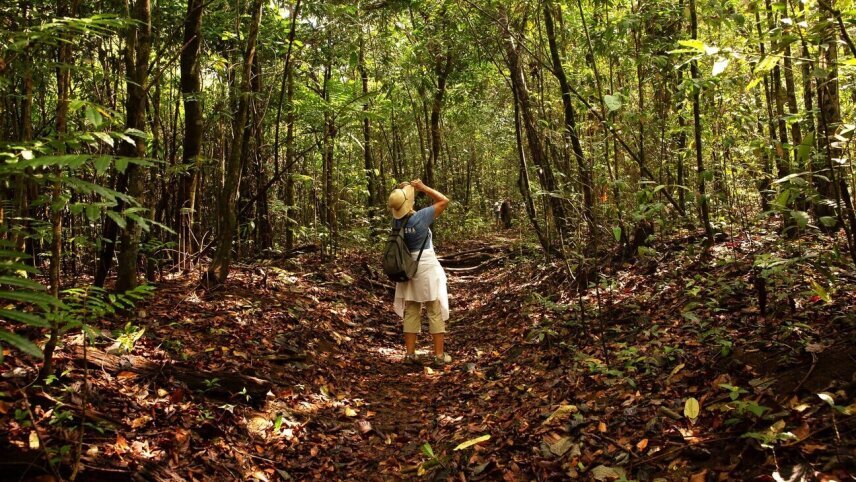
Step into the rainforest and experience the living, breathing heart of Costa Rica. With over half the country covered in tropical forest, this trail walk offers a glimpse into one of the most biodiverse places in the Americas. As you follow your guide along shaded paths, you’ll learn how the rainforest supports everything from towering trees to tiny orchids.
In the Golfo Dulce region, wildlife is spotted high in the forest canopy. Listen for howler monkeys in the treetops, spot colourful frogs near the forest floor, and watch for flashes of toucans, parrots, or even a macaw overhead. The trail winds through a landscape shaped by water, sunlight, and time, offering quiet moments and unexpected encounters. This trail walk is perfect for nature lovers, an opportunity to slow down, look closely, and connect with the rhythms of the rainforest.
- Morning Experience: Golfo Dulce by Kayak
Kayaking in Golfo Dulce offers a peaceful way to explore one of Costa Rica’s most biodiverse marine environments. Whether gliding across the open bay or weaving through narrow mangrove channels, the experience is quiet, slow-paced, and deeply immersive.
The stillness is part of the magic—especially in the mangroves, where silence allows you to observe wildlife without disturbing it. Birds perch overhead, fish ripple beneath the surface, and crabs scuttle along tangled roots. In the bay, you might spot dolphins, sea turtles, or rays gliding through the clear water.
This region is rich in life, and paddling at water level offers a unique perspective on the ecosystems that thrive here. It’s not just about movement—it’s about noticing, listening, and being one with nature.
The lively coastal town of Quepos, nestled on Costa Rica’s central Pacific coast, welcomes us today with three ‘Your Choice’ experiences on offer. Just minutes from the renowned Manuel Antonio National Park, Quepos is a gateway to unique wildlife encounters. Nearby mangrove forests play a vital role in Costa Rica’s fragile ecosystem, offering shelter to countless species and helping protect the coastline. Add to this the efforts of local farmers who are putting sustainable practices to good use, and you’ll discover a region rich in nature, culture, and character.
- Morning experience: The Mighty Mangrove
Gliding through the mangrove forests near Quepos, feels like entering a hidden world shaped by tides and time, as the mangroves grow where rivers meet the ocean, creating a rich, ever-changing environment that supports everything from crabs and caimans to monkeys and spoonbills. These coastal forests, especially around Damas Island, are home to an extraordinary mix of land and sea life.
The tangled roots of red, black, and white mangrove trees do more than look surreal—they hold the coastline together, protect against storms, and provide shelter for young marine life. Costa Rica’s Pacific coast is lined with mangroves, covering over 40,000 hectares. These forests are not only beautiful but essential: they clean the water, store carbon, and support local fisheries.
As you explore the winding estuary channels, your guide will explain how this part of the forest plays an essential role. Birds perch in the canopy, fish dart below the surface of the water, and the roots form a maze of life. Our boat journey provides us with a living classroom. Quiet, wild, and full of surprises.
- Morning experience: Manuel Antonio National Park - Guided Rainforest Trail
Established in 1972, Manuel Antonio National Park is one of Costa Rica’s most ecologically diverse protected areas, and the place to visit when in Quepos. On a guided walk, we explore national park trails through tropical forest, where the focus loops between elusive wildlife to the rich plant life. Towering trees like espavel and guácimo form the canopy, while ferns, vines, and flowering plants crowd the understory. Guides point out medicinal plants, epiphytes like bromeliads and orchids, and explain how different species interact within the ecosystem. Because many animals hide high in the trees or blend into their surroundings, guides often carry scopes to spot sloths, monkeys, or birds tucked away in the foliage. This walk offers a chance to slow down and appreciate the complexity of the forest from the ground up, with the opportunity to glimpse some of Costa Rica’s unique wildlife.
- Half-day experience: A Costa Rican chocolate story
Step into the lush countryside near Quepos for a sensory journey through Costa Rica’s most iconic crops; chocolate, vanilla, and coffee. Set on a private ranch, this immersive tour invites you to explore how these beloved ingredients are grown, harvested, and transformed, with a guided walk through the gardens, where cacao pods ripen on trees, vanilla vines climb and coffee plants thrive in the tropical climate. Our guide explains how each crop is cultivated sustainably while we discover the traditional methods used to process them into the rich flavours enjoyed around the world. After exploring the gardens and learning about the plants, sit down to a fresh farm-to-table lunch made with local produce. It’s a delicious way to connect with the land and the people who care for it.
Disembark and head to Hacienda Doka, nestled in Costa Rica’s fertile Central Valley, for an immersive coffee experience that blends tradition, taste, and storytelling. Costa Rica’s coffee is world-renowned, not just for its smooth, balanced flavour, but for the deep cultural roots it holds in the country’s identity and economy. At the plantation, we follow its journey through the growth cycle, harvest, and roasting process. Along the way, we explore different coffee plant varieties and learn how Costa Rica’s unique climate and volcanic soil contribute to its high-quality beans. A coffee and chocolate tasting adds a delicious end to our tour, before we tuck into a traditional buffet lunch, offering a taste of local flavours.
We continue to San José for our overnight stay.
After breakfast, farewell your fellow travellers and board your share service transfer to San José airport for your onward flight.
Trip Inclusions
- Fulfil a lifetime ambition to cruise the Panama Canal on a daytime crossing from Colon to Panama City
- Search for Costa Rica’s unique mammals and birdlife in Manuel Antonio National Park, whale watch at Golfo Dulce and walk a rainforest trail
- Learn about the engineering marvels of the canal at the Panama Canal Museum and Miraflores Locks
- Spend time with the indigenous people of Panama at an Emberá village
- Cruise a wildlife-rich mangrove forest, take an aerial tram ride above a forest canopy and tour a Costa Rican coffee plantation and chocolate farm
- Airport arrival and departure transfers to/from our group hotel on the first day and the final day of your voyage package
- Two night’s hotel accommodation, including breakfast in Panama City on Days 1 and 2
- One night’s hotel accommodation, including breakfast in San José on Day 9
- Onboard accommodation during voyage, including daily cabin service
- All meals, snacks, tea, coffee, soft drinks and juices during voyage
- Meals listed as included during shore excursions and land portions of the package
- Premium spirits, cocktails, beer, wine and liqueurs during voyage.
- Captain’s Farewell reception, including four-course dinner, house cocktails, house beer and wine, non-alcoholic beverages
- Pre-voyage, post-voyage and shore excursion, ‘Your Choice' experiences as outlined in the itinerary*
- Enrichment experiences as listed, including Welcome reception
- Presentations and guiding services provided by our Voyage Host, Aurora Expeditions Team and local operators
- Gratuities during excursions and enrichment program for local guides, drivers, venues and local sites
- Port surcharges, permits, tender boat transfers, pilotage and landing fees
- Onboard Wi-Fi
- Headsets are available for use during our ‘Your Choice’ experiences when needed
- Complimentary access to onboard expedition doctor and medical clinic (initial consultation)
- Comprehensive pre-departure information
*Our ‘Your Choice’ shore excursions listed in the itinerary are included. One excursion per person per port of call and city stay package is included, unless stated otherwise. The listed experiences are indicative only and must be reserved through our passenger portal at least 60 days prior to embarkation and cannot be amended after this time. If we do not receive your choices by this time, you will be allocated excursions by our automated system. Due to restrictions imposed by site management and government bodies, your passport details are required to purchase tickets for the included sites at the time of booking. While every effort is made to ensure you are allocated your primary preference shore excursion, we may occasionally need to allocate you on an alternative excursion due to operational reasons beyond our control.
- International or domestic flights – unless specified in itinerary
- Transfers – unless specified in itinerary
- Airport arrival or departure taxes
- Passport, visa, reciprocity and vaccination fees and charges
- Travel insurance or emergency evacuation charges
- Hotels and meals – unless specified in the itinerary
- All items of a personal nature, including but not limited to on board gratuities*, laundry services, personal clothing, medical expenses, email or phone charges.
*A gratuity of USD $20 per person, per day for the crew and Expedition Team will be automatically added to your onboard account. You may remove or adjust this amount when settling your account. For suite guests, this gratuity is included as part of the Suite Benefits.
- Itinerary and inclusions subject to change.
Life On Board
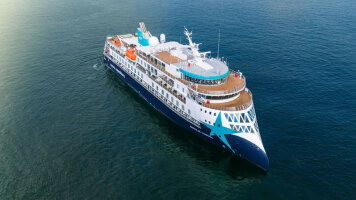
Named after the legendary Australian geologist and explorer, Aurora's new state-of-the-art ship, the Douglas Mawson, is the last in a line of purpose-built vessels that have redefined small ship expedition cruising. Read more
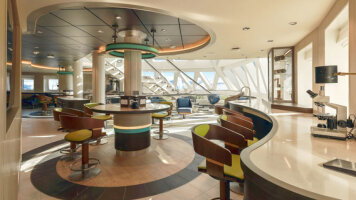
Learn more about the world and the unique destinations Aurora visits by visiting the onboard naturalist and Expedition Team in the world-class Citizen Science Center. You will be rewarded for your thirst for knowledge with one of the best views on the ship.
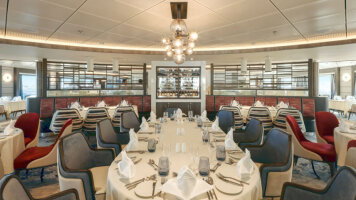
Start each adventure with hearty meals and delicious morning and afternoon teas prepared by our onboard chefs. Our chefs offer a variety of menu options for each meal. Enjoy house wines, beers, and soft drinks with dinner after a day of exploration.
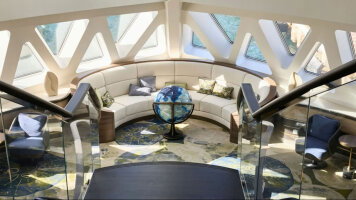
The bars and lounges on board are refined yet inviting places to gather, with floor-to-ceiling windows offering stunning views, and of course friendly bartenders to shoot the breeze with.
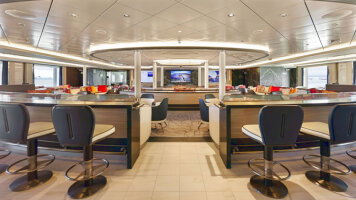
On all expeditions you will meet naturalists and local specialists, who offer presentations on their area of expertise to enhance your appreciation of the destination you are exploring.
Download Brochure

Aurora Expeditions Arctic & Beyond (2026-27)
Dates & Pricing
Aurora Loyalty Program
GJ Loyalty Discount
Cabin Layout Options:
Select Cabin Preference:
Tour & cruises prices are per person. Prices shown have savings applied, are subject to availability and may be withdrawn at any time without notice. Pricing and trip details are correct at this point in time, however are subject to confirmation at the time of booking and are subject to change by Aurora Expeditions. For cruise itineraries, cabin images are sourced from the cruise-line and should be treated as indicative only. Cabin inclusions, upholsteries and room layout may differ to the image(s) shown depending on the ship selected and your sailing dates.
Similar Cruises

11 Days Reykjavik Reykjavik
Operated By: Aurora Expeditions
11 Days Tromso Oslo
Operated By: Aurora Expeditions
11 Days Ushuaia Punta Arenas
Operated By: Aurora Expeditions