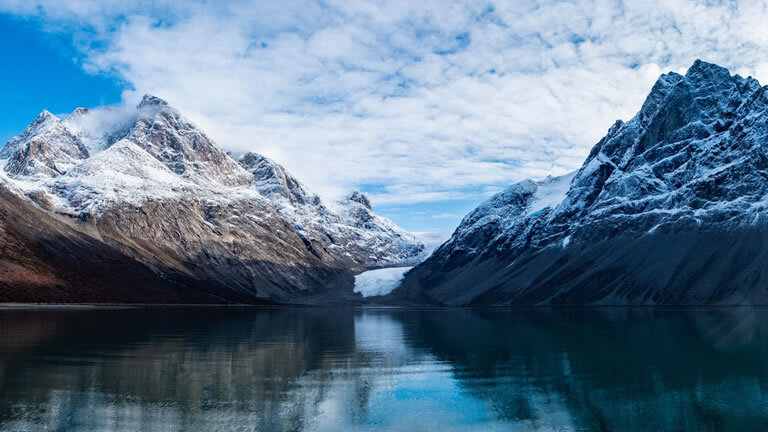
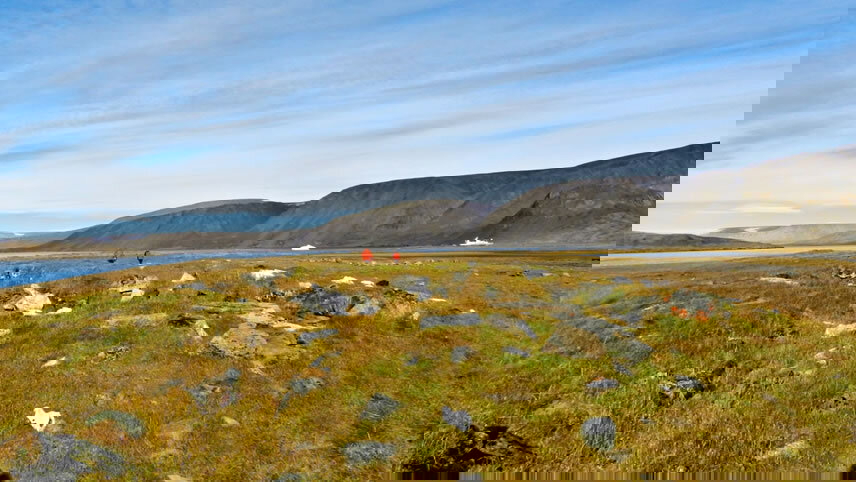

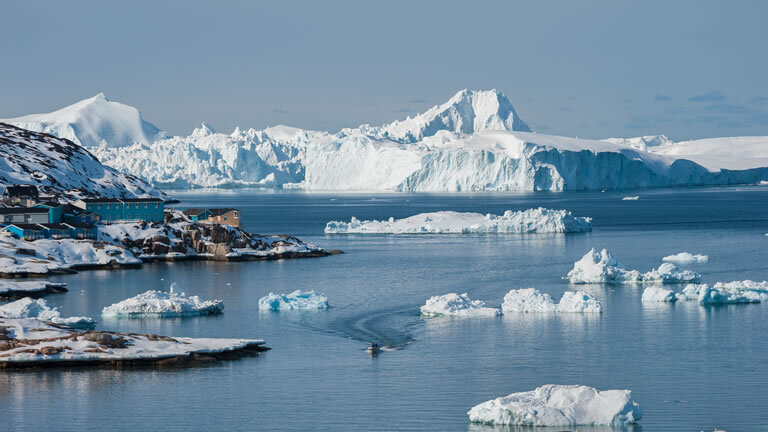
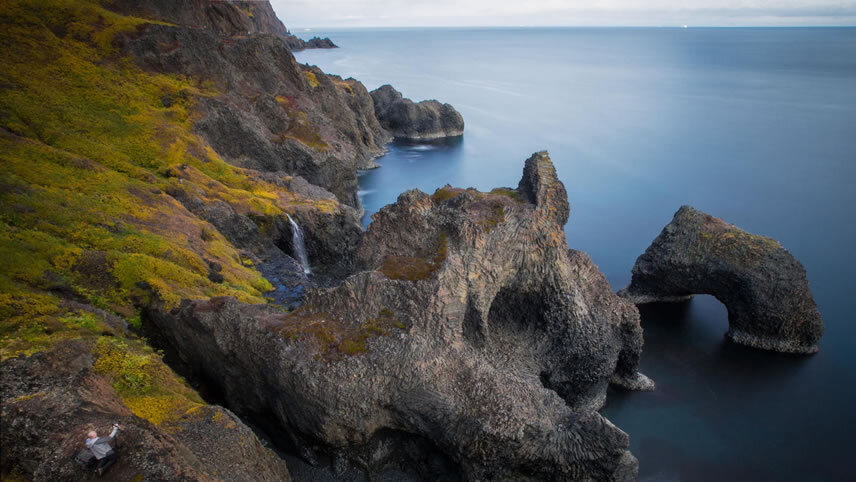
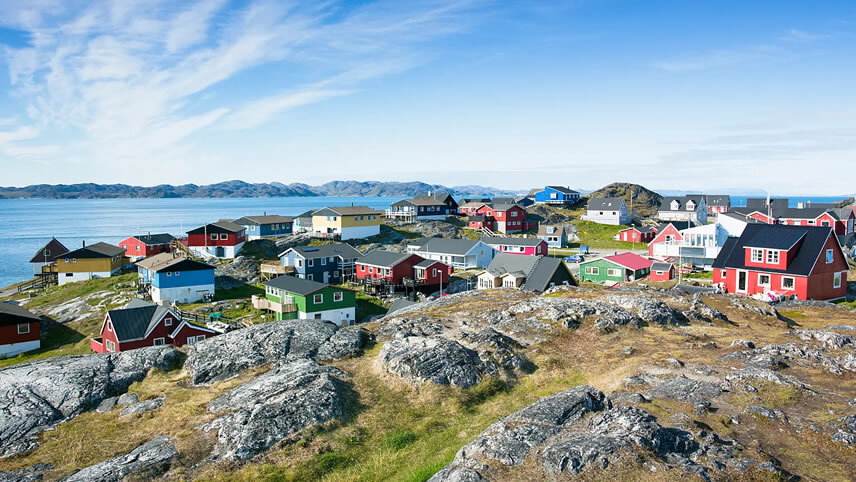

First of all, you will explore the western coast of Greenland which will welcome you with its majestic icebergs in Disko Bay, a UNESCO World Heritage Site, and its colourful villages encircled by mountains and basalt formations. This is the ideal opportunity for meeting the local population read more and learning about Greenland Inuit culture.
Then set sail for the Nunavut province in Northern Canada, to approach the entrance of the Northwest Passage. Amundsen was the first to pave the way on this northern route between the Atlantic and the Pacific Oceans, which long remained just a theory for navigators and scientists. On Beechey Island, retrace the steps of the Franklin expedition, before marvelling at the sublime canyon at Fury Beach.
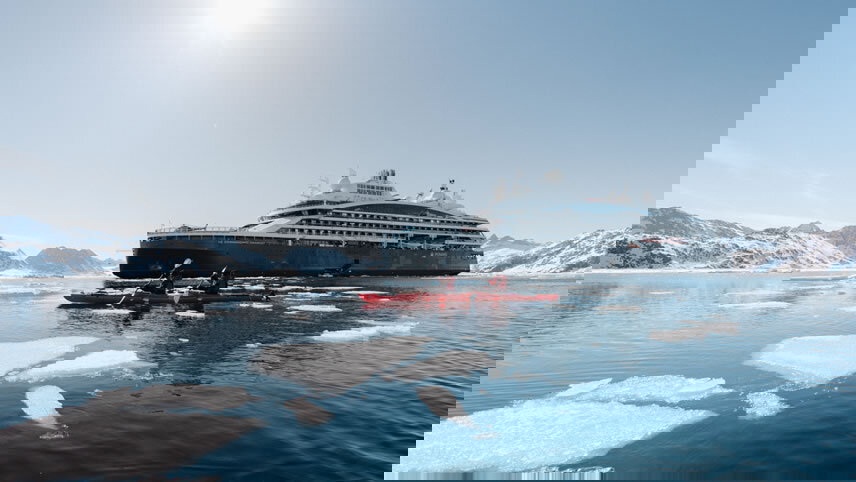
Throughout your trip, you will enter grandiose fjords and sail at the edge of the ice floes, in the hope of glimpsing the polar bear, the lord of the Far North. After Bellot Strait, the narrow passage of Coningham Bay will provide the perfect spot for an encounter with majestic belugas. In Artic Bay, you will meet the inhabitants of an Inuit village and will be able to build unique relationships.
The exploration of nature and wildlife and, above all, the polar history linked to this mythical route are the common theme of this journey, which will let you experience magic and unforgettable moments. The raw beauty of the Arctic offers an unforgettable backdrop, while the team of on-board naturalists sharpens your adventurer's soul. With a keen eye, you will scan the coastlines, fjords and glaciers in search of traces of life – a colony of walruses, a polar bear, beluga, northern fulmar, guillemot, Arctic tern, black-legged kittiwake… – and comprehend the historic places that bear witness to this iconic passage.


Itinerary
When Erik Le Rouge, the exiled Norse chief, landed on the coast of Nuuk, he found a fertile and welcoming land dotted with fjords. He settled there with a group of his former countrymen, and the Norse remained the principal inhabitants until, over a period of 500 years, their population declined and gave way to the Inuit. Nuuk is situated at the mouth of one of the largest networks of fjords in the world, where the waters never freeze.
The town spreads gently out towards the Davis Strait and enjoys an historic center that is particularly rich in national heritage. The vivid reds, blues, greens and yellows of the houses are a lively contrast to the somber waters of Greenland and serve to lift the spirits of the locals during the Winter months.
Located a few kilometres away from the Arctic Circle, the Nooralaq peninsula features raw and untamed beauty. Nature reigns supreme here, with the tundra stretching as far as the eye can see, decked out in various forms of flora and inhabited by Greenland’s emblematic fauna — snow buntings, common ravens, reindeer, musk oxen, and the discreet Arctic fox. The heights of Nooralaq afford sublime panoramas over the Itteleq fjord, whose water reflects the moving skies of the Far North.
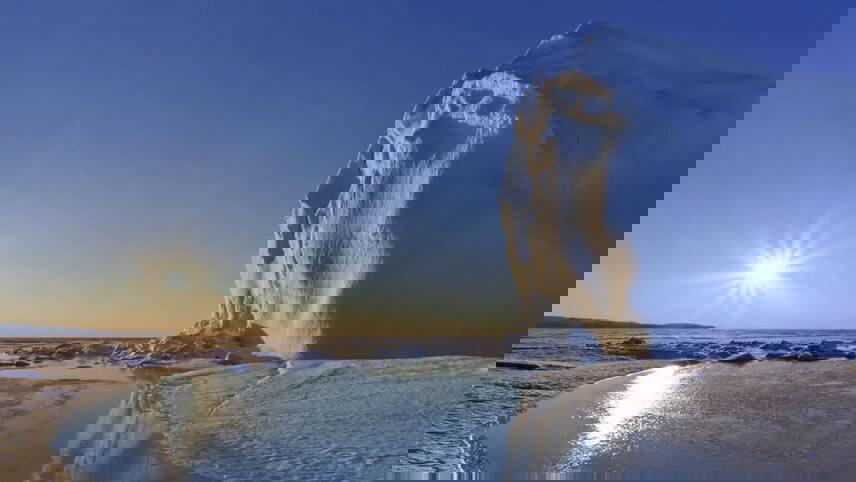
To the east of Baffin Bay, discover Disko Bay, scattered with countless icebergs produced by the Ilulissat Icefjord, a UNESCO World Heritage Site. From your ship, admire the majestic ballet of these ice giants as they slowly drift across the dark waters. This site is a natural marvel of Greenland, and is also renowned as an observation point for the region’s many humpback whales. The encounters with wild fauna and stunning landscapes in the heart of this spectacular and fragile nature will be pure moments of wonder for you.
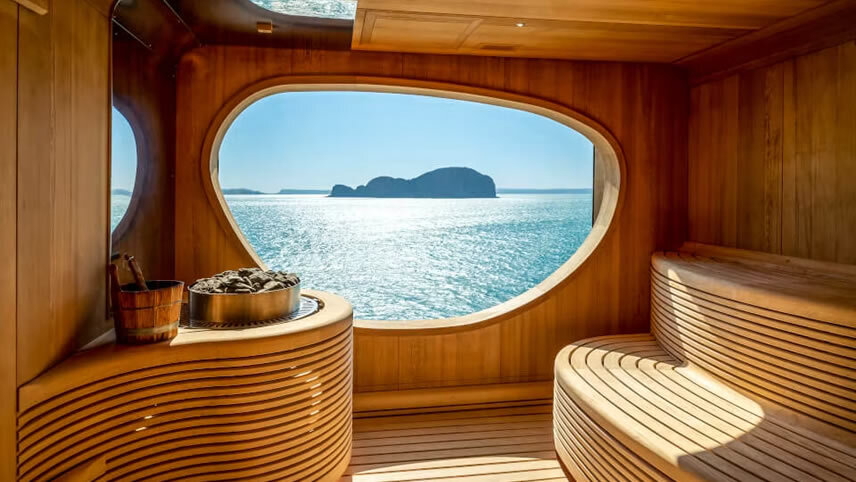
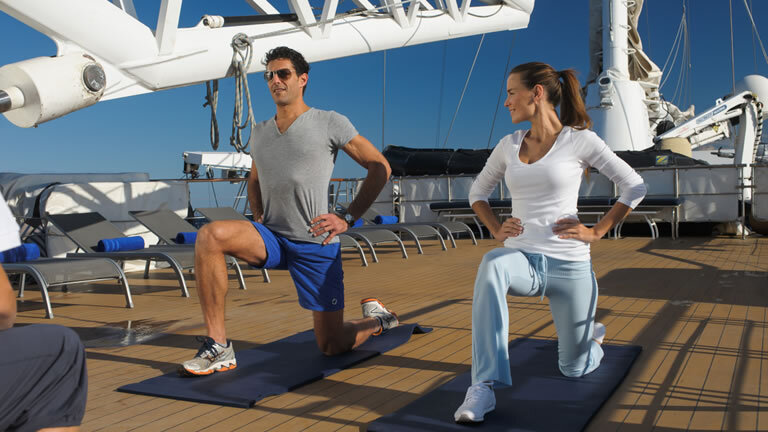
During your journey at sea, make the most of the many services and activities on board. Treat yourself to a moment of relaxation in the spa or stay in shape in the fitness centre. Depending on the season, let yourself be tempted by the swimming pool or a spot of sunbathing.
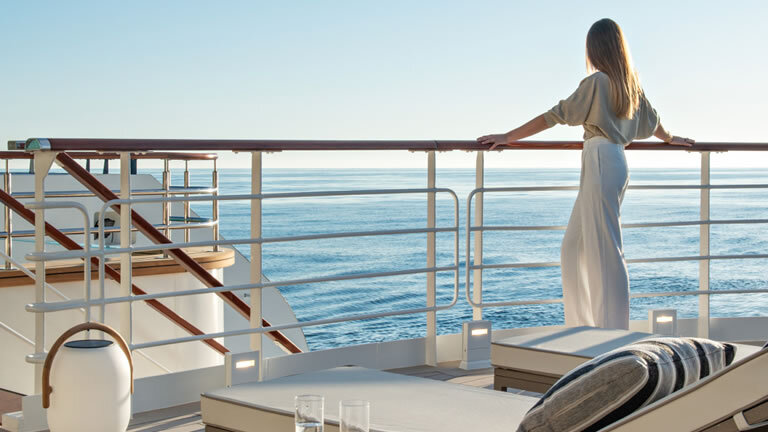
This journey without a port of call will also be an opportunity to enjoy the conferences or shows proposed on board, depending on the activities offered, or to do some shopping in the boutique or to meet the Ponant photographers in their dedicated space. As for lovers of the open sea, they will be able to visit the ship’s upper deck to admire the spectacle of the waves and perhaps be lucky enough to observe marine species. A truly enchanted interlude, combining comfort, rest and entertainment.
On Baffin Island, located in northern Canada at the mouth of the famous NorthWest Passage, there is a small Inuit settlement at the very bounds of infinity. To get there, cross the Arctic Circle, the imaginary line that separates man from lands of mystery and wonder. It’s not so much the way of life that sets Pond Inlet’s inhabitants apart, so much as the setting. Snow-capped mountains, fjords and glaciers combine in a dazzling natural environment that fills space and expands time. Some discoveries change you forever: this is one of them.
Located in Baffin Bay, Devon Island is part of the Canadian Arctic Archipelago. Anchored on the Arctic Cordillera, its rocky surface, similar to that of Mars, is of great interest to scientists. Robert Bylot and William Baffin were the first Europeans to sight Devon Island in 1616 but it would be mapped two centuries later by the British sailor William E. Parry, who named it after the eponymous English region. Around 1920, the Hudson's Bay Company set up a fur-trading outpost there, until the departure of the Inuits in 1936. A new attempt to populate it was made at the beginning of the 1950s. Only a few buildings in ruins, vestiges of that time, remain today.
Devon Island, located in Canada's High Arctic, is often noted as the largest uninhabited island on Earth, making it a unique destination for those interested in extreme, remote landscapes. Its terrain, predominantly ice-covered, is strikingly similar to Mars, which has made it a key site for space research and simulation missions.
Visitors to Devon Island can explore the Haughton impact crater, a scientifically significant site due to its lunar-like conditions. The surrounding area offers stark, breathtaking vistas ideal for photography and geological study.
Despite its harsh conditions, the island supports a variety of Arctic wildlife, including muskoxen and seabirds, adding a vital ecological interest to its otherworldly landscape.
The Canadian Arctic Circle is home to one of the planet’s best preserved natural sanctuaries: Somerset Island. This immaculate northern desert is renowned for its phenomenal landscapes, its midnight sun and its huge tundra, where musk oxen roam. Covering 24,786 square kilometres (15,400 square miles), it is the Arctic archipelago’s ninth-largest island. Vegetation is rare except in some hollows and lowlands, where Peary caribou are common.
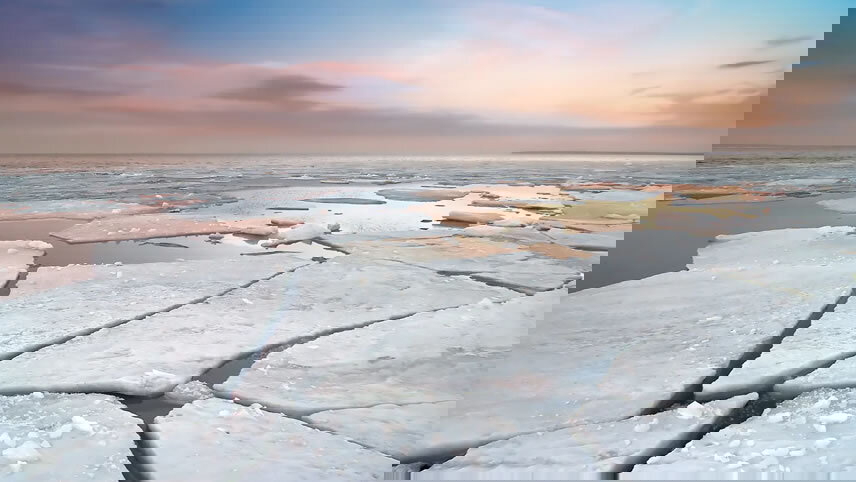
A key stage in the North West Passage, the Bellot Strait, crossed by strong currents, promises you an unforgettable sailing experience. The entrance to the strait is dominated by the Ross Cairn. The buildings of Fort Ross also stand not far from here. Separating Somerset Island from the Boothia Peninsula, this 2-km-wide strait was discovered in 1852 by Captain William Kennedy of the Royal Navy, and the Frenchman Joseph-René Bellot, during an expedition in search of Sir John Franklin. Discover a magnificent décor covered in snow, fragmented by large ice floes. As you sail between them, your ship will perhaps be accompanied by a few polar bears.
Prescott Island is located between Somerset Island and Prince of Wales Island, in the heart of Peel Sound, and its shorelines provide a perfect playground for belugas. However, the opportunity to observe and listen to these "sea canaries” is not the only reason to scan the horizon: here, between the icebergs and the dramatic landscapes, you may also be able to spot polar bears, as well as summon up memories of Sir John Franklin, who was the first to cross Peel Sound in 1846 during his expedition in search of the Northwest Passage, followed in 1903 by Roald Amundsen, who was the first to find a route through that passage!
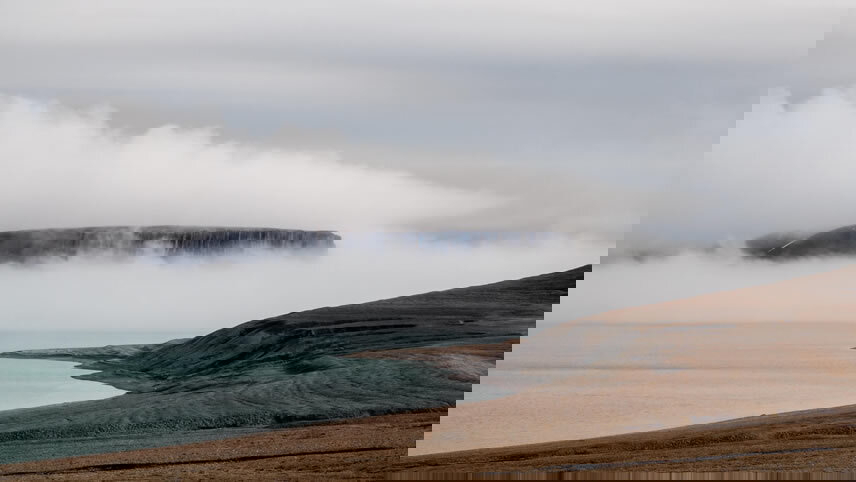
Beechey Island, at the eastern end of Resolute Bay, will call to mind some of the most important moments of Franklin’s expedition. Sir John set off in 1845 in search of the mythical Northwest Passage and was forced to take shelter in Erebus Harbour for two long years, while he waited for the ice floes to recede and allow him a way through. It is a spectacular location; seeing the three wooden grave markers, bleached by the sun (indicating the burial places of at least three of Captain Franklin’s men) and visiting the memorial that has been erected in memory of Franklin and his men can only reinforce the hushed sense of reverence. If the surrounding wilderness impresses us, the ochre and yellows of the rocky desert soften the landscape.
Located in Baffin Bay, Devon Island is part of the Canadian Arctic Archipelago. Anchored on the Arctic Cordillera, its rocky surface, similar to that of Mars, is of great interest to scientists. Robert Bylot and William Baffin were the first Europeans to sight Devon Island in 1616 but it would be mapped two centuries later by the British sailor William E. Parry, who named it after the eponymous English region. Around 1920, the Hudson's Bay Company set up a fur-trading outpost there, until the departure of the Inuits in 1936. A new attempt to populate it was made at the beginning of the 1950s. Only a few buildings in ruins, vestiges of that time, remain today.
During your journey at sea, make the most of the many services and activities on board. Treat yourself to a moment of relaxation in the spa or stay in shape in the fitness centre. Depending on the season, let yourself be tempted by the swimming pool or a spot of sunbathing.
This journey without a port of call will also be an opportunity to enjoy the conferences or shows proposed on board, depending on the activities offered, or to do some shopping in the boutique or to meet the Ponant photographers in their dedicated space. As for lovers of the open sea, they will be able to visit the ship’s upper deck to admire the spectacle of the waves and perhaps be lucky enough to observe marine species. A truly enchanted interlude, combining comfort, rest and entertainment.
On the southern coast of Disko Island, Qeqertarsuaq is one of just two small villages on this island the size of Corsica. Its isolation makes it an observation post popular among naturalists since the beginning of polar exploration and the set-up, in 1906, of the Arctic Centre research facility. During a zodiac cruise you will have the chance to explore the natural wonders of Greenland, meet its wildlife such as the humpback whale and contemplate the basaltic organ landscapes that offer pure moments of wonder for you. In the heart of this spectacular and fragile nature, enjoy the breath-taking views of the grandiose and varied landscapes of Disko Island and Disko Bay.
Your ship glides slowly along the water towards the west coast of Greenland, to enter Evighedsfjorden, just a few kilometres south of Kangerlussuaq. Evighedsfjorden means “the fjord of Eternity”, and for good reason: just when you think you’ve reached the end of this stretch of sea measuring over 100 kilometres in length, it seems to go on forever, as though to bring even more pleasure to those sailing in it. The spectacular scenery ranges from glaciers to tundra with an abundant flora, and jagged cliffs where numerous bird species have taken up residence. Take the time to observe the white-tailed eagles and the colonies of seagulls and black-legged kittiwakes flying overhead in the area.
When Erik Le Rouge, the exiled Norse chief, landed on the coast of Nuuk, he found a fertile and welcoming land dotted with fjords. He settled there with a group of his former countrymen, and the Norse remained the principal inhabitants until, over a period of 500 years, their population declined and gave way to the Inuit. Nuuk is situated at the mouth of one of the largest networks of fjords in the world, where the waters never freeze.
The town spreads gently out towards the Davis Strait and enjoys an historic center that is particularly rich in national heritage. The vivid reds, blues, greens and yellows of the houses are a lively contrast to the somber waters of Greenland and serve to lift the spirits of the locals during the Winter months.
Life On Board
Take a voyage on Le Boreal and enjoy the sophisticated luxury of small ship cruising. Read more
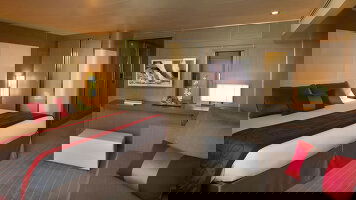
Choose from nine categories of staterooms and suites, all of which offer ocean views. Read more

Whether you choose to dine in the restaurant or at the grill you will savour Ponant's French gastronomy. Read more
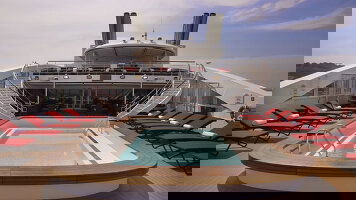
Relax on the pool deck, take in the views from the lounges or rejuvenate in the onboard spa. Read more

From the moment you embark your every need will be looked after by the French crew. Read more

Relax and unwind at the spa in a deep aromatherapy bath filled with reviving mineral salts. Read more
Ship Reviews (2)

Dates & Pricing
Cabin Layout Options:
Select Cabin Preference:
Tour & cruises prices are per person. Prices shown have savings applied, are subject to availability and may be withdrawn at any time without notice. Pricing and trip details are correct at this point in time, however are subject to confirmation at the time of booking and are subject to change by Ponant. For cruise itineraries, cabin images are sourced from the cruise-line and should be treated as indicative only. Cabin inclusions, upholsteries and room layout may differ to the image(s) shown depending on the ship selected and your sailing dates.