Northwest Passage

Overview



Itinerary
On arrival in Calgary, you will be met by an Aurora Expeditions representative and transferred to the group hotel. Visit the Aurora Expeditions hospitality desk to collect your cabin luggage tags and speak with our ground operations team. They will share important pre-embarkation information for tomorrow’s charter flight and can assist with local dining suggestions or last-minute purchases.
The remainder of the day is yours to enjoy at leisure. All meals today are at your own expense.
Transfer to Calgary Airport and board our charter flight to Kugluktuk, Nunavut. Please ensure your main luggage is fitted with the cabin tags provided and keep valuables, travel documents, medication and anything required during the day in your hand luggage.
Kugluktuk, meaning ‘place of moving water’, stands near the mouth of the Coppermine River in the homeland of the Inuinnait. Copper gathered in this region was fashioned into tools for generations, giving rise to the historical English name ‘Copper Inuit’. Transfer to Sylvia Earle, settle into your cabin and join the mandatory safety briefings before meeting your Expedition Team and crew.
We hope to begin with a Zodiac cruise or landing at Port Epworth, on a coast shaped by ancient geology and a long record of Inuit travel and seasonal use. Depending on conditions, we may explore the shoreline and search for archaeological traces that reveal how people moved through and lived within this western Arctic landscape.
Later, we set a course east. Watch from deck for seals, whales and migrating birdlife as the Expedition Team introduces the human and natural history of the Northwest Passage.
Iqaluktuuttiaq, or Cambridge Bay, means ‘place of many fish’ and reflects the rich waters that have long drawn Inuit families to this part of Victoria Island. Today it is a vibrant regional centre where Inuinnaqtun language, harvesting traditions and contemporary northern life meet.
The harbour is also linked with Roald Amundsen’s ship Maud, which remained here for decades after becoming trapped in ice and sinking. A locally guided visit may explore community history and culture before we return to the ship and continue east.
We aim to explore the western side of King William Island, known to Inuit as Qikiqtaq. This landscape is central to the Franklin story, but its history is far older and richer than the European search for a passage. Inuit travelled, hunted and camped throughout the region for generations, developing knowledge that later proved crucial to understanding the fate of HMS Erebus and HMS Terror.
Weather and sea ice will determine our landing place. On shore, the Expedition Team may interpret archaeological features, expedition relics and the oral histories that connect this coast with one of polar exploration’s most enduring mysteries. We will also watch for caribou, Arctic foxes, seals and polar bears.
Bellot Strait is one of the most storied waterways of the Northwest Passage. Barely two kilometres wide at its narrowest point, it separates Somerset Island from the Boothia Peninsula and is swept by strong tides and shifting ice. Safe conditions may allow us to transit or explore in the vicinity of Fitzroy Inlet, Bellot Strait or Strzelecki Harbour.
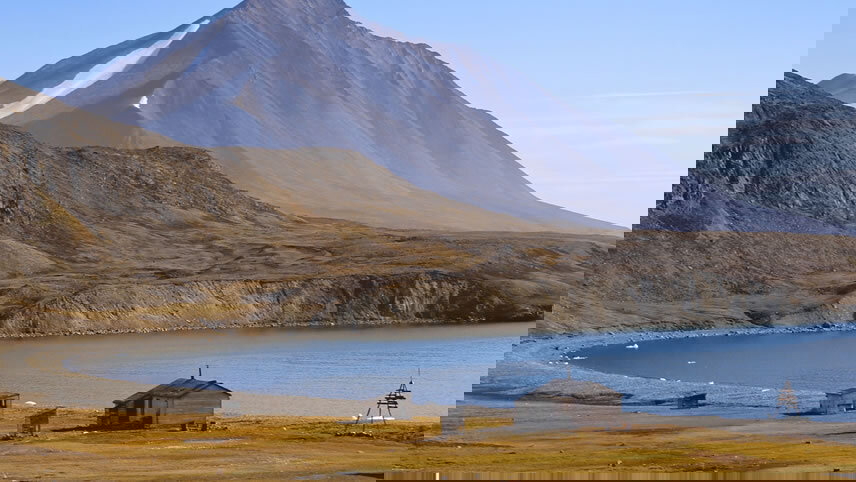
Zodiac cruises and tundra walks reveal an austere landscape of cliffs, coves and tidal channels. This was a formidable obstacle for early navigators, yet part of a well-known homeland and travel network for Inuit. Scan the shore and water for polar bears, seals, beluga and seabirds.
At Radstock Bay, beneath the limestone mass of Caswall Tower, archaeological remains reveal generations of Inuit life. Stone house foundations, caches and whale bones speak to sophisticated hunting practices, food storage and seasonal movement through the region. We hope to hike across raised beaches and tundra while our guides bring these traces into context.
Wildlife also shapes our plans. Walrus may use parts of this coast as haul-out habitat, and access can be restricted to protect them. Musk oxen, Arctic hare, foxes and polar bears are also possible in the wider area, so the Expedition Team may select an alternative site on northwestern Somerset Island if required.
Maxwell Bay (Tasiujaq) cuts deeply into Devon Island and offers a choice of sheltered inlets, including Graham Harbour and Custance Inlet. By late September the tundra has taken on autumn tones and early snow may sharpen the island’s flat-topped mountains and glacial valleys.
We may explore by Zodiac or on foot, watching for musk oxen, Arctic hare and foxes on land, and seals or walrus in the water. Polar bears move throughout this region, although every sighting is a matter of chance. Archaeological remains and historic sites may also reveal how Inuit travellers, traders and later government patrols used these protected waters.
At Croker Bay, a glacier descends towards a broad Arctic inlet. Conditions may favour a Zodiac cruise among sculpted ice or a landing beneath Devon Island’s distinctive mountains. Ringed seals and walrus may be present, with polar bears occasionally travelling the coast.
We also hope to visit Dundas Harbour, where the remains of an RCMP post and former Hudson’s Bay Company activity represent a recent layer of history. Nearby archaeological features point to much older Inuit use of this coast. A tundra walk may bring encounters with musk oxen, Arctic hare and late-season birdlife.
We leave Nunavut and cross Baffin Bay towards Greenland. Spend time on deck scanning for whale blows, seals and fulmars, or join presentations that connect the two sides of the passage—from shared Inuit cultural roots and long-distance travel to the ambitions of European explorers and the realities of navigation through ice.
As darkness returns to the Arctic night, clear skies may also offer a chance to see the northern lights.
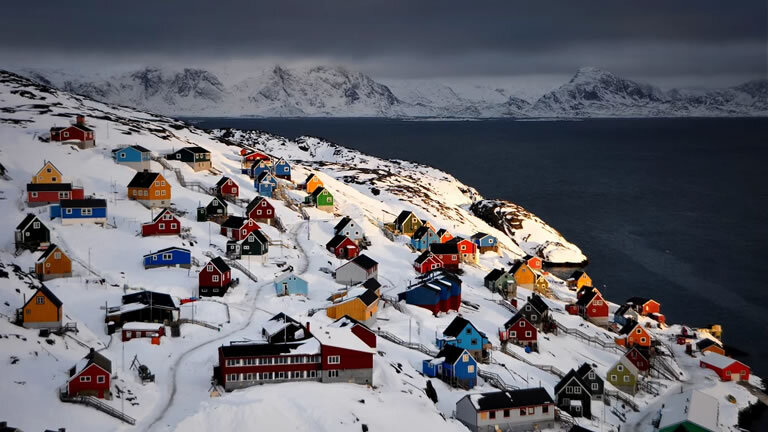
Our return to Greenland begins at Kullorsuaq, a small community set among islands, mountains and ice in the Upernavik Archipelago. The settlement takes its name from the distinctive mountain nearby: Kullorsuaq, or ‘the Big Thumb’, known in English as the Devil’s Thumb.
A community visit may offer insight into life in one of Greenland’s northern settlements, where hunting and fishing remain closely tied to sea ice, weather and seasonal wildlife. Offshore, icebergs drift through intricate channels used by seals and whales, and the surrounding cliffs may hold ravens and seabirds.
A morning at sea allows time to watch the Greenland coast unfold and to learn more about its geology, wildlife and human history. Humpback and minke whales may be encountered in these waters, while changing ice and weather guide our progress.
Later, we hope to explore around Nuussuaq. The peninsula’s immense basalt mountains and broad valleys preserve evidence of ancient movement and settlement along a coast that has supported Inuit communities for thousands of years. A late-day landing may offer a tundra walk, Zodiac cruise or community visit, subject to conditions and local arrangements.
Today’s plans will be shaped by ice, weather and local conditions. We hope to visit Ilulissat, where people have lived beside the icefjord for more than 4,000 years. A walk towards the UNESCO World Heritage-listed Ilulissat Icefjord reveals a constantly changing procession of bergs calved by Sermeq Kujalleq. The nearby Sermermiut valley preserves traces of successive Inuit cultures and adds a powerful human story to this extraordinary glacial landscape.
At Ukivik, open tundra and an indented coast may offer a final wilderness walk, shaped by weather, wildlife and local conditions.
Later, we hope to visit Nipisat, part of the UNESCO World Heritage property Aasivissuit–Nipisat: Inuit Hunting Ground between Ice and Sea. Archaeological layers document more than 4,000 years of human history and reveal how successive cultures adapted to seasonal resources between the Greenland Ice Sheet and the coast. It is a fitting place to reflect on Inuit resilience, knowledge and continuity at the end of our passage.
In Kangerlussuaq, farewell the crew, Expedition Team and fellow travellers before transferring to the airport for our charter flight to Reykjavík. The voyage concludes on arrival at Reykjavík Airport.
Note: Our arrival time in Reykjavík depends on the allocated charter-flight slots, which we expect to receive in March 2028. We recommend allowing flexibility when arranging onward travel.
Trip Inclusions
- Explore King William Island, where Inuit oral histories proved vital to understanding the fate of Franklin’s lost expedition.
- Follow a route rich in polar history through Bellot Strait and the channels of the Canadian Arctic.
- Discover enduring Inuit cultures from the Inuinnait homelands of the western Arctic to remote communities in Greenland.
- Visit Nipisat, part of the UNESCO-listed Inuit Hunting Ground between Ice and Sea, with archaeological evidence spanning more than 4,000 years.
- Watch for polar bears, walrus, musk oxen, seals, whales and late-season Arctic birdlife.
- Experience Greenland’s immense icebergs and, under clear dark skies, the possibility of the northern lights.
- All transfers as mentioned in the itinerary.
- One night’s hotel accommodation including breakfast in Calgary on Day 1.
- Charter flight from Calgary to Kugluktuk on Day 2.
- Charter flight from Kangerlussuaq to Reykjavík on Day 15.
- On-board accommodation during voyage including daily cabin service.
- All meals, snacks, tea, coffee, soft drinks and juices during voyage.
- Premium spirits, cocktails, beer, wine and liqueurs during voyage.
- Captain’s Farewell reception including four-course dinner, house cocktails, house beer and wine, and non-alcoholic beverages.
- All shore excursions and Zodiac cruises.
- Educational lectures and guiding services provided by the Expedition Team.
- Complimentary access to the onboard expedition doctor and medical clinic for an initial consultation.
- One 3-in-1 waterproof polar expedition jacket.
- Complimentary use of Muck Boots during the voyage.
- Comprehensive pre-departure information.
- Port surcharges, permits and landing fees.
- Gratuities during excursions and the enrichment program for local guides, drivers, venues and local sites.
- Wi-Fi*.
* Please note that we travel to remote regions where connectivity can be unreliable.
- International or domestic flights – unless specified in the itinerary.
- Transfers – unless specified in the itinerary.
- Airport arrival or departure taxes.
- Passport, visa, reciprocity and vaccination fees and charges.
- Travel insurance or emergency evacuation charges.
- Hotels and meals – unless specified in the itinerary.
- Optional excursions and optional activity surcharges.
- All items of a personal nature, including but not limited to onboard gratuities*, laundry services, personal clothing, medical expenses, email or phone charges.
*A gratuity of USD $20 per person, per day for the crew and Expedition Team will be automatically added to your onboard account. You may remove or adjust this amount when settling your account. For suite guests, this gratuity is included as part of the Suite Benefits.
- Itinerary and inclusions subject to change.
Life On Board
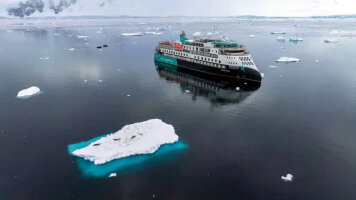
A floating ambassador for the conservation of the planet, the Sylvia Earle pays tribute to marine biologist, oceanographer and explorer Dr. Sylvia Earle and six pioneering women in conservation with public decks honouring their contributions. Read more
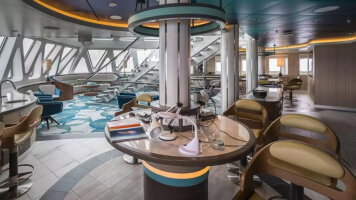
Learn more about the world and the unique destinations Aurora visits by visiting the onboard naturalist and Expedition Team in the world-class Citizen Science Center. You will be rewarded for your thirst for knowledge with one of the best views on the ship.
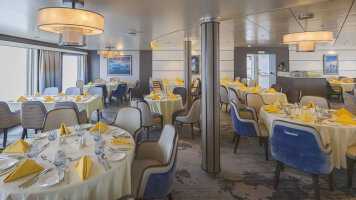
Whatever adventures the day holds, you will be fuelled-up with hearty meals and delicious morning and afternoon teas cooked by our onboard chefs. Our chefs offer a variety of menu options for each meal. Enjoy the range of house wine, beers, and soft drinks included with dinner after a long day in the wild.
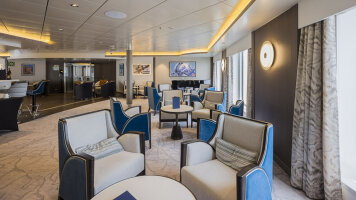
With floor-to-ceiling windows, the library is a peaceful sanctuary and wildlife guides, books and binoculars can be found in the observation lounge on Deck 7 - the perfect place to relax and watch the incredible landscapes pass by, or spot unique polar wildlife.
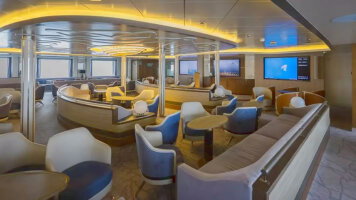
On all expeditions you will meet naturalists and local specialists, who offer presentations on their area of expertise to enhance your appreciation of the destination you are exploring.
Dates & Pricing
 AUD
AUD
Aurora Loyalty Program
GJ Loyalty Discount
Cabin Layout Options:
Select Cabin Preference:
Tour & cruises prices are per person. Prices shown have savings applied, are subject to availability and may be withdrawn at any time without notice. Pricing and trip details are correct at this point in time, however are subject to confirmation at the time of booking and are subject to change by Aurora Expeditions. For cruise itineraries, cabin images are sourced from the cruise-line and should be treated as indicative only. Cabin inclusions, upholsteries and room layout may differ to the image(s) shown depending on the ship selected and your sailing dates.
Similar Cruises
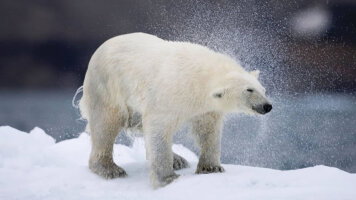
16 Days Calgary Toronto
Operated By: Aurora Expeditions
15 Days Oslo Reykjavik
Operated By: Aurora Expeditions
14 Days Aberdeen Tromso
Operated By: Aurora Expeditions
16 Days Denpasar Singapore
Operated By: Aurora Expeditions
